
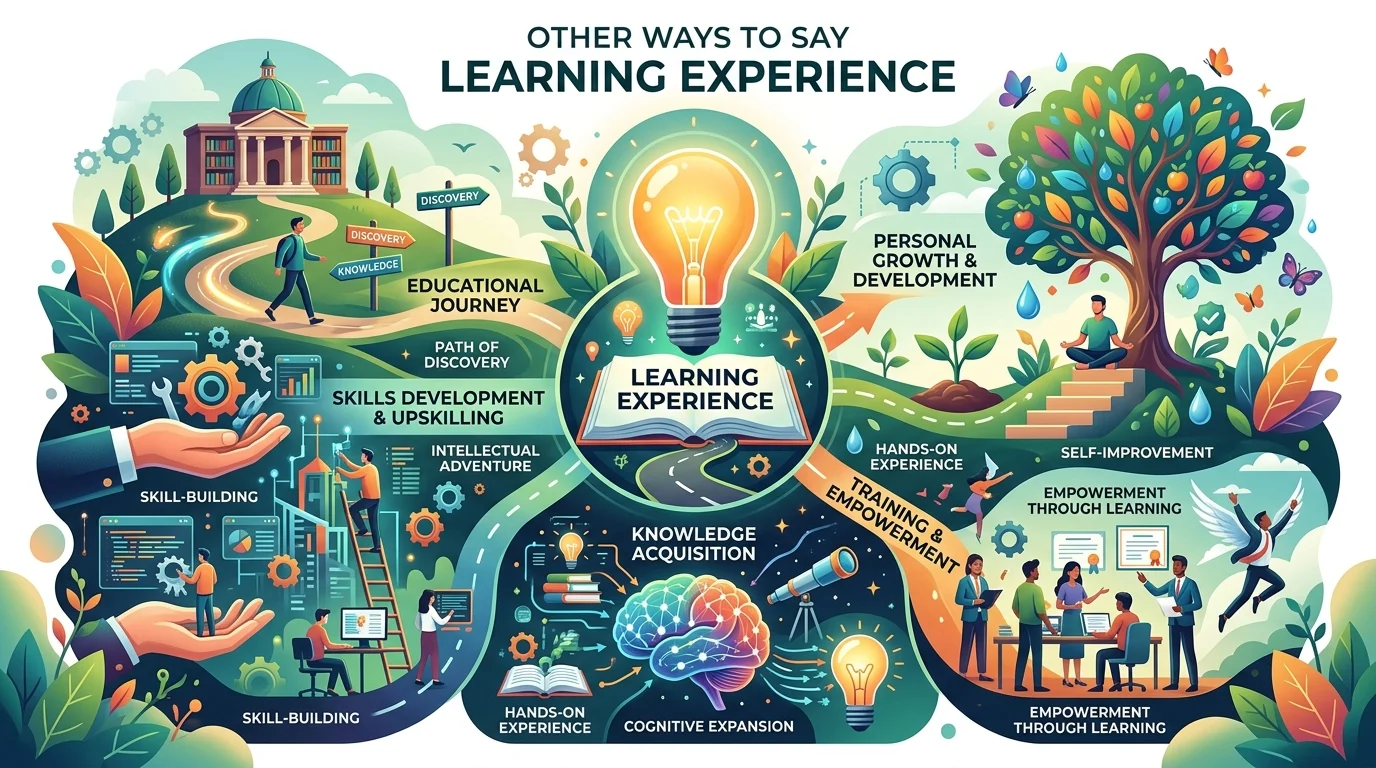
The phrase “other ways to say learning experience” is commonly used to describe a situation, event, challenge, or activity that teaches someone something valuable. Whether the experience is positive or difficult, a learning experience helps a person gain knowledge, improve skills, develop new perspectives, or grow personally and professionally.
- Grammar Form
- Simple Definition
- Similar Expressions
- Example Sentences
- Spoken English
- Business English
- Emails
- Academic Writing
- Job Interviews
- Formal Tone
- Neutral Tone
- Positive Tone
- Workplace Tip
- ✔ Pros
- ✘ Cons
- Meaning
- Explanation
- Example Sentence
- Best Use
- Tone
- Similarity Score
- Meaning
- Explanation
- Example Sentence
- Best Use
- Tone
- Similarity Score
- Meaning
- Example Sentence
- Best Use
- Tone
- Similarity Score
- Meaning
- Example Sentence
- Best Use
- Tone
- Similarity Score
- Meaning
- Example Sentence
- Best Use
- Tone
- Similarity Score
- Meaning
- Example Sentence
- Best Use
- Tone
- Similarity Score
- Meaning
- Example Sentence
- Best Use
- Tone
- Similarity Score
- Meaning
- Example Sentence
- Best Use
- Tone
- Similarity Score
- Meaning
- Example Sentence
- Best Use
- Tone
- Similarity Score
- Meaning
- Example Sentence
- Best Use
- Tone
- Similarity Score
- Meaning
- Example Sentence
- Best Use
- Tone
- Similarity Score
- Meaning
- Example Sentence
- Best Use
- Tone
- Similarity Score
- Formal Dialogue
- Informal Dialogue
- Business Email Example
- US English
- UK English
- Workplace Communication
- Academic Writing
- Is “learning experience” professional?
- What is the most professional alternative?
- What is the most common alternative?
- Is “learning experience” good for resumes?
- What should beginners use?
- What is the best interview alternative?
- Grammar Form
- Simple Definition
- Similar Expressions
- Example Sentences
- Spoken English
- Business English
- Emails
- Academic Writing
- Job Interviews
- Formal Tone
- Neutral Tone
- Positive Tone
- Workplace Tip
- ✔ Pros
- ✘ Cons
- Meaning
- Explanation
- Example Sentence
- Best Use
- Tone
- Similarity Score
- Meaning
- Explanation
- Example Sentence
- Best Use
- Tone
- Similarity Score
- Meaning
- Example Sentence
- Best Use
- Tone
- Similarity Score
- Meaning
- Example Sentence
- Best Use
- Tone
- Similarity Score
- Meaning
- Example Sentence
- Best Use
- Tone
- Similarity Score
- Meaning
- Example Sentence
- Best Use
- Tone
- Similarity Score
- Meaning
- Example Sentence
- Best Use
- Tone
- Similarity Score
- Meaning
- Example Sentence
- Best Use
- Tone
- Similarity Score
- Meaning
- Example Sentence
- Best Use
- Tone
- Similarity Score
- Meaning
- Example Sentence
- Best Use
- Tone
- Similarity Score
- Meaning
- Example Sentence
- Best Use
- Tone
- Similarity Score
- Meaning
- Example Sentence
- Best Use
- Tone
- Similarity Score
- Formal Dialogue
- Informal Dialogue
- Business Email Example
- US English
- UK English
- Workplace Communication
- Academic Writing
- Is “learning experience” professional?
- What is the most professional alternative?
- What is the most common alternative?
- Is “learning experience” good for resumes?
- What should beginners use?
- What is the best interview alternative?
Whileother ways to say learning experience is clear and widely understood, using it repeatedly can make your writing sound repetitive. That’s why many writers, students, professionals, and English learners search for other ways to say learning experience. Choosing different alternatives can help you sound more professional, polished, and engaging in emails, resumes, interviews, academic papers, and everyday conversations.
Learning other ways to say learning experience can help you communicate growth, improvement, and development more effectively. Some alternatives are formal and workplace-friendly, while others are better suited for personal conversations and storytelling.
For example:
Professional: The project was a valuable professional development opportunity.
Casual: It was a great learning experience.
Both sentences communicate growth, but the first sounds more polished and professional.other ways to say learning experience.
What Does “Learning Experience” Mean?
A learning experience is an event, activity, challenge, or situation that teaches someone something new or helps them develop skills, knowledge, or understanding.other ways to say learning experience.
People often use learning experience when discussing:
- Workplace challenges
- School projects
- Career growth
- Personal development
- Training programs
- Mistakes and lessons learned
Grammar Form
Learning experience is a noun phrase.
Simple Definition
It means:
“A situation that teaches you something valuable.”other ways to say learning experience.
Similar Expressions
- Educational experience
- Growth opportunity
- Valuable lesson
- Development experience
- Training opportunity
Example Sentences
- Managing the project was a valuable learning experience.
- The internship provided a great learning experience.
When to Use “Learning Experience”
Spoken English
Common in daily conversations.
Example:
“Traveling alone was a great learning experience.”
Business English
Used to discuss professional growth.
Example:
“The project was a valuable learning experience for our team.”
Emails
Useful when discussing lessons learned.
Example:
“It was a meaningful learning experience.”
Academic Writing
Frequently used in education-related discussions.
Example:
“The program provided students with a practical learning experience.”other ways to say learning experience.
Job Interviews
Very common when discussing challenges.
Example:
“The situation became a learning experience that improved my leadership skills.”
Is “Learning Experience” Professional?
Yes. It is considered professional, positive, and appropriate in most situations.
Formal Tone
Professional and respectful.
Neutral Tone
Works in almost any setting.
Positive Tone
Highlights growth and improvement.
Workplace Tip
In resumes and interviews, alternatives like professional development opportunity or valuable lesson often sound stronger than simply saying learning experience.other ways to say learning experience.
Pros and Cons of Using “Learning Experience”
✔ Pros
- Positive wording
- Professional
- Easy to understand
- Highlights growth
- Works in interviews and resumes
- Suitable for most audiences
✘ Cons
- Can become repetitive
- Sometimes sounds generic
- May lack detail
- Overused in professional writing
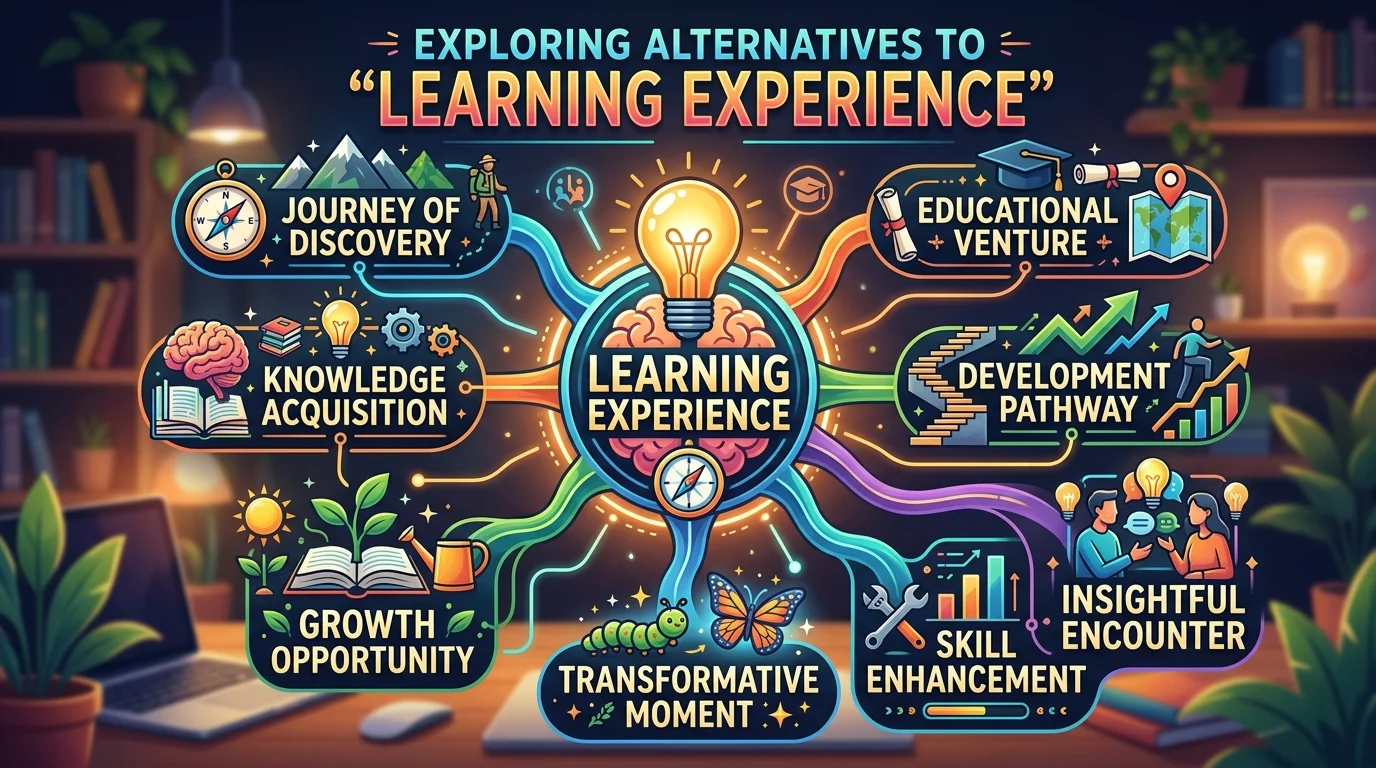
Quick Alternatives List
- Valuable lesson
- Growth opportunity
- Educational experience
- Development opportunity
- Eye-opening experience
- Professional development opportunity
- Teaching moment
- Skill-building experience
- Practical lesson
- Formative experience
- Insightful experience
- Personal growth opportunity
- Training experience
- Knowledge-building opportunity
- Character-building experience
- Meaningful lesson
- Enriching experience
- Developmental experience
- Transformative experience
- Learning opportunity
Valuable Lesson
Meaning
An experience that teaches something important.
Explanation
One of the most common alternatives to other ways to say learning experience.
Example Sentence
The project failure became a valuable lesson.
Best Use
Professional and personal situations.
Tone
Professional.
Similarity Score
10/10
Growth Opportunity
Meaning
A chance to improve or develop.other ways to say learning experience.
Explanation
Popular in workplace and career discussions.
Example Sentence
The assignment was a growth opportunity for everyone involved.
Best Use
Business and self-development.
Tone
Professional.
Similarity Score
9/10
Educational Experience
Meaning
An experience that provides knowledge.other ways to say learning experience.
Example Sentence
The workshop was an educational experience.
Best Use
Academic and training settings.
Tone
Formal.
Similarity Score
9/10
Professional Development Opportunity
Meaning
An experience that improves professional skills.
Example Sentence
The conference was a valuable professional development opportunity.other ways to say learning experience.
Best Use
Workplace and resumes.
Tone
Highly Professional.
Similarity Score
8/10
Eye-Opening Experience
Meaning
An experience that changes understanding.
Example Sentence
Working abroad was an eye-opening experience.
Best Use
Personal stories and interviews.
Tone
Positive.
Similarity Score
8/10
Teaching Moment
Meaning
A situation that provides a lesson.
Example Sentence
The mistake became a teaching moment for the team.
Best Use
Education and leadership.
Tone
Friendly Professional.
Similarity Score
8/10
Skill-Building Experience
Meaning
An activity that improves abilities.
Example Sentence
The internship was a skill-building experience.other ways to say learning experience.
Best Use
Career and education.
Tone
Professional.
Similarity Score
8/10
Practical Lesson
Meaning
A lesson learned through real-life experience.
Example Sentence
The project taught us several practical lessons.
Best Use
Workplace and education.
Tone
Professional.
Similarity Score
8/10
Formative Experience
Meaning
An experience that significantly shapes development.other ways to say learning experience.
Example Sentence
University was a formative experience in my life.
Best Use
Academic and personal writing.
Tone
Formal.
Similarity Score
7/10
Transformative Experience
Meaning
An experience that creates major positive change.
Example Sentence
Volunteering overseas was a transformative experience.
Best Use
Personal growth discussions.
Tone
Advanced Professional.
Similarity Score
7/10
Insightful Experience
Meaning
An experience that provides valuable understanding.other ways to say learning experience.
Example Sentence
The mentorship program was an insightful experience.
Best Use
Professional and academic settings.
Tone
Professional.
Similarity Score
8/10
Enriching Experience
Meaning
An experience that adds value to your life.
Example Sentence
Studying abroad was an enriching experience.
Best Use
Education and travel.
Tone
Positive.
Similarity Score
7/10
Mini Dialogue Examples
Formal Dialogue
Manager:
How did the project go?
Employee:
It was a valuable learning experience that improved my project management skills.
Informal Dialogue
Friend:
How was your first job?
Friend:
It was definitely an eye-opening experience.
Business Email Example
Subject: Project Reflection
Dear Team,
Although the project presented several challenges, it proved to be a valuable learning experience and a significant growth opportunity for everyone involved.other ways to say learning experience
Best regards,
Sarah
Common Mistakes to Avoid
- Repeating learning experience too often.
- Using vague descriptions without explaining what was learned.
- Using informal alternatives in academic papers.
- Overusing corporate buzzwords.
- Confusing learning with training.
- Using advanced phrases incorrectly.
- Forgetting to highlight the lesson learned.
Cultural and Tone Tips
US English
Learning experience is widely used and sounds natural.
UK English
Alternatives like valuable lesson and development opportunity are common in professional settings.other ways to say learning experience
Workplace Communication
Growth opportunity and professional development opportunity are highly effective.other ways to say learning experience.
Academic Writing
Educational experience and formative experience are often preferred.
Comparison Table
| Phrase | Tone | Best Context | Professional Level | Example |
|---|---|---|---|---|
| Valuable Lesson | Professional | General | High | It was a valuable lesson. |
| Growth Opportunity | Professional | Workplace | High | It was a growth opportunity. |
| Educational Experience | Formal | Academic | High | The course was an educational experience. |
| Professional Development Opportunity | Formal | Career | Very High | It was a development opportunity. |
| Eye-Opening Experience | Friendly | Personal Stories | Medium | It was eye-opening. |
| Skill-Building Experience | Professional | Resume | High | It was a skill-building experience. |
| Transformative Experience | Advanced | Personal Growth | High | It was transformative. |
Frequently Asked Questions
Is “learning experience” professional?
Yes, it is professional and widely accepted.
What is the most professional alternative?
Professional development opportunity is one of the strongest professional alternatives.other ways to say learning experience.
What is the most common alternative?
Valuable lesson is very common and natural.
Is “learning experience” good for resumes?
Yes, but alternatives often sound stronger.
What should beginners use?
Valuable lesson and growth opportunity are easy and effective.
What is the best interview alternative?
Growth opportunity works exceptionally well in interviews.
Conclusion
Learning other ways to say learning experience can The phrase “learning experience” is commonly used to describe a situation, event, challenge, or activity that teaches someone something valuable. Whether the experience is positive or difficult, a learning experience helps a person gain knowledge, improve skills, develop new perspectives, or grow personally and professionally.
While learning experience is clear and widely understood, using it repeatedly can make your writing sound repetitive. That’s why many writers, students, professionals, and English learners search for other ways to say learning experience. Choosing different alternatives can help you sound more professional, polished, and engaging in emails, resumes, interviews, academic papers, and everyday conversations.
Learning other ways to say learning experience can help you communicate growth, improvement, and development more effectively. Some alternatives are formal and workplace-friendly, while others are better suited for personal conversations and storytelling.
For example:
Professional: The project was a valuable professional development opportunity.
Casual: It was a great learning experience.
Both sentences communicate growth, but the first sounds more polished and professional.
What Does “Learning Experience” Mean?
A learning experience is an event, activity, challenge, or situation that teaches someone something new or helps them develop skills, knowledge, or understanding.
People often use learning experience when discussing:
- Workplace challenges
- School projects
- Career growth
- Personal development
- Training programs
- Mistakes and lessons learned
Grammar Form
Learning experience is a noun phrase.
Simple Definition
It means:
“A situation that teaches you something valuable.”other ways to say learning experience,
Similar Expressions
- Educational experience
- Growth opportunity
- Valuable lesson
- Development experience
- Training opportunity
Example Sentences
- Managing the project was a valuable learning experience.
- The internship provided a great learning experience.
When to Use “Learning Experience”
Spoken English
Common in daily conversations.
Example:
“Traveling alone was a great learning experience.”other ways to say learning experience.
Business English
Used to discuss professional growth.
Example:
“The project was a valuable learning experience for our team.”
Emails
Useful when discussing lessons learned.
Example:
“It was a meaningful learning experience.”
Academic Writing
Frequently used in education-related discussions.
Example:
“The program provided students with a practical learning experience.”
Job Interviews
Very common when discussing challenges.
Example:
“The situation became a learning experience that improved my leadership skills.”
Is “Learning Experience” Professional?
Yes. It is considered professional, positive, and appropriate in most situations.
Formal Tone
Professional and respectful.
Neutral Tone
Works in almost any setting.
Positive Tone
Highlights growth and improvement.
Workplace Tip
In resumes and interviews, alternatives like professional development opportunity or valuable lesson often sound stronger than simply saying learning experience.
Pros and Cons of Using “Learning Experience”
✔ Pros
- Positive wording
- Professional
- Easy to understand
- Highlights growth
- Works in interviews and resumes
- Suitable for most audiences
✘ Cons
- Can become repetitive
- Sometimes sounds generic
- May lack detail
- Overused in professional writing
Quick Alternatives List
- Valuable lesson
- Growth opportunity
- Educational experience
- Development opportunity
- Eye-opening experience
- Professional development opportunity
- Teaching moment
- Skill-building experience
- Practical lesson
- Formative experience
- Insightful experience
- Personal growth opportunity
- Training experience
- Knowledge-building opportunity
- Character-building experience
- Meaningful lesson
- Enriching experience
- Developmental experience
- Transformative experience
- Learning opportunity
Valuable Lesson
Meaning
An experience that teaches something important.
Explanation
One of the most common alternatives to learning experience.
Example Sentence
The project failure became a valuable lesson.
Best Use
Professional and personal situations.
Tone
Professional.
Similarity Score
10/10
Growth Opportunity
Meaning
A chance to improve or develop.
Explanation
Popular in workplace and career discussions.
Example Sentence
The assignment was a growth opportunity for everyone involved.
Best Use
Business and self-development.
Tone
Professional.
Similarity Score
9/10
Educational Experience
Meaning
An experience that provides knowledge.
Example Sentence
The workshop was an educational experience.
Best Use
Academic and training settings.
Tone
Formal.
Similarity Score
9/10
Professional Development Opportunity
Meaning
An experience that improves professional skills.
Example Sentence
The conference was a valuable professional development opportunity.
Best Use
Workplace and resumes.
Tone
Highly Professional.
Similarity Score
8/10
Eye-Opening Experience
Meaning
An experience that changes understanding.
Example Sentence
Working abroad was an eye-opening experience.
Best Use
Personal stories and interviews.
Tone
Positive.
Similarity Score
8/10
Teaching Moment
Meaning
A situation that provides a lesson.
Example Sentence
The mistake became a teaching moment for the team.
Best Use
Education and leadership.
Tone
Friendly Professional.
Similarity Score
8/10
Skill-Building Experience
Meaning
An activity that improves abilities.
Example Sentence
The internship was a skill-building experience.
Best Use
Career and education.
Tone
Professional.
Similarity Score
8/10
Practical Lesson
Meaning
A lesson learned through real-life experience.
Example Sentence
The project taught us several practical lessons.
Best Use
Workplace and education.
Tone
Professional.
Similarity Score
8/10
Formative Experience
Meaning
An experience that significantly shapes development.
Example Sentence
University was a formative experience in my life.
Best Use
Academic and personal writing.
Tone
Formal.
Similarity Score
7/10
Transformative Experience
Meaning
An experience that creates major positive change.
Example Sentence
Volunteering overseas was a transformative experience.
Best Use
Personal growth discussions.
Tone
Advanced Professional.
Similarity Score
7/10
Insightful Experience
Meaning
An experience that provides valuable understanding.
Example Sentence
The mentorship program was an insightful experience.
Best Use
Professional and academic settings.
Tone
Professional.
Similarity Score
8/10
Enriching Experience
Meaning
An experience that adds value to your life.
Example Sentence
Studying abroad was an enriching experience.
Best Use
Education and travel.
Tone
Positive.
Similarity Score
7/10
Mini Dialogue Examples
Formal Dialogue
Manager:
How did the project go?
Employee:
It was a valuable learning experience that improved my project management skills.
Informal Dialogue
Friend:
How was your first job?
Friend:
It was definitely an eye-opening experience.
Business Email Example
Subject: Project Reflection
Dear Team,
Although the project presented several challenges, it proved to be a valuable learning experience and a significant growth opportunity for everyone involved.
Best regards,
Sarah
Common Mistakes to Avoid
- Repeating learning experience too often.
- Using vague descriptions without explaining what was learned.
- Using informal alternatives in academic papers.
- Overusing corporate buzzwords.
- Confusing learning with training.
- Using advanced phrases incorrectly.
- Forgetting to highlight the lesson learned.
Cultural and Tone Tips
US English
Learning experience is widely used and sounds natural.
UK English
Alternatives like valuable lesson and development opportunity are common in professional settings.
Workplace Communication
Growth opportunity and professional development opportunity are highly effective.
Academic Writing
Educational experience and formative experience are often preferred.
Comparison Table
| Phrase | Tone | Best Context | Professional Level | Example |
|---|---|---|---|---|
| Valuable Lesson | Professional | General | High | It was a valuable lesson. |
| Growth Opportunity | Professional | Workplace | High | It was a growth opportunity. |
| Educational Experience | Formal | Academic | High | The course was an educational experience. |
| Professional Development Opportunity | Formal | Career | Very High | It was a development opportunity. |
| Eye-Opening Experience | Friendly | Personal Stories | Medium | It was eye-opening. |
| Skill-Building Experience | Professional | Resume | High | It was a skill-building experience. |
| Transformative Experience | Advanced | Personal Growth | High | It was transformative. |
Frequently Asked Questions
Is “learning experience” professional?
Yes, it is professional and widely accepted.
What is the most professional alternative?
Professional development opportunity is one of the strongest professional alternatives.
What is the most common alternative?
Valuable lesson is very common and natural.
Is “learning experience” good for resumes?
Yes, but alternatives often sound stronger.
What should beginners use?
Valuable lesson and growth opportunity are easy and effective.
What is the best interview alternative?
Growth opportunity works exceptionally well in interviews.
Conclusion
Learning other ways to say learning experience can improve your communication and help you express growth, development, and knowledge more effectively. While learning experience remains a useful phrase, alternatives like valuable lesson, growth opportunity, professional development opportunity, and skill-building experience can make your writing more engaging and professional. By expanding your vocabulary, you can communicate personal and professional growth with greater confidence and clarity. your communication and help you express growth, development, and knowledge more effectively. While learning experience remains a useful phrase, alternatives like valuable lesson, growth opportunity, professional development opportunity, and skill-building experience can make your writing more engaging and professional. By expanding your vocabulary, you can communicate personal and professional growth with greater confidence and clarity.