

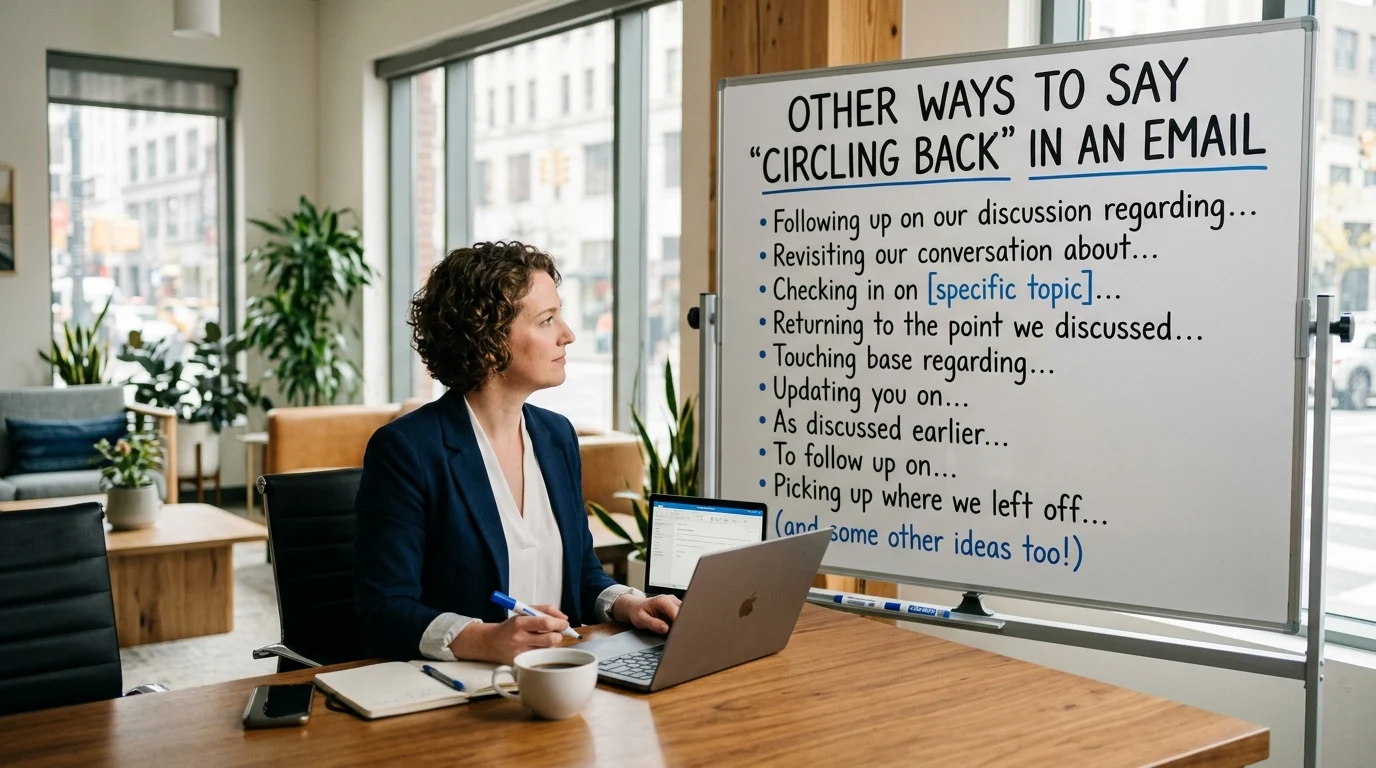
Finding other ways to say circling back in an email can make your professional communication sound more polished, natural, and engaging. While the phrase circling back has become extremely common in business communication, many professionals use it so often that it can begin to sound repetitive or even like corporate jargon.
- What Does "Circling Back" Mean?
- Example
- Why Use Alternatives to "Circling Back"?
- It Sounds Repetitive
- It Can Feel Like Corporate Jargon
- Different Situations Require Different Tones
- Alternatives Can Improve Clarity
- 1. Following Up
- Example
- Best For
- 2. Checking In
- Example
- Best For
- 3. Touching Base
- Example
- Best For
- 4. Reaching Out Again
- Example
- Best For
- 5. Seeking an Update
- Example
- Best For
- 6. Requesting an Update
- Example
- 7. Revisiting This Topic
- Example
- 8. Returning to This Matter
- Example
- 9. Following Up on My Previous Email
- Example
- 10. Reconnecting Regarding
- Example
- 11. Continuing Our Conversation
- Example
- 12. Referring Back To
- Example
- 13. Revisiting Our Discussion
- Example
- 14. Checking on the Status
- Example
- 15. Looking for an Update
- Example
- 16. Following Through
- Example
- 17. Returning to Our Earlier Discussion
- Example
- 18. Checking Whether There Have Been Updates
- Example
- 19. Reopening the Conversation
- Example
- 20. Picking Up Where We Left Off
- Example
- 21. Revisiting the Matter
- Example
- 22. Following Up on Next Steps
- Example
- 23. Continuing the Discussion
- Example
- 24. Reengaging on This Topic
- Example
- 25. Connecting Again
- Example
- 26. Returning to the Subject
- Example
- 27. Revisiting the Project
- Example
- 28. Checking for Progress
- Example
- 29. Following Up Regarding
- Example
- 30. Reaching Out Regarding
- Example
- Formal Alternatives to Say Circling Back
- Further to My Earlier Email
- With Reference to Our Previous Correspondence
- Returning to the Matter Discussed
- Following Up on Outstanding Items
- Revisiting the Subject for Clarification
- Just Checking In
- Hope You're Doing Well—Following Up On
- Looking Forward to an Update
- Checking on Progress
- Reaching Out for an Update
- Following Up on Our Conversation
- Checking on Next Steps
- Seeing If You Need Anything From Me
- Touching Base About the Project
- Following Up to Keep Things Moving
- Template 1: Professional Follow-Up
- Template 2: Client Email
- Template 3: Job Application Follow-Up
- Being Too Aggressive
- Following Up Too Frequently
- Writing Long Follow-Up Emails
- Using Excessive Corporate Jargon
- Forgetting Context
Whether you’re contacting a client, following up with a coworker, checking on a project, or requesting an update from a hiring manager, knowing other ways to say circling back in an email can help you maintain a professional tone while keeping your writing fresh.
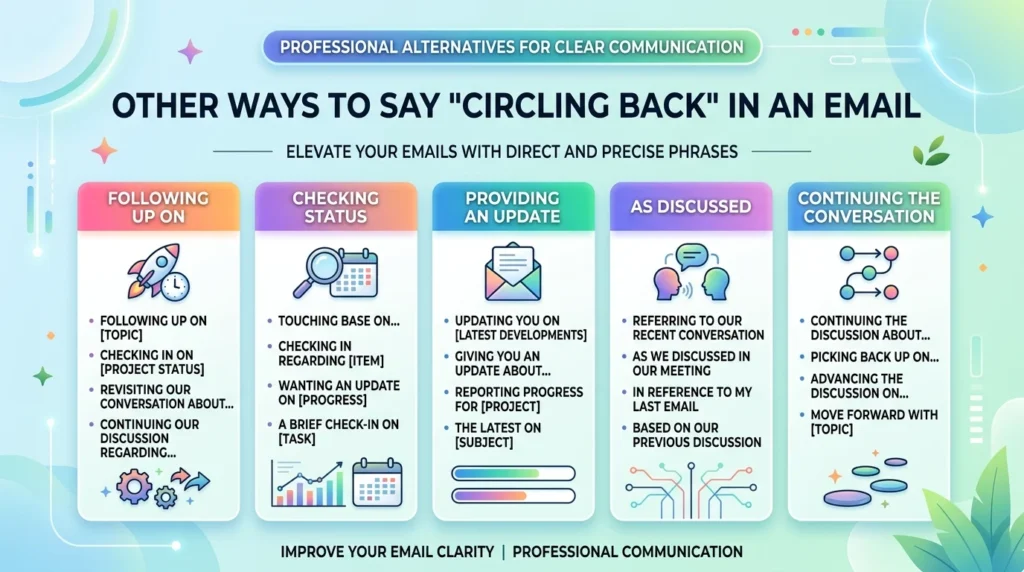
Many business professionals actively search for other ways to say circling back in an email because they want alternatives that sound more formal, more friendly, or more direct depending on the situation. The right phrase can improve response rates, strengthen workplace relationships,other ways to say circling back in an email, and make your emails easier to read.
In this guide, you’ll discover more than 45 other ways to say circling back in an email, including formal options, client-friendly alternatives, workplace phrases,other ways to say circling back in an email, and email examples you can start using immediately.
What Does “Circling Back” Mean?
The phrase circling back means returning to a previous topic,other ways to say circling back in an email, discussion, request, or email.
It is often used when:
- Following up on unanswered emails
- Requesting an update
- Revisiting a discussion
- Checking project status
- Continuing an earlier conversation
- Seeking clarification
Example
“I’m circling back regarding the proposal sent last week.”other ways to say circling back in an email,
In this example, the sender is revisiting an earlier discussion about a proposal.
Why Use Alternatives to “Circling Back”?
Although the phrase is widely accepted,other ways to say circling back in an email, there are several reasons people seek other ways to say circling back in an email.
It Sounds Repetitive
Using the same phrase repeatedly can make your emails feel formulaic.
It Can Feel Like Corporate Jargon
Some recipients view “circling back” as overused business language.
Different Situations Require Different Tones
A client email may require a different phrase than a friendly internal message.
Alternatives Can Improve Clarity
Simple phrases like “following up” often communicate the message more directly.
45 Other Ways to Say Circling Back in an Email
1. Following Up
Example
I’m following up regarding the marketing proposal.
Best For
Professional emails.
2. Checking In
Example
I’m checking in to see if there are any updates.
Best For
Friendly communication.
3. Touching Base
Example
I wanted to touch base regarding the project timeline.
Best For
Coworkers and clients.
4. Reaching Out Again
Example
I’m reaching out again regarding my previous email.
Best For
Second follow-ups.
5. Seeking an Update
Example
I’m seeking an update on the approval process.
Best For
Formal emails.
6. Requesting an Update
Example
I’d like to request an update regarding the application.
7. Revisiting This Topic
Example
I’d like to revisit this topic briefly.
8. Returning to This Matter
Example
I’m returning to this matter to check on progress.
9. Following Up on My Previous Email
Example
I’m following up on my previous email sent last Thursday.
10. Reconnecting Regarding
Example
I’m reconnecting regarding the project discussion.
11. Continuing Our Conversation
Example
I’m continuing our conversation about the upcoming launch.
12. Referring Back To
Example
I’m referring back to our earlier discussion.
13. Revisiting Our Discussion
Example
I’d like to revisit our discussion from last week.
14. Checking on the Status
Example
I’m checking on the status of the request.
15. Looking for an Update
Example
I’m looking for an update regarding the timeline.
16. Following Through
Example
I’m following through on our previous conversation.
17. Returning to Our Earlier Discussion
Example
I’m returning to our earlier discussion regarding the contract.
18. Checking Whether There Have Been Updates
Example
I’m checking whether there have been any updates.
19. Reopening the Conversation
Example
I’d like to reopen the conversation about the proposal.
20. Picking Up Where We Left Off
Example
Let’s pick up where we left off last month.
21. Revisiting the Matter
Example
I’m revisiting the matter to see if additional information is needed.
22. Following Up on Next Steps
Example
I’m following up on next steps for the project.
23. Continuing the Discussion
Example
I’d like to continue the discussion regarding implementation.
24. Reengaging on This Topic
Example
I’m reengaging on this topic to gather feedback.
25. Connecting Again
Example
I’m connecting again regarding our meeting request.
26. Returning to the Subject
Example
I’d like to return to the subject of onboarding.
27. Revisiting the Project
Example
I’m revisiting the project timeline.
28. Checking for Progress
Example
I’m checking for progress on the deliverables.
29. Following Up Regarding
Example
I’m following up regarding the invoice.
30. Reaching Out Regarding
Example
I’m reaching out regarding our previous correspondence.
Formal Alternatives to Say Circling Back
When writing executive-level emails or communicating with clients, these options sound more polished.
Further to My Earlier Email
Example:
Further to my earlier email, I would appreciate an update.
With Reference to Our Previous Correspondence
Example:
With reference to our previous correspondence, I wanted to inquire about the status.
Returning to the Matter Discussed
Example:
Returning to the matter discussed during our meeting.
Following Up on Outstanding Items
Example:
I’m following up on the outstanding items from last week’s meeting.
Revisiting the Subject for Clarification
Example:
I’m revisiting the subject for clarification.
Client-Friendly Alternatives
Clients generally respond best to language that is clear and courteous.
Just Checking In
Hope You’re Doing Well—Following Up On
Looking Forward to an Update
Checking on Progress
Reaching Out for an Update
Following Up on Our Conversation
Checking on Next Steps
Seeing If You Need Anything From Me
Touching Base About the Project
Following Up to Keep Things Moving
Email Templates
Template 1: Professional Follow-Up
Subject: Follow-Up on Project Timeline
Hello John,
I hope you’re doing well.
I’m following up regarding the project timeline discussed last week. I wanted to see if there have been any updates or if additional information is needed from my side.
I look forward to hearing from you.
Best regards,
Sarah
Template 2: Client Email
Subject: Checking In
Hi Michael,
I hope your week is going well.
I’m checking in regarding the proposal sent on June 2. Please let me know if you’ve had an opportunity to review it or if there are any questions I can answer.
Thank you for your time.
Best,
Emma
Template 3: Job Application Follow-Up
Subject: Follow-Up on Application
Dear Hiring Manager,
I hope you’re doing well.
I wanted to follow up on my application for the Marketing Coordinator position. I’m very interested in the opportunity and would appreciate any updates regarding the hiring process.
Thank you for your consideration.
Kind regards,
David
Common Mistakes to Avoid
When using other ways to say circling back in an email, avoid these common mistakes:
Being Too Aggressive
Never demand a response.
Following Up Too Frequently
Wait an appropriate amount of time.
Writing Long Follow-Up Emails
Keep messages concise.
Using Excessive Corporate Jargon
Choose simple language whenever possible.
Forgetting Context
Always remind the recipient what you’re following up about.
Conclusion
Learning other ways to say circling back in an email can significantly improve your professional communication. While circling back is a common workplace phrase, alternatives such as following up, checking in, touching base, seeking an update, revisiting our discussion, and reaching out again often sound clearer and more natural. By using a variety of these expressions, you can keep your emails professional, avoid repetition, and encourage more effective responses from colleagues, clients, and business contacts.