
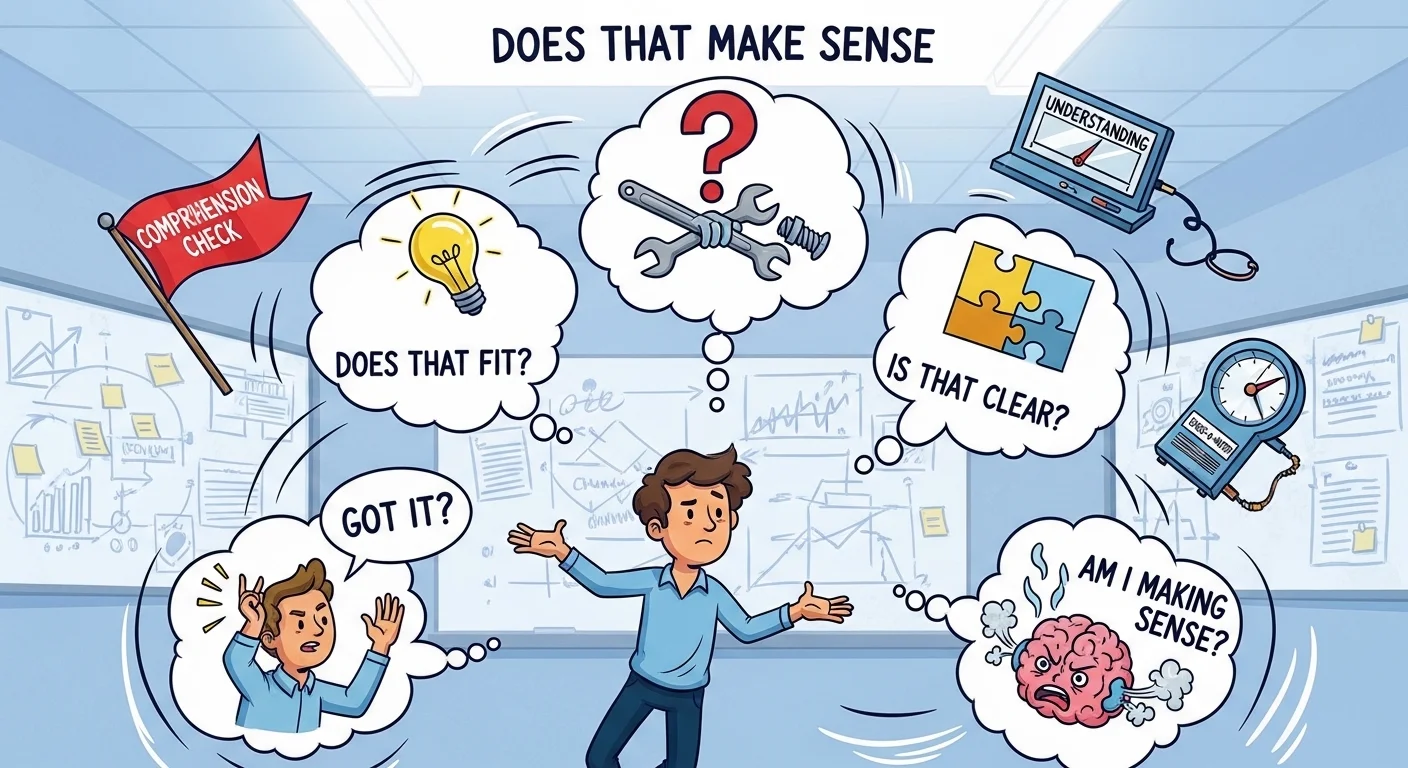
Other Ways to Say “Does That Make Sense?.“Does that make sense?” is a common phrase used to check if someone understands what you’re explaining. While widely recognized, using it repeatedly can make your speech or writing sound repetitive or less engaging. Using alternative expressions allows you to maintain clarity, politeness, and professionalism in your communication.
Whether in classrooms, workplace discussions, presentations, emails, or casual conversations, using varied ways to ask for understanding ensures your message is clear and your audience feels acknowledged.
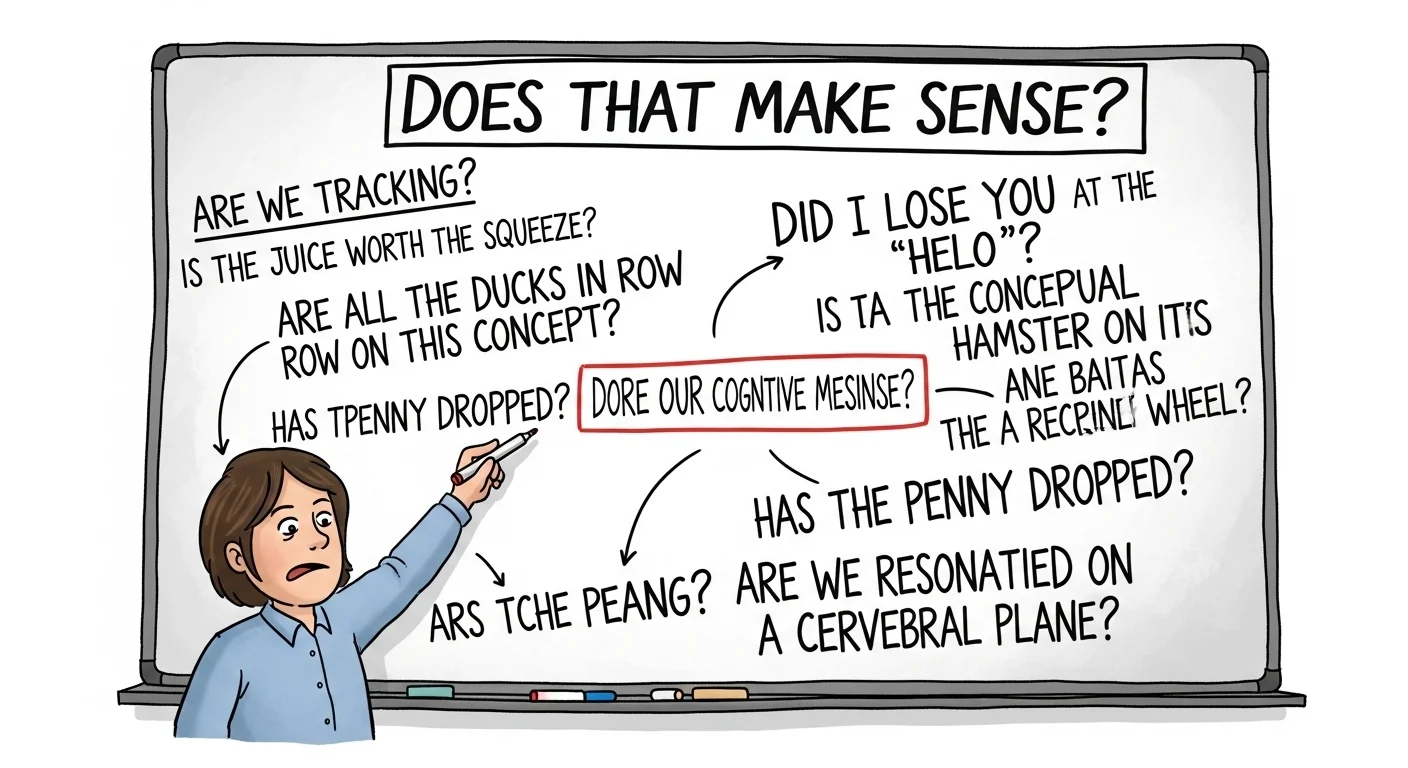
Polite & Conversational Alternatives
These are friendly, approachable ways to check for understanding.
👉 Do you follow me?
👉 Are you with me so far?
👉 Does that make sense to you?
👉 Are you following?
👉 Are you clear on this?
👉 Does that sound right?
👉 Am I making sense?
👉 Is that clear?
👉 Are you keeping up?
👉 Do you understand what I mean?
Example:
“I’ll need you to submit the report by Friday. Are you with me so far?”
Casual & Friendly Alternatives
Perfect for informal conversations with friends, colleagues, or teammates.
👉 You get what I mean?
👉 Does that click?
👉 Are you following along?
👉 You know what I mean?
👉 Got it?
👉 Everything clear?
👉 Makes sense, right?
👉 You feel me?
👉 You catching this?
👉 All good?
Example:
“So we’re meeting at 6 PM instead of 5. You feel me?”
“Yeah, got it!”
Professional & Workplace Alternatives
Suitable for presentations, meetings, emails, or training sessions.
👉 Is that understood?
👉 Can I clarify further?
👉 Are we aligned on this?
👉 Is this clear to everyone?
👉 Any questions so far?
👉 Shall I elaborate?
👉 Does everyone follow?
👉 Is that explanation sufficient?
👉 Do you need me to explain further?
👉 Are there any points that need clarification?
Example:
“I’ll review the quarterly targets with the team. Any questions so far?”
Short & Simple Alternatives
Quick, concise ways for chats, texts, or brief conversations.
👉 Clear?
👉 Got it?
👉 Makes sense?
👉 Right?
👉 You with me?
👉 Understand?
👉 All clear?
👉 Okay?
👉 You got this?
👉 Following?
Example:
“Submit the document by 5 PM. Clear?”
“Clear, thanks!”
Emphasizing Understanding Alternatives
Use these when you want to ensure comprehension and avoid confusion.
👉 Just to make sure we’re on the same page
👉 Let me know if this makes sense
👉 I want to be clear
👉 Confirm you’re following
👉 Let’s check understanding
👉 I hope that’s clear
👉 Do you need me to explain further?
👉 I want to ensure this is understood
👉 Are we on the same page?
👉 Can I clarify anything?
Example:
“We’ll integrate the new software next week. Just to make sure we’re on the same page, everyone understands the steps, right?”
When to Use Each Type
-
Polite & conversational → Friendly explanations, teaching, or informal meetings
-
Casual phrases → Chats, text messages, or social interactions
-
Professional alternatives → Workplace meetings, presentations, emails, or reports
-
Short phrases → Quick check-ins or brief updates
-
Emphasizing understanding → Clarifying complex points, ensuring alignment
Using the right tone ensures your audience feels acknowledged and your communication remains effective.
Why Use Alternatives Instead of “Does That Make Sense?”
Overusing “does that make sense?” can:
-
Sound repetitive in conversations or emails
-
Reduce engagement
-
Make explanations feel less dynamic
-
Come across as less polished in professional contexts
Alternatives keep your language fresh, friendly, or formal depending on your audience.
Practical Examples
Instead of:
“Does that make sense?”
Try:
“Just to make sure we’re on the same page, everyone understands, right?”
Instead of:
“Does that make sense to you?”
Try:
“Do you follow what I mean?”
Instead of:
“Does that make sense?”
Try:
“Can I clarify anything further?”
FAQs
Is “Does that make sense?” polite?
Yes, it is polite, but using alternatives like “Are we on the same page?” sounds more engaging and professional.
What is a casual alternative?
“You feel me?” or “Got it?” are suitable for informal conversations.
What is a professional alternative?
“Is this clear to everyone?” or “Do you need me to explain further?” works best in workplace settings.
Can I use short alternatives in chat or email?
Yes! Phrases like “Clear?” or “Following?” are quick, effective, and concise.
Conclusion
“Does that make sense?” is a familiar and useful phrase, but having a variety of alternatives enhances your communication, ensures clarity, and keeps your tone appropriate. Polite, casual, professional, short, and emphasis-focused alternatives allow you to check understanding effectively in any situation.
Switching up your phrasing makes your explanations more engaging, ensures alignment, and strengthens your conversational and professional skills