
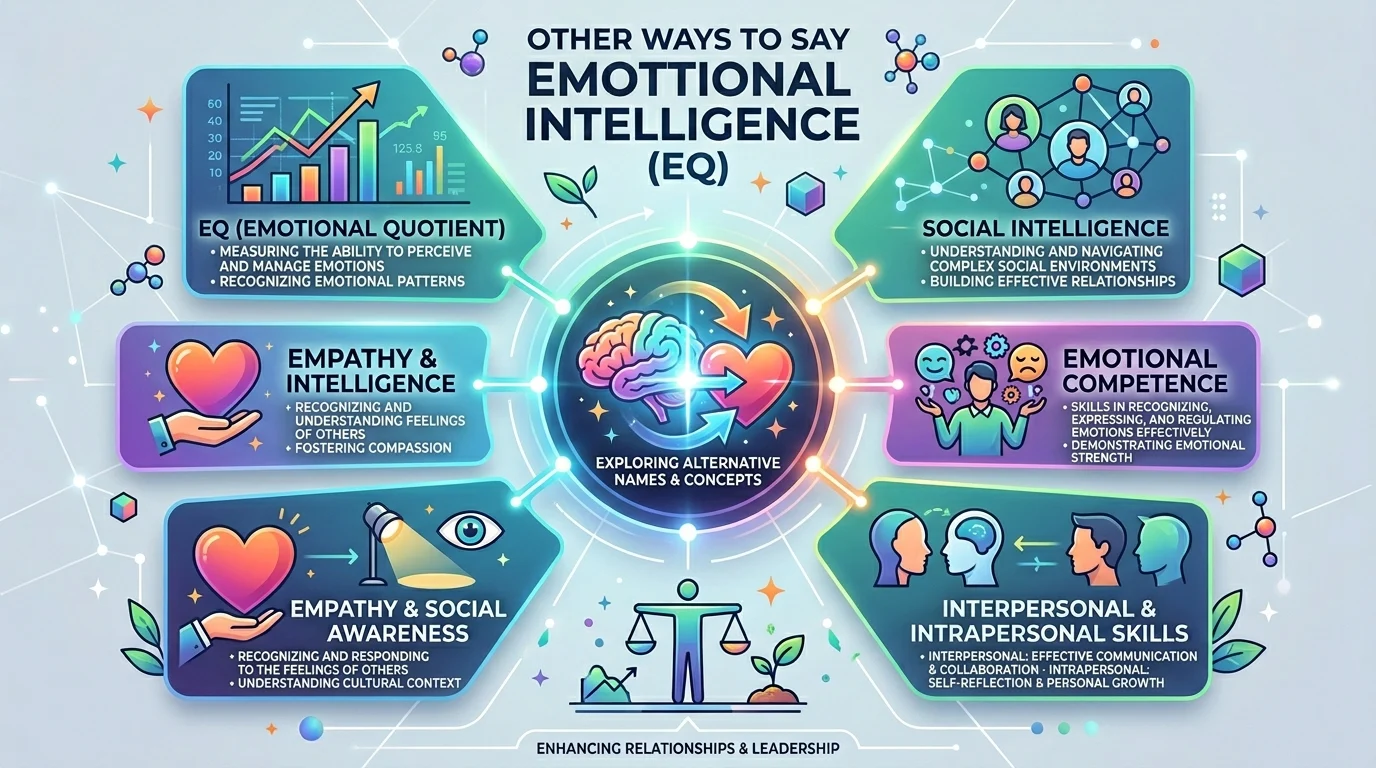
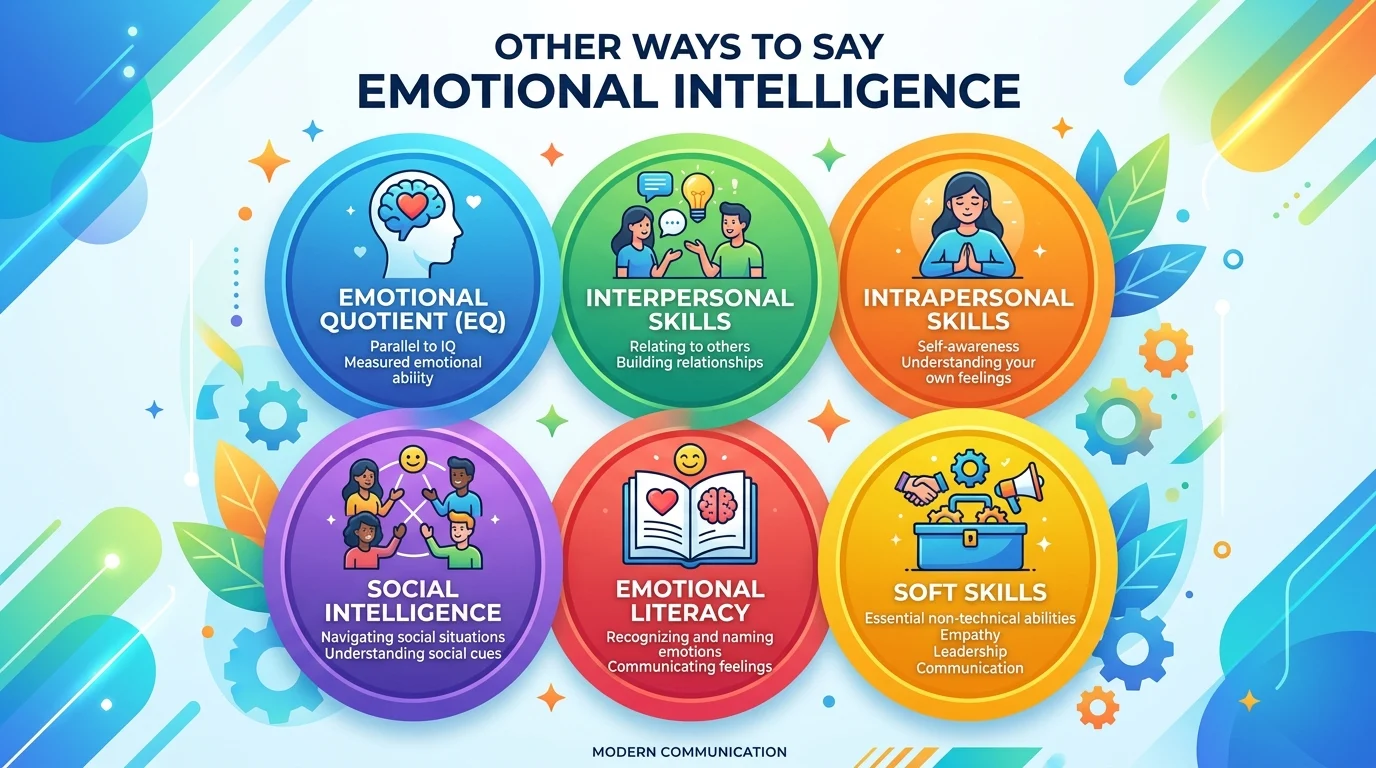
Other ways to say emotional intelligence can help you communicate more effectively in professional, academic, and personal settings. Emotional intelligence is one of the most valued qualities in modern workplaces because it helps people understand emotions, build strong relationships, manage conflicts, and make thoughtful decisions.
- What Does “Emotional Intelligence” Mean?
- Grammar Form
- Student-Friendly Definition
- Example Sentences
- When to Use “Emotional Intelligence”
- Workplace Communication
- Business English
- Academic Writing
- Resumes and Cover Letters
- Leadership Discussions
- Is “Emotional Intelligence” Professional?
- Formal
- Professional
- Friendly
- Workplace Tip
- Pros and Cons of Using “Emotional Intelligence”
- ✔ Pros
- ✘ Cons
- Quick Alternatives List
- Emotional Awareness
- Meaning
- Explanation
- Example Sentence
- Best Use
- Tone
- Similarity Score
- Emotional Maturity
- Meaning
- Explanation
- Example Sentence
- Best Use
- Tone
- Similarity Score
- Social Intelligence
- Meaning
- Explanation
- Example Sentence
- Best Use
- Tone
- Similarity Score
- People Skills
- Meaning
- Explanation
- Example Sentence
- Best Use
- Tone
- Similarity Score
- Empathy
- Meaning
- Explanation
- Example Sentence
- Best Use
- Tone
- Similarity Score
- Self-Awareness
- Meaning
- Explanation
- Example Sentence
- Best Use
- Tone
- Similarity Score
- Emotional Competence
- Meaning
- Example Sentence
- Tone
- Similarity Score
- Relationship Management
- Meaning
- Example Sentence
- Tone
- Similarity Score
- Emotional Wisdom
- Meaning
- Example Sentence
- Tone
- Similarity Score
- Interpersonal Intelligence
- Meaning
- Example Sentence
- Tone
- Similarity Score
- Mini Dialogue Examples
- Formal Dialogue
- Informal Dialogue
- Workplace Example
- Common Mistakes to Avoid
- Cultural & Tone Tips
- US English
- UK English
- Corporate Communication
- Resume Writing
- Comparison Table
- Frequently Asked Questions
- Is emotional intelligence a soft skill?
- What is the best professional alternative?
- What is the most resume-friendly option?
- Is empathy the same as emotional intelligence?
- What is the simplest alternative?
- What should beginners use?
- Conclusion
While the term other ways to say emotional intelligence is widely recognized, many writers, students, professionals, and job seekers look for other ways to say emotional intelligence to avoid repetition and improve their communication. Using different expressions can make your writing sound more natural, polished, and engaging.
Learning other ways to say emotional intelligence is especially useful in resumes, cover letters, performance reviews, leadership discussions, workplace communication, and academic writing. Some alternatives emphasize empathy, while others focus on self-awareness, interpersonal skills, or emotional maturity.
For example:
Professional: Strong interpersonal awareness
Friendly: Great people skills
Both are useful other ways to say emotional intelligence, but they fit different situations.
What Does “Emotional Intelligence” Mean?
Emotional intelligence refers to the ability to recognize, understand, manage, and respond to emotions effectively—both your own emotions and the emotions of others.
People often search for other ways to say emotional intelligence when writing resumes, LinkedIn profiles, workplace evaluations, leadership articles, or educational content.
Grammar Form
Noun phrase.
Student-Friendly Definition
The ability to understand feelings, manage emotions, and interact well with others.
Example Sentences
- Her emotional intelligence helped resolve the conflict quickly.
- Strong emotional intelligence is an important leadership skill.
When to Use “Emotional Intelligence”
Workplace Communication
Employers value emotional intelligence because it improves teamwork and leadership.
Business English
Professionals often use emotional intelligence when discussing management skills.
Academic Writing
Students may use emotional intelligence in psychology, education, and leadership topics.
Resumes and Cover Letters
Job seekers frequently highlight emotional intelligence as a soft skill.
Leadership Discussions
Managers often demonstrate emotional intelligence through empathy and communication.
Is “Emotional Intelligence” Professional?
Yes. Emotional intelligence is highly professional and widely respected.
Formal
Appropriate for business reports and academic writing.
Professional
Common in leadership and workplace communication.
Friendly
Can be replaced with simpler alternatives in casual conversations.
Workplace Tip
When writing a resume, using other ways to say emotional intelligence can make your skills section more varied and impactful.
Pros and Cons of Using “Emotional Intelligence”
✔ Pros
- Professional and respected
- Widely understood
- Valuable workplace skill
- Suitable for leadership discussions
- Positive reputation
✘ Cons
- Can become repetitive
- May sound corporate
- Sometimes overused in resumes
- Not always specific enough
Quick Alternatives List
- Emotional Awareness
- Emotional Insight
- Emotional Maturity
- Social Intelligence
- Interpersonal Awareness
- People Skills
- Empathy
- Self-Awareness
- Emotional Competence
- Emotional Wisdom
- Relationship Management
- Emotional Understanding
- Social Awareness
- Emotional Perception
- Human Understanding
- Emotional Sensitivity
- Self-Regulation
- Emotional Capability
- Interpersonal Intelligence
- Social Skills
Emotional Awareness
Meaning
The ability to recognize emotions.
Explanation
One of the closest other ways to say emotional intelligence because it focuses on understanding feelings.
Example Sentence
Her emotional awareness helped her respond calmly during a difficult conversation.
Best Use
Workplace and personal development.
Tone
Professional.
Similarity Score
10/10
Emotional Maturity
Meaning
The ability to handle emotions responsibly.
Explanation
A strong alternative among other ways to say emotional intelligence that emphasizes personal growth.
Example Sentence
His emotional maturity makes him an effective leader.
Best Use
Leadership and performance reviews.
Tone
Professional.
Similarity Score
9/10
Social Intelligence
Meaning
The ability to understand and interact with people effectively.
Explanation
One of the most common other ways to say emotional intelligence in workplace communication.
Example Sentence
Social intelligence is essential for building strong professional relationships.
Best Use
Business and leadership.
Tone
Professional.
Similarity Score
9/10
People Skills
Meaning
The ability to communicate and work well with others.
Explanation
A casual and widely understood alternative to emotional intelligence.
Example Sentence
She has excellent people skills and works well with clients.
Best Use
Casual conversations and resumes.
Tone
Friendly Professional.
Similarity Score
8/10
Empathy
Meaning
The ability to understand and share another person’s feelings.
Explanation
Empathy is one of the most important components of emotional intelligence.
Example Sentence
Empathy helped him support his team during challenging times.
Best Use
Leadership and teamwork.
Tone
Professional.
Similarity Score
8/10
Self-Awareness
Meaning
Understanding your own emotions and behaviors.
Explanation
A valuable alternative among other ways to say emotional intelligence.
Example Sentence
Self-awareness helps people make better decisions.
Best Use
Personal development.
Tone
Professional.
Similarity Score
8/10
Emotional Competence
Meaning
The ability to manage emotions effectively.
Example Sentence
Emotional competence is important for workplace success.
Tone
Professional.
Similarity Score
9/10
Relationship Management
Meaning
The ability to build and maintain positive relationships.
Example Sentence
Strong relationship management skills improved team performance.
Tone
Professional.
Similarity Score
8/10
Emotional Wisdom
Meaning
Using emotional understanding to make thoughtful decisions.
Example Sentence
Her emotional wisdom helped resolve disagreements peacefully.
Tone
Professional.
Similarity Score
8/10
Interpersonal Intelligence
Meaning
The ability to understand and work effectively with others.
Example Sentence
Interpersonal intelligence is a key trait of successful leaders.
Tone
Professional.
Similarity Score
8/10
Mini Dialogue Examples
Formal Dialogue
Manager:
What makes her such an effective leader?
Director:
Her emotional intelligence and strong interpersonal awareness help her connect with people.
Informal Dialogue
Friend:
Why does everyone enjoy working with him?
Friend:
He has great people skills and a lot of empathy.
Workplace Example
Performance Review:
Sarah consistently demonstrates emotional awareness, empathy, and strong relationship management skills when collaborating with team members.
Common Mistakes to Avoid
- Using emotional intelligence without examples.
- Confusing empathy with emotional intelligence.
- Overusing the term in resumes.
- Using vague descriptions.
- Ignoring context when choosing alternatives.
- Repeating the same phrase throughout a document.
Cultural & Tone Tips
US English
People skills and emotional intelligence are common workplace terms.
UK English
Emotional awareness and interpersonal skills are often used.
Corporate Communication
Emotional intelligence and relationship management sound highly professional.
Resume Writing
Using several alternatives creates a stronger impression.
Comparison Table
| Phrase | Tone | Best Context | Professional Level | Example |
|---|---|---|---|---|
| Emotional Awareness | Professional | Workplace | High | Emotional awareness improves communication. |
| Emotional Maturity | Professional | Leadership | High | Emotional maturity is important for managers. |
| Social Intelligence | Professional | Business | High | Social intelligence helps build relationships. |
| People Skills | Friendly | Resumes | Medium | She has excellent people skills. |
| Empathy | Professional | Teamwork | High | Empathy strengthens collaboration. |
| Self-Awareness | Professional | Development | High | Self-awareness improves decision-making. |
| Relationship Management | Professional | Leadership | High | Strong relationship management is valuable. |
Frequently Asked Questions
Is emotional intelligence a soft skill?
Yes. Emotional intelligence is considered one of the most important soft skills.
What is the best professional alternative?
Emotional awareness is one of the strongest alternatives.
What is the most resume-friendly option?
Interpersonal skills or relationship management.
Is empathy the same as emotional intelligence?
No. Empathy is one part of emotional intelligence.
What is the simplest alternative?
People skills.
What should beginners use?
Emotional awareness or people skills are easy to understand.
Conclusion
Learning other ways to say emotional intelligence can help you communicate more effectively in professional and personal situations. While emotional intelligence remains a valuable term, alternatives such as emotional awareness, emotional maturity, social intelligence, empathy, and relationship management can add variety and precision to your writing. Choosing the right expression allows you to describe communication skills, leadership abilities, and interpersonal strengths more clearly and confidently.