

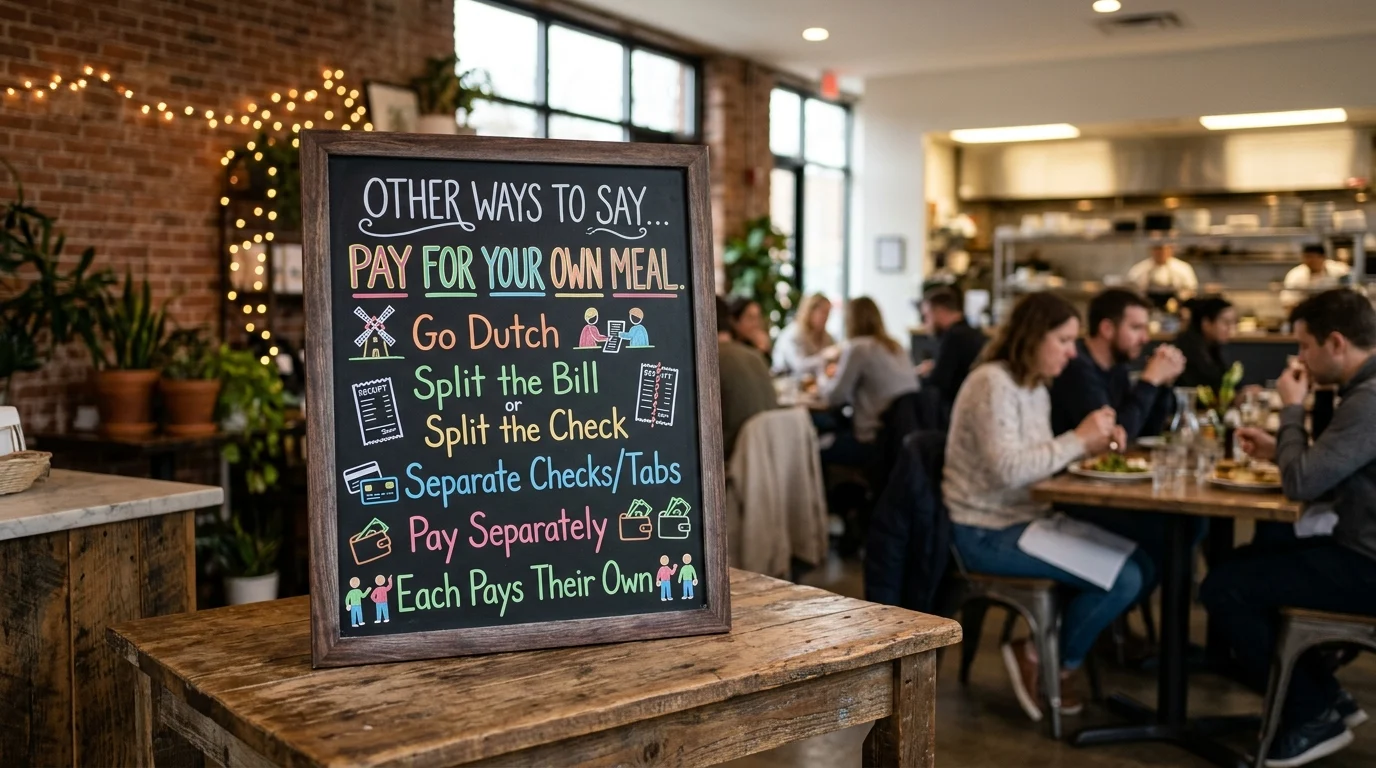
The phrase “other ways to say pay for your own meal” is commonly used when individuals are expected to cover the cost of their food rather than having someone else pay for them. Whether you’re organizing a business lunch, planning a group dinner, hosting a social event, or sending invitations, knowing other ways to say pay for your own meal can help you communicate expectations clearly and politely.
- What Does “Pay for Your Own Meal” Mean?
- Grammar Form
- Student-Friendly Definition
- Example Sentences
- When to Use “Pay for Your Own Meal”
- Social Gatherings
- Business Events
- Networking Events
- Group Outings
- Informal Invitations
- Is “Pay for Your Own Meal” Polite or Professional?
- Formal
- Neutral
- Casual
- Etiquette Tip
- Pros and Cons of Using “Pay for Your Own Meal”
- ✔ Pros
- ✘ Cons
- Quick Alternatives List
- Everyone Pays Their Own Way
- Meaning
- Explanation
- Grammar Note
- Example Sentence
- Best Use
- Worst Use
- Tone
- Level
- Similarity Score
- Replaceability Tip
- Each Guest Covers Their Own Meal
- Meaning
- Explanation
- Example Sentence
- Best Use
- Tone
- Level
- Similarity Score
- Meals Will Be at Attendees' Expense
- Meaning
- Explanation
- Example Sentence
- Best Use
- Tone
- Level
- Similarity Score
- Guests Are Responsible for Their Own Meals
- Meaning
- Explanation
- Example Sentence
- Best Use
- Tone
- Similarity Score
- Everyone Covers Their Own Expenses
- Meaning
- Explanation
- Example Sentence
- Best Use
- Tone
- Similarity Score
- Separate Checks Will Be Available
- Meaning
- Explanation
- Example Sentence
- Best Use
- Tone
- Similarity Score
- We Will Each Cover Our Own Meal
- Meaning
- Explanation
- Example Sentence
- Best Use
- Tone
- Similarity Score
- Attendees Pay Individually
- Meaning
- Example Sentence
- Tone
- Similarity Score
- Dutch Treat
- Meaning
- Explanation
- Example Sentence
- Best Use
- Tone
- Similarity Score
- Individual Meal Costs Apply
- Meaning
- Example Sentence
- Tone
- Similarity Score
- Mini Dialogue Examples
- Formal Dialogue
- Informal Dialogue
- Business Email Example
- Mistakes to Avoid
- Cultural & Tone Tips
- US English
- UK English
- Professional Settings
- Social Events
- Comparison Table
- Frequently Asked Questions
- Is “pay for your own meal” rude?
- What is the most professional alternative?
- What is the most formal alternative?
- What is the friendliest alternative?
- Can I use these phrases in invitations?
- What should beginners use?
- Conclusion
Many people feel uncomfortable directly telling guests to other ways to say pay for your own meal because it may sound blunt or awkward. That is why learning other ways to say pay for your own meal is valuable. Different alternatives can make invitations sound friendlier, more professional, and more considerate.
Using other ways to say pay for your own meal is especially helpful in event planning, workplace gatherings, family celebrations, networking events, and casual meetups. Some expressions sound formal and professional, other ways to say pay for your own meal,while others are relaxed and conversational.
For example:
Formal: Meals will be at attendees’ expense.
Casual: Everyone pays their own way.
Both are effective other ways to say pay for your own meal, but they suit different situations.
What Does “Pay for Your Own Meal” Mean?
The phrase “other ways to say pay for your own meal” means that each person is responsible for covering the cost of their own food and drinks rather than having the host, organizer, or another individual pay for them.
People often search for other ways to say pay for your own meal when writing invitations, event notices, dinner plans, or professional communications.
Grammar Form
Verb phrase.
Student-Friendly Definition
A statement that means each person pays for the food they order.
Example Sentences
- Guests will need to pay for their own meal.
- Everyone will pay for their own meal at the restaurant.
When to Use “Pay for Your Own Meal”
Social Gatherings
When friends meet for lunch or dinner.
Business Events
When companies are not covering meal expenses.
Networking Events
When attendees are responsible for their own costs.
Group Outings
When everyone contributes individually.
Informal Invitations
When hosts want to clarify payment expectations.
Is “Pay for Your Own Meal” Polite or Professional?
The phrase itself is clear, but it can sometimes sound direct. That is why many people prefer other ways to say pay for your own meal that sound softer and more welcoming.
Formal
- Meals will be at attendees’ expense.
- Each guest will be responsible for their own meal.
Neutral
- Everyone pays for their own meal.
- Individual meal costs apply.
Casual
- Everyone pays their own way.
- We’ll each cover our own meal.
Etiquette Tip
For invitations, using polite other ways to say pay for your own meal helps avoid misunderstandings while maintaining a friendly tone.
Pros and Cons of Using “Pay for Your Own Meal”
✔ Pros
- Clear and direct
- Easy to understand
- Avoids confusion
- Sets expectations early
- Suitable for many situations
✘ Cons
- Can sound blunt
- May feel awkward in invitations
- Less professional in formal settings
- Sometimes lacks warmth
Quick Alternatives List
- Everyone pays their own way
- Each guest covers their own meal
- Meals will be self-funded
- Individual meal costs apply
- Dutch treat
- Pay-as-you-go dining
- Meals are not provided
- Guests are responsible for their own meals
- Everyone covers their own expenses
- Attendees pay individually
- Separate checks will be available
- Meals will be at your expense
- Self-paid meal arrangement
- Each person pays separately
- Food costs are not included
- Everyone settles their own bill
- Guests will pay individually
- We will each cover our own meal
- Bring your own budget
- Meals are attendee-funded
Everyone Pays Their Own Way
Meaning
Each person pays for their own expenses.
Explanation
One of the most common other ways to say pay for your own meal in casual situations.
Grammar Note
Idiomatic phrase.
Example Sentence
For dinner, everyone pays their own way.
Best Use
Friends, casual gatherings.
Worst Use
Formal corporate invitations.
Tone
Friendly.
Level
Beginner.
Similarity Score
10/10
Replaceability Tip
Use this phrase when planning informal group outings.
Each Guest Covers Their Own Meal
Meaning
Every guest pays for their own food.
Explanation
A polite and professional alternative among other ways to say pay for your own meal.
Example Sentence
Each guest covers their own meal during the event.
Best Use
Invitations and announcements.
Tone
Professional.
Level
Beginner.
Similarity Score
10/10
Meals Will Be at Attendees’ Expense
Meaning
Participants are responsible for meal costs.
Explanation
One of the most formal other ways to say pay for your own meal.
Example Sentence
Meals will be at attendees’ expense throughout the conference.
Best Use
Business events.
Tone
Formal.
Level
Advanced.
Similarity Score
9/10
Guests Are Responsible for Their Own Meals
Meaning
Guests pay for their own food.
Explanation
A clear and professional phrase often used in event planning.
Example Sentence
Guests are responsible for their own meals during the excursion.
Best Use
Professional invitations.
Tone
Professional.
Similarity Score
9/10
Everyone Covers Their Own Expenses
Meaning
Each person pays their own costs.
Explanation
A broader alternative that includes meals and related expenses.
Example Sentence
Everyone covers their own expenses during the trip.
Best Use
Travel and group activities.
Tone
Neutral.
Similarity Score
8/10

Separate Checks Will Be Available
Meaning
Each diner receives an individual bill.
Explanation
A restaurant-friendly alternative to pay for your own meal.
Example Sentence
Separate checks will be available upon request.
Best Use
Restaurant events.
Tone
Professional.
Similarity Score
8/10
We Will Each Cover Our Own Meal
Meaning
Everyone pays individually.
Explanation
A friendly and collaborative option.
Example Sentence
We will each cover our own meal at lunch.
Best Use
Friends and coworkers.
Tone
Friendly.
Similarity Score
9/10
Attendees Pay Individually
Meaning
Each attendee handles their own payment.
Example Sentence
Attendees pay individually for meals and refreshments.
Tone
Professional.
Similarity Score
8/10
Dutch Treat
Meaning
Everyone pays for themselves.
Explanation
A traditional expression often used in casual English.
Example Sentence
Let’s make it a Dutch treat lunch.
Best Use
Informal conversations.
Tone
Casual.
Similarity Score
8/10
Individual Meal Costs Apply
Meaning
Meal expenses are charged separately.
Example Sentence
Individual meal costs apply during the event.
Tone
Professional.
Similarity Score
8/10
Mini Dialogue Examples
Formal Dialogue
Organizer:
Will lunch be included?
Coordinator:
No, meals will be at attendees’ expense.
Informal Dialogue
Friend:
Who’s paying for dinner?
Friend:
Everyone pays their own way.
Business Email Example
Subject: Networking Lunch Details
Dear Attendees,
Thank you for registering for the networking lunch. Please note that each guest will cover their own meal. Separate checks will be available at the restaurant.
Best regards,
Event Coordinator
Mistakes to Avoid
- Sounding too direct or demanding.
- Forgetting to mention payment expectations.
- Using informal phrases in formal invitations.
- Waiting until the last minute to clarify costs.
- Assuming guests understand the arrangement.
- Using unclear wording.
- Mixing formal and casual language.
Cultural & Tone Tips
US English
“Everyone pays their own way” is very common.
UK English
“Dutch treat” is understood but less frequently used.
Professional Settings
“Each guest covers their own meal” sounds more polished.
Social Events
Friendly alternatives work best.
Comparison Table
| Phrase | Tone | Best Context | Professional Level | Example |
|---|---|---|---|---|
| Everyone Pays Their Own Way | Casual | Friends | Medium | Everyone pays their own way. |
| Each Guest Covers Their Own Meal | Professional | Invitations | High | Each guest covers their own meal. |
| Meals Will Be at Attendees’ Expense | Formal | Conferences | High | Meals will be at attendees’ expense. |
| Guests Are Responsible for Their Own Meals | Professional | Events | High | Guests are responsible for their own meals. |
| Separate Checks Will Be Available | Professional | Restaurants | High | Separate checks will be available. |
| Dutch Treat | Casual | Informal Gatherings | Medium | Let’s make it Dutch treat. |
| We Will Each Cover Our Own Meal | Friendly | Coworkers | Medium | We’ll each cover our own meal. |
Frequently Asked Questions
Is “pay for your own meal” rude?
No, but it can sound direct. Softer alternatives are often preferred.
What is the most professional alternative?
“Each guest covers their own meal.”
What is the most formal alternative?
“Meals will be at attendees’ expense.”
What is the friendliest alternative?
“Everyone pays their own way.”
Can I use these phrases in invitations?
Yes, they are commonly used in invitations and event notices.
What should beginners use?
“Each guest covers their own meal” is simple and professional.
Conclusion
Learning other ways to say pay for your own meal can help you communicate payment expectations politely and professionally. While pay for your own meal is clear, alternatives such as everyone pays their own way, each guest covers their own meal, and meals will be at attendees’ expense can make invitations and announcements sound more polished. By choosing the right phrase for your audience, you can avoid confusion and maintain a friendly, respectful tone.