

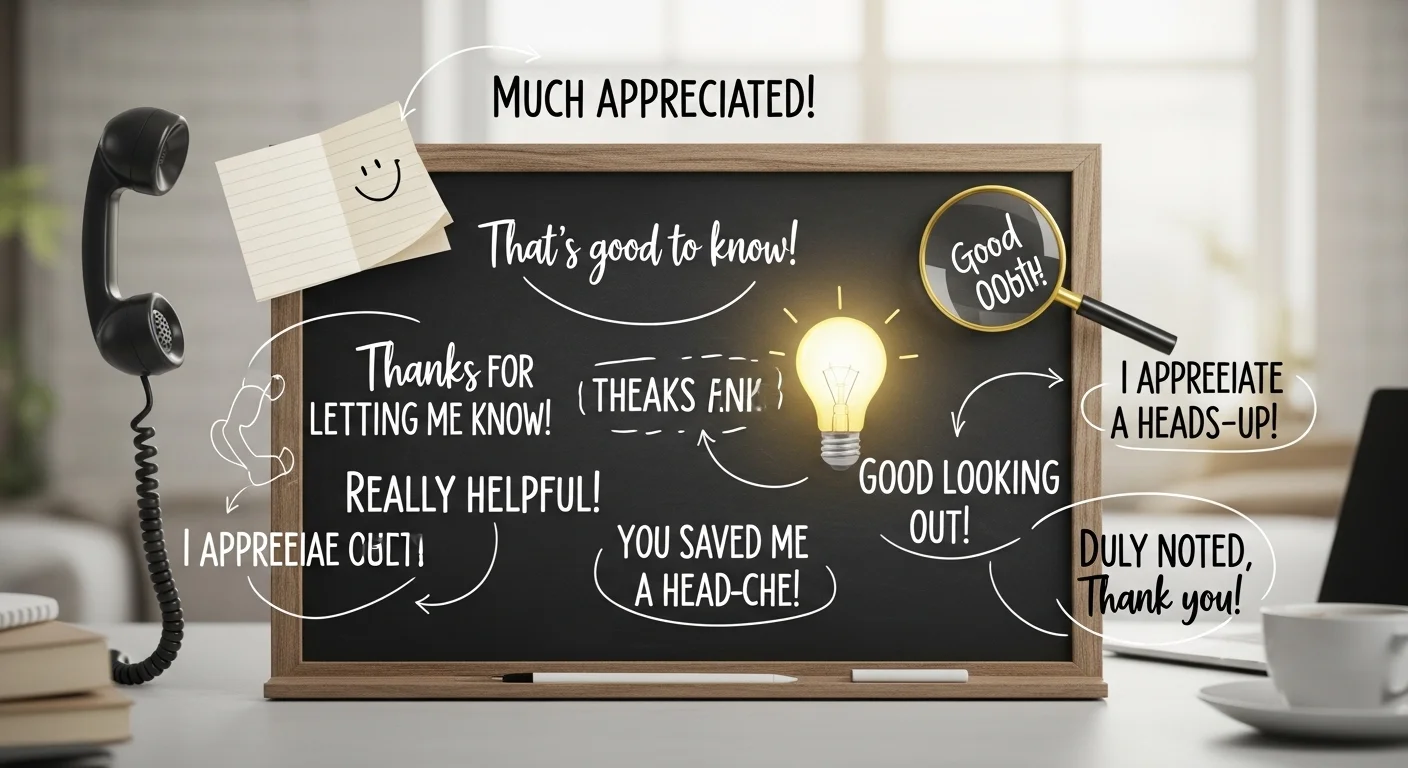
Other Ways to Say Thanks for the Heads Up.In everyday communication — especially emails, workplace chats, and professional conversations — the phrase “thanks for the heads up” is commonly used to show appreciation when someone informs you about something in advance.
While it sounds friendly and natural, repeating it too often can make your communication feel limited. If you want to sound more professional, polished, or situation-appropriate, learning better alternatives is a smart move.
In this complete guide, you’ll discover 60 powerful alternatives categorized by tone — professional, polite, casual, and formal — along with examples to help you use them correctly.
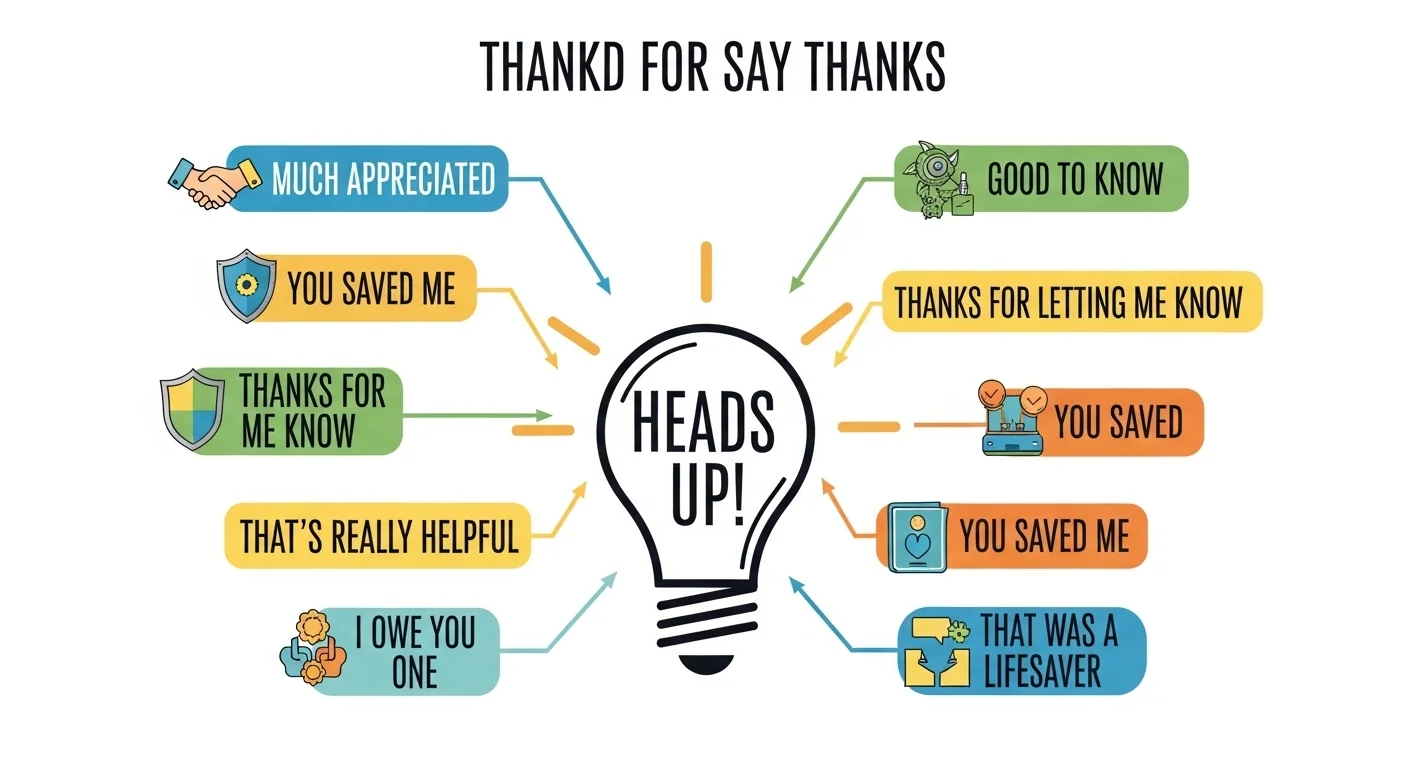
What Does “Thanks for the Heads Up” Mean?
The phrase means thank you for informing me in advance or thank you for the warning/information. It is often used when someone alerts you about:
-
A schedule change
-
A potential problem
-
An upcoming deadline
-
A delay or issue
-
Important information
Why Use Alternatives?
👉 It improves your professional tone.
👉 It prevents repetition in emails.
👉 It helps match tone with context.
👉 It makes your communication more polished.
👉 It shows emotional intelligence in conversations.
Professional & Workplace Alternatives
These are best for office emails, managers, clients, and formal communication.
👉 Thank you for the update.
👉 I appreciate the advance notice.
👉 Thank you for informing me.
👉 I appreciate you letting me know.
👉 Thank you for bringing this to my attention.
👉 I’m grateful for the early notice.
👉 Thank you for the information.
👉 Much appreciated for the update.
👉 I appreciate the clarification.
👉 Thank you for the reminder.
👉 Thanks for the timely update.
👉 I value the early notification.
👉 Appreciate the proactive communication.
👉 Thank you for flagging this.
👉 I appreciate you highlighting this.
Example:
“Thank you for bringing this to my attention. I’ll review it right away.”
Polite & Friendly Alternatives
Perfect for colleagues and semi-formal communication.
👉 Thanks for letting me know.
👉 I appreciate the heads-up.
👉 Thanks for the quick update.
👉 I’m glad you informed me.
👉 Thanks for the alert.
👉 Appreciate you keeping me posted.
👉 Thanks for the notice.
👉 Thanks for the information.
👉 I’m grateful you mentioned this.
👉 Thanks for pointing that out.
Example:
“Thanks for the quick update — I’ll adjust my schedule accordingly.”
Casual Alternatives (Chats & Informal Use)
Use these in friendly conversations or team chats.
👉 Good looking out!
👉 Thanks for the tip.
👉 Appreciate it!
👉 Got it, thanks!
👉 Nice catch, thanks!
👉 Thanks for the warning.
👉 Thanks for the shout.
👉 That helps, thanks!
👉 Glad you told me.
👉 Thanks for the early notice!
Example:
“Good looking out! I almost missed that deadline.”
More Formal Alternatives (Corporate Tone)
These are ideal for senior management or official emails.
👉 Your notification is appreciated.
👉 I appreciate your prompt communication.
👉 Thank you for the advance information.
👉 Your update is greatly appreciated.
👉 Thank you for the early advisory.
👉 I acknowledge receipt of your update.
👉 Thank you for your proactive approach.
👉 I appreciate the timely notice.
👉 Thank you for the prior notification.
👉 Your communication is much appreciated.
Example:
“I appreciate your prompt communication regarding the schedule adjustment.”
When Should You Use Each Type?
-
Use formal alternatives when emailing clients or senior staff.
-
Use professional alternatives in regular workplace emails.
-
Use friendly phrases for coworkers.
-
Use casual phrases in chats or informal talks.
Choosing the right tone makes you sound emotionally aware and professionally skilled.
Common Mistakes to Avoid
-
❌ Using casual phrases in formal emails.
-
❌ Overusing the same phrase repeatedly.
-
❌ Sounding too robotic in friendly conversations.
-
❌ Not acknowledging important updates properly.
Conclusion
“Thanks for the heads up” is a useful and friendly phrase, but upgrading your vocabulary gives you more control over tone and professionalism. Whether you are writing a corporate email or replying in a team chat, using the right alternative improves clarity and strengthens relationships.
Small language improvements can create a big professional impact.
Frequently Asked Questions
Is “thanks for the heads up” professional?
It is semi-professional and suitable for casual workplace communication. For formal emails, consider more polished alternatives.
What is a more formal way to say thanks for the heads up?
You can say “I appreciate the advance notice” or “Thank you for bringing this to my attention.”
Can I use it in client emails?
It’s better to use formal alternatives when communicating with clients or senior management.
What is the best alternative in professional emails?
“Thank you for the update” or “I appreciate your prompt communication” works well.