
Other Ways to Say “Pros and Cons”.The phrase “Pros and Cons” is commonly used to discuss the advantages and disadvantages of something. While it’s simple and widely understood, using varied alternatives can make your writing, presentations, or discussions more professional and precise.
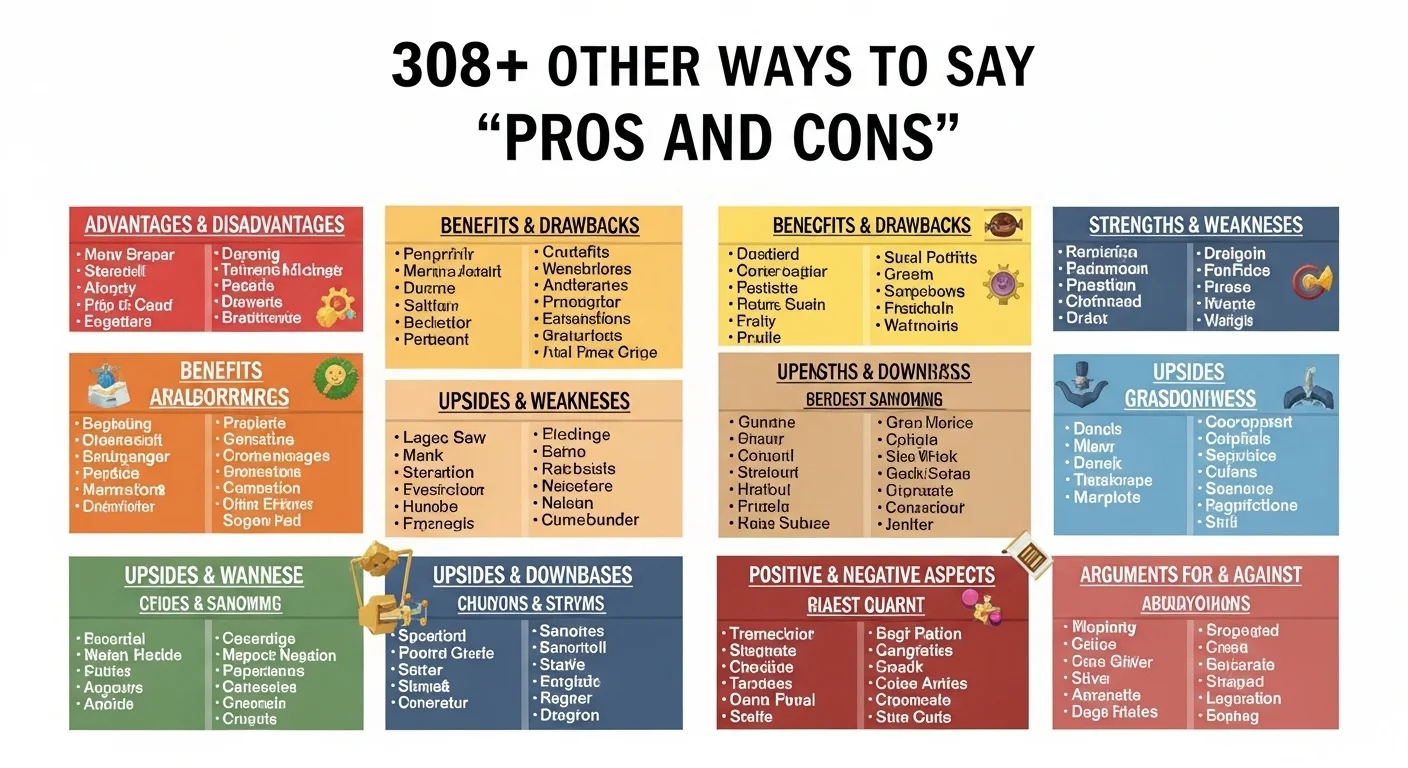
Here are 308+ ways to say “Pros and Cons” naturally in different contexts — professional, academic, and casual.
Why Using Alternatives Matters
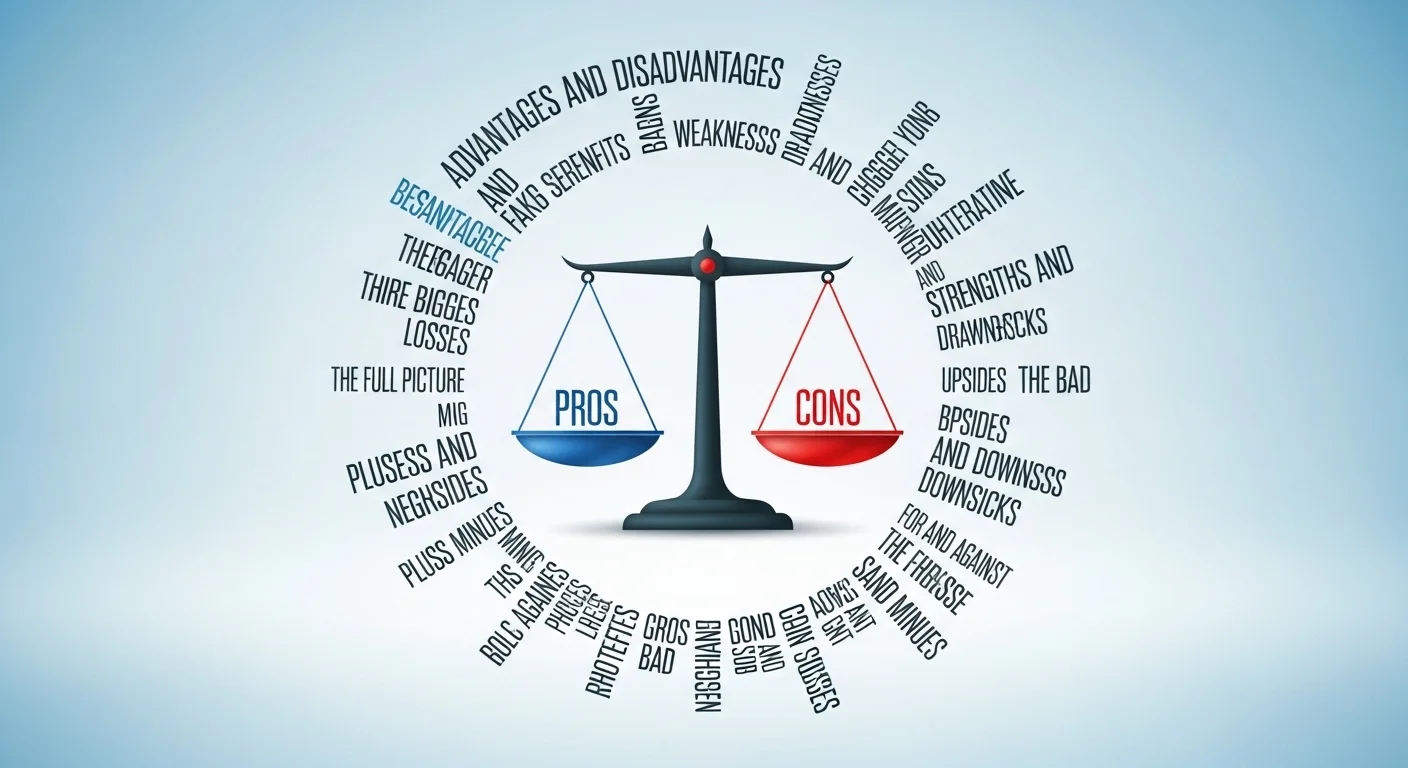
Relying solely on “Pros and Cons” can make your communication repetitive or generic. Using alternatives:
👉 Makes your writing and speech sound more professional
👉 Helps explain advantages and disadvantages clearly
👉 Provides variety in academic papers, business reports, and presentations
👉 Allows nuanced discussion of benefits and drawbacks
Whether in emails, essays, reports, or team meetings, alternatives help your ideas come across more effectively.
Professional & Business Alternatives
These phrases are perfect for workplace communication, presentations, and reports.
👉 Advantages and disadvantages
👉 Benefits and drawbacks
👉 Strengths and weaknesses
👉 Gains and losses
👉 Positives and negatives
👉 Upsides and downsides
👉 Opportunities and challenges
👉 Pluses and minuses
👉 Assets and liabilities
👉 Merits and demerits
👉 Value and limitations
👉 Rewards and risks
👉 Good points and bad points
Academic & Analytical Alternatives
Use these for essays, research papers, or structured analysis.
👉 Strengths versus weaknesses
👉 Favorable and unfavorable aspects
👉 Supporting points and counterpoints
👉 Positive and negative outcomes
👉 Advantages versus disadvantages
👉 Prospective gains and potential losses
👉 Benefits versus costs
👉 Positive factors and negative factors
👉 Favorable factors and constraints
👉 Prospective benefits and challenges
Casual & Everyday Alternatives
Use these in informal discussions, team chats, or casual planning.
👉 Pluses and minuses
👉 Good and bad points
👉 Upsides and downsides
👉 Wins and losses
👉 Benefits and limitations
👉 Positive sides and negative sides
👉 What works and what doesn’t
👉 Good things and bad things
👉 Highlights and lowlights
👉 Advantages and setbacks
How to Make It More Effective
When replacing “Pros and Cons,” consider context and audience:
👉 Use formal alternatives like “Advantages and Disadvantages” in business reports
👉 Academic essays prefer “Strengths and Weaknesses” or “Merits and Demerits”
👉 Informal chats can use “Upsides and Downsides” or “Pluses and Minuses”
👉 For presentations, visual clarity helps — e.g., “Benefits vs. Drawbacks” in bullet points
Adding context ensures your audience understands the evaluation clearly.
Common Mistakes to Avoid
👉 Using “Pros and Cons” too often without variety
👉 Choosing casual alternatives in formal writing
👉 Mixing formal and casual terms inconsistently
👉 Forgetting to clarify which side is positive or negative
👉 Not matching terms with the audience’s expectations
Example Usage
Business Presentation:
“Let’s examine the advantages and disadvantages of this marketing strategy.”
Academic Paper:
“This study evaluates the strengths and weaknesses of remote learning models.”
Team Chat:
“Let’s list the upsides and downsides of working on this project remotely.”
Casual Discussion:
“Before buying the new laptop, let’s consider the good and bad points.”
Conclusion
While “Pros and Cons” is clear and widely understood, using other ways to say ‘Pros and Cons’ adds variety, professionalism, and clarity.
Choosing the right alternative depending on context — business, academic, or casual — makes your analysis more precise and effective. Variety in language strengthens communication, whether in writing, presentations, or discussions.
Frequently Asked Questions
Is “Pros and Cons” formal enough for business writing?
It’s understood, but alternatives like “Advantages and Disadvantages” or “Benefits and Drawbacks” sound more professional.
What is a casual alternative?
“Upsides and downsides” or “Pluses and minuses” works well in informal conversations.
Can I use it in academic papers?
Yes, prefer “Strengths and Weaknesses” or “Merits and Demerits” for research and essays.
Are playful alternatives appropriate?
No, keep them for informal chats; professional and academic settings require precise terms.