
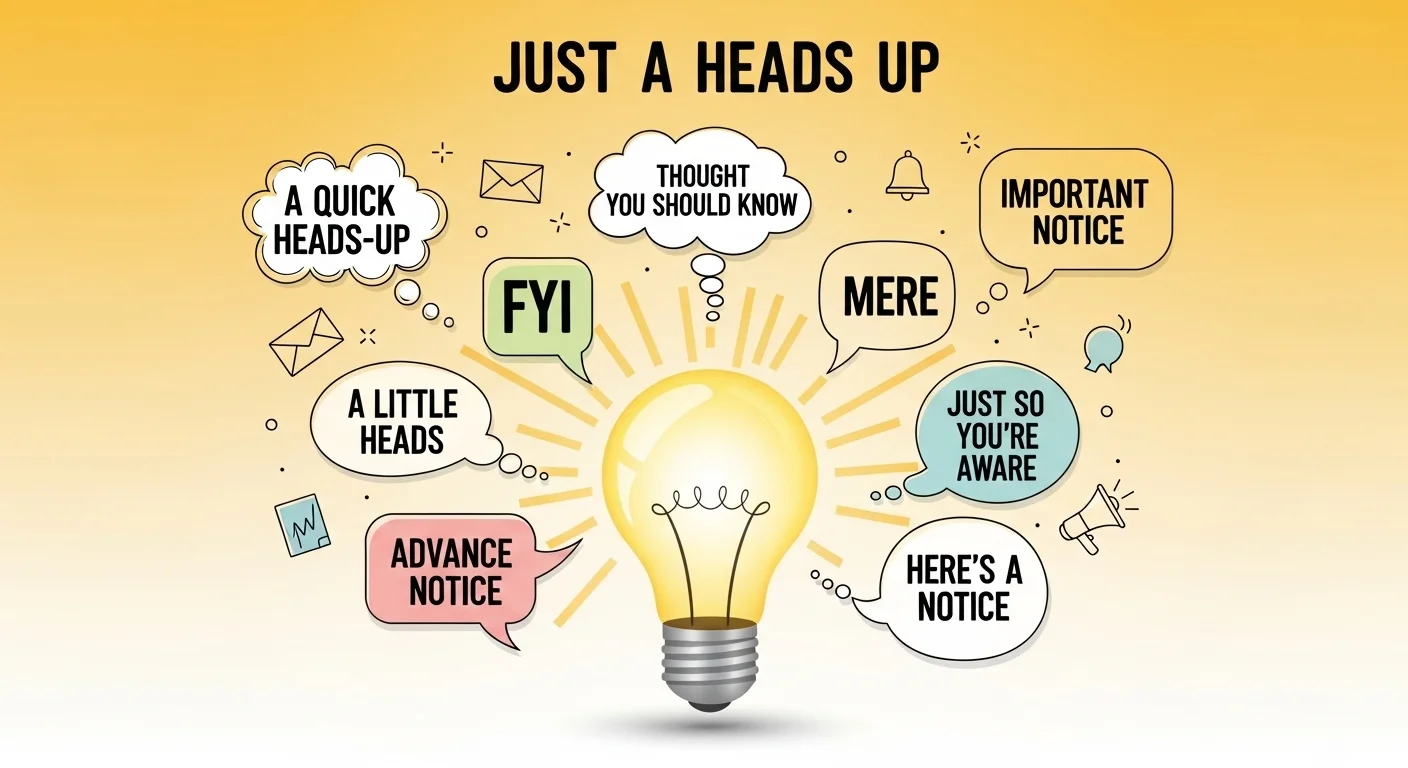
Other Ways to Say Just a Heads Up.The phrase “just a heads up” is common in everyday English. People use it to give early notice or a small warning. It sounds friendly and relaxed. But it is not always the best choice.
- What Does “Just a Heads Up” Mean?
- When to Use “Just a Heads Up”
- Spoken English
- Business English
- Emails / Messages
- Social Media
- Academic Writing
- Professional Meetings
- Is “Just a Heads Up” Polite or Professional?
- Pros & Cons of Using “Just a Heads Up”
- Quick Alternatives List (For Busy Readers)
- Please Note
- Kindly Be Advised
- For Your Information
- I Wanted to Let You Know
- As a Reminder
- Please Be Aware
- Just So You Know
- This Is to Notify You
- Keep in Mind
- I Thought You Should Know
- Mini Dialogue Examples
- Formal Conversation
- Informal Conversation
- Business Email Example
- Common Mistakes to Avoid
- Cultural & Tone Tips
- Comparison Table
- Frequently Asked Questions
- Is “just a heads up” rude?
- Is it okay in emails?
- What is the most formal alternative?
- What is the safest professional option?
- Can beginners use it?
- Should I use it in academic writing?
- Conclusion
In business emails, academic writing, or professional meetings, tone matters. The words you choose can make you sound confident, polite, or careless. Strong vocabulary improves clarity. It also shows emotional intelligence.
Using varied expressions helps you avoid repetition. It makes your English smoother and more natural.
For example:
Informal: Just a heads up, the meeting moved to 3 PM.
Formal: Please note that the meeting has been rescheduled to 3 PM.
Both sentences share the same meaning. But the tone feels very different.
Let’s explore better alternatives you can use in every situation.
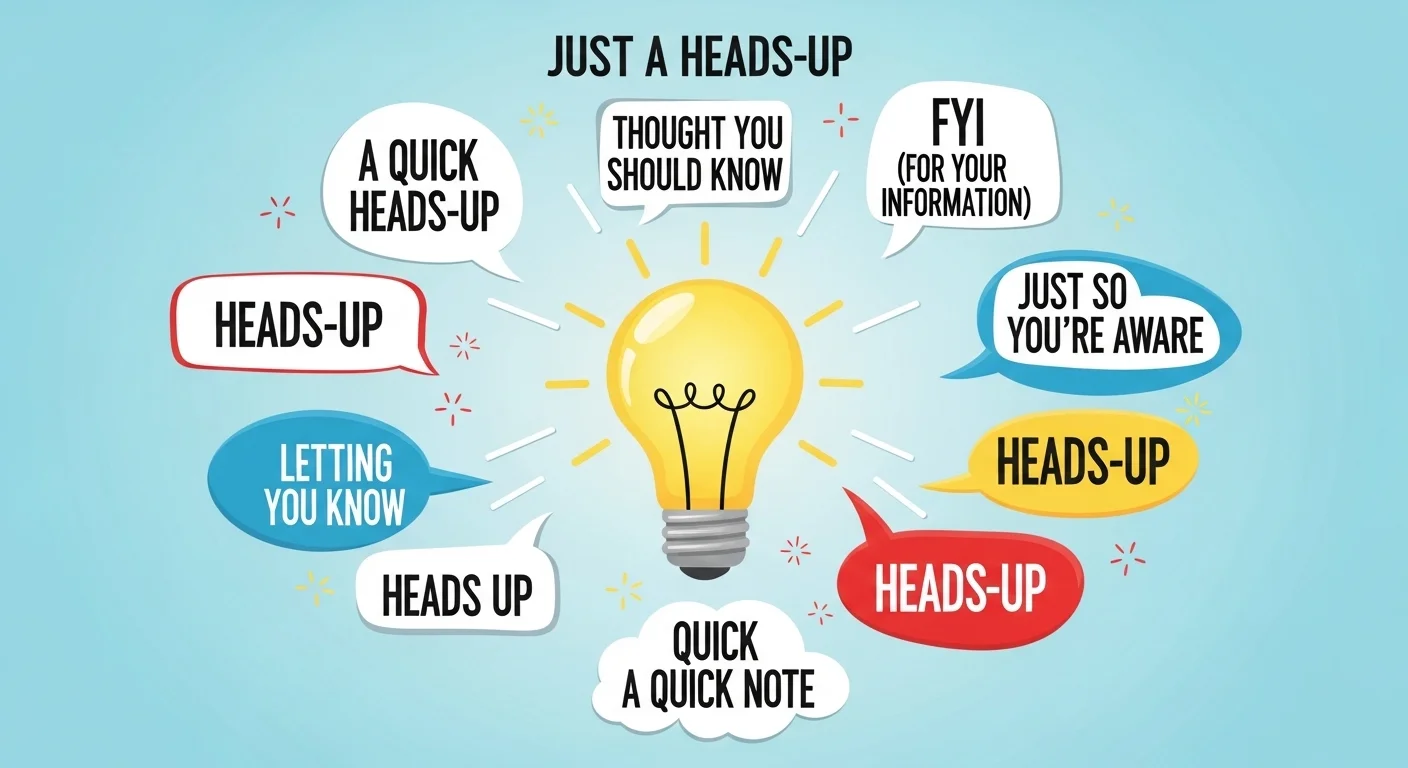
What Does “Just a Heads Up” Mean?
Student-Friendly Definition:
It means giving someone advance notice about something important.
Grammar Type:
Informal idiomatic phrase.
Tone Synonyms:
👉 Quick reminder
👉 Friendly warning
👉 Early notice
Opposite Tone Expressions:
👉 Official notice
👉 Formal announcement
Example Sentences:
👉 Just a heads up, traffic is heavy today.
👉 Just a heads up that the office will close early.
When to Use “Just a Heads Up”
Spoken English
👉 Very common among friends and coworkers.
Business English
👉 Acceptable in relaxed workplaces.
Emails / Messages
👉 Good for team chats.
👉 Avoid in formal client emails.
Social Media
👉 Perfectly natural and friendly.
Academic Writing
👉 Not appropriate. Too casual.
Professional Meetings
👉 Better to say “I would like to inform you.”
Is “Just a Heads Up” Polite or Professional?
Polite: Yes, in casual settings.
Neutral: Yes, among teammates.
Formal: No.
Informal: Yes.
Strong: No. It is soft.
Etiquette Tip:
👉 Better for internal communication.
👉 Avoid in corporate emails to senior leadership.
Pros & Cons of Using “Just a Heads Up”
✔ Pros:
👉 Friendly tone
👉 Easy to understand
👉 Good for quick reminders
👉 Natural in speech
✘ Cons:
👉 Too casual for academic writing
👉 Weak in legal communication
👉 Can sound repetitive
👉 Not suitable for serious announcements
Quick Alternatives List (For Busy Readers)
👉 Please note
👉 Kindly be advised
👉 For your information
👉 I wanted to let you know
👉 Just so you know
👉 As a reminder
👉 Please be aware
👉 This is to notify you
👉 Keep in mind
👉 I thought you should know
👉 Kindly note
👉 For your awareness
👉 Consider this a reminder
👉 Giving you advance notice
👉 Allow me to inform you
👉 Please remember
👉 Take note
👉 Be advised
👉 Just to inform you
👉 I would like to inform you
Detailed Alternatives Explained
Please Note
Meaning: Pay attention to this information.
Explanation:
Professional and clear. Very common in formal emails.
Grammar Note: Formal directive phrase.
Example Sentence:
👉 Please note that the deadline is Friday.
Best Use: Email, workplace, academic writing
Worst Use: Casual texting
Tone: Formal / Professional
Level: Beginner
Similarity Score: 9/10
Replaceability Tip: Use this when writing to clients or managers.
Kindly Be Advised
Meaning: You are officially informed.
Explanation:
Very formal. Often used in legal or corporate communication.
Grammar Note: Passive formal phrase.
Example Sentence:
👉 Kindly be advised that your request has been approved.
Best Use: Corporate email
Worst Use: Friendly conversation
Tone: Very Formal
Level: Advanced
Similarity Score: 8/10
Replaceability Tip: Ideal for structured, official messages.
For Your Information
Meaning: Sharing helpful details.
Explanation:
Neutral tone. Sometimes shortened to FYI.
Grammar Note: Prepositional phrase.
Example Sentence:
👉 For your information, the system will update tonight.
Best Use: Work emails
Worst Use: Sensitive discussions (can sound blunt)
Tone: Neutral
Level: Beginner
Similarity Score: 7/10
Replaceability Tip: Good when no action is required.
I Wanted to Let You Know
Meaning: Informing politely.
Explanation:
Friendly but still professional. Safe in most emails.
Grammar Note: Verb phrase.
Example Sentence:
👉 I wanted to let you know that the report is ready.
Best Use: Workplace emails
Worst Use: Legal writing
Tone: Friendly / Professional
Level: Beginner
Similarity Score: 9/10
Replaceability Tip: Safe choice in almost all situations.
As a Reminder
Meaning: Reminding someone about something already shared.
Explanation:
Used when the listener already knows the information.
Grammar Note: Introductory phrase.
Example Sentence:
👉 As a reminder, payment is due tomorrow.
Best Use: Workplace, school
Worst Use: First-time notice
Tone: Neutral
Level: Beginner
Similarity Score: 8/10
Replaceability Tip: Only use if it is not new information.
Please Be Aware
Meaning: Notice something important.
Explanation:
Polite but serious tone. Often used for warnings.
Grammar Note: Imperative phrase.
Example Sentence:
👉 Please be aware of the new safety rules.
Best Use: Professional settings
Worst Use: Casual messages
Tone: Professional
Level: Intermediate
Similarity Score: 8/10
Replaceability Tip: Use when importance is high.
Just So You Know
Meaning: Informal notice.
Explanation:
Very close to the original phrase. Casual and relaxed.
Grammar Note: Informal clause.
Example Sentence:
👉 Just so you know, I will be late.
Best Use: Friends, texting
Worst Use: Formal email
Tone: Friendly
Level: Beginner
Similarity Score: 10/10
Replaceability Tip: Almost identical tone to “just a heads up.”
This Is to Notify You
Meaning: Official notice.
Explanation:
Structured and formal.
Grammar Note: Declarative statement.
Example Sentence:
👉 This is to notify you that your subscription has expired.
Best Use: Official communication
Worst Use: Casual conversation
Tone: Formal
Level: Intermediate
Similarity Score: 7/10
Replaceability Tip: Use in policy or system notifications.
Keep in Mind
Meaning: Remember something important.
Explanation:
Often used when giving advice.
Grammar Note: Imperative verb phrase.
Example Sentence:
👉 Keep in mind that traffic will be heavy.
Best Use: Spoken English
Worst Use: Legal documents
Tone: Neutral
Level: Beginner
Similarity Score: 6/10
Replaceability Tip: Best for advice, not official notice.
I Thought You Should Know
Meaning: Sharing important information personally.
Explanation:
Sounds thoughtful and slightly emotional.
Grammar Note: Verb phrase.
Example Sentence:
👉 I thought you should know that the client called.
Best Use: Workplace or friends
Worst Use: Formal legal letters
Tone: Friendly
Level: Intermediate
Similarity Score: 8/10
Replaceability Tip: Use when the info feels important.
Mini Dialogue Examples
Formal Conversation
Manager: 👉 Please note that the deadline has changed.
Employee: 👉 Thank you for informing me.
Informal Conversation
Friend: 👉 Just so you know, the event starts at 8.
You: 👉 Thanks for telling me!
Business Email Example
Subject: Schedule Update
👉 Dear Team,
👉 I wanted to let you know that tomorrow’s meeting is postponed.
👉 Best regards.
Common Mistakes to Avoid
👉 Using “just a heads up” in academic essays.
👉 Writing it in legal contracts.
👉 Overusing FYI in serious emails.
👉 Mixing formal and informal tone.
👉 Using “be aware” in sensitive topics (can sound harsh).
👉 Forgetting punctuation in professional emails.
Cultural & Tone Tips
👉 In US English, it is very common and friendly.
👉 In UK English, it is slightly less common in formal work emails.
👉 In casual online English, it sounds warm and natural.
👉 In corporate culture, professionals prefer “please note.”
Comparison Table
| Phrase | Tone | Best Context | Professional Level | Example |
|---|---|---|---|---|
| Please note | Formal | High | Please note the change. | |
| Just so you know | Friendly | Text | Low | Just so you know, I’m late. |
| Kindly be advised | Very Formal | Corporate | Very High | Kindly be advised of updates. |
| I wanted to let you know | Neutral | Work email | Medium | I wanted to let you know… |
| As a reminder | Neutral | School/work | Medium | As a reminder, submit today. |
Frequently Asked Questions
Is “just a heads up” rude?
No. It is friendly but informal.
Is it okay in emails?
Yes, in casual team emails. Avoid in formal client communication.
What is the most formal alternative?
“Kindly be advised.”
What is the safest professional option?
“Please note.”
Can beginners use it?
Yes, but only in casual conversation.
Should I use it in academic writing?
No. Choose formal expressions instead.
Conclusion
Learning other ways to say “just a heads up” helps you speak and write with confidence. Word choice shapes tone. Tone shapes professionalism.