
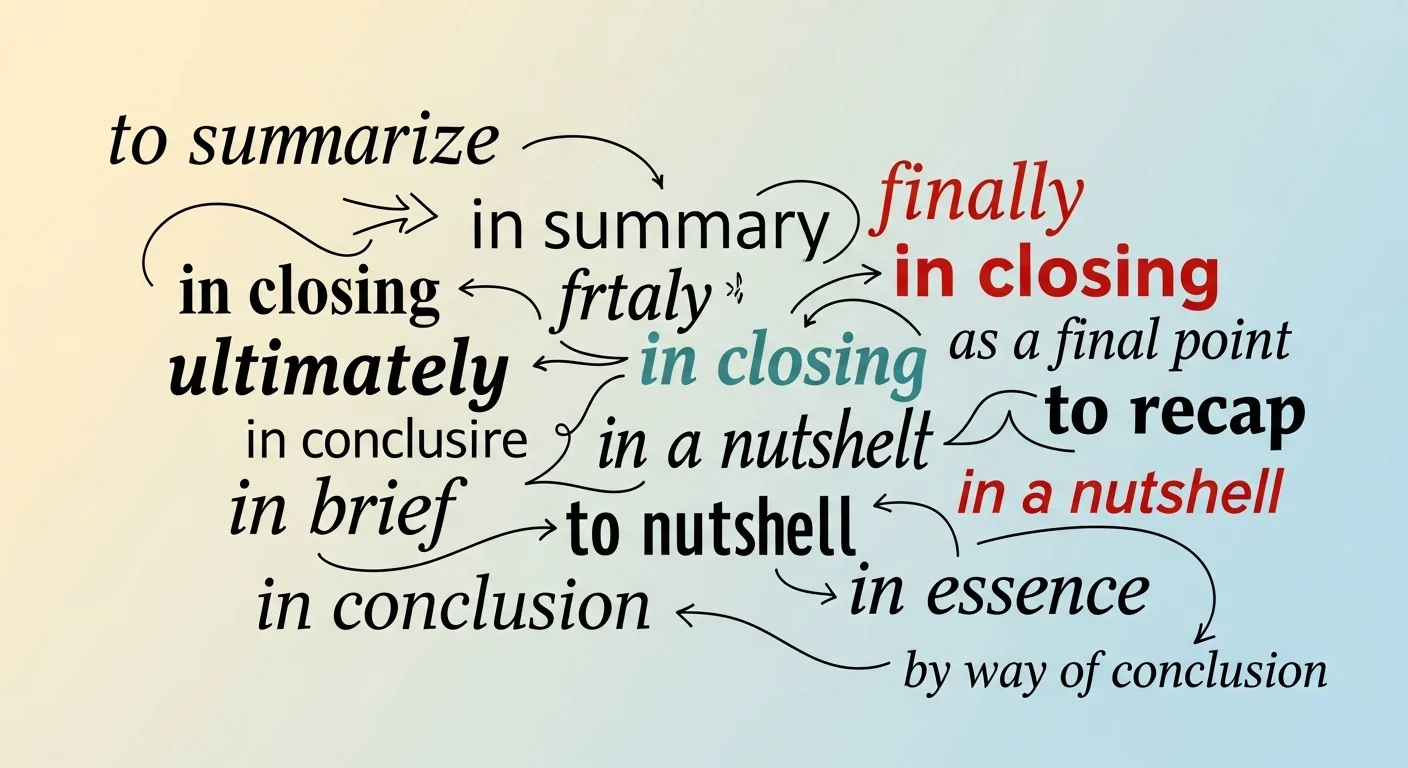
Other Ways to Say “In Conclusion”.The phrase “In Conclusion” is widely used to summarize ideas in essays, emails, reports, or presentations. While it’s clear and professional, overusing it can make your writing repetitive or predictable.
Using varied expressions allows you to conclude with clarity, style, and impact. Here are 309+ alternatives to say ‘In Conclusion’ naturally and effectively.The phrase “In Conclusion” is widely used to summarize ideas in essays, emails, reports, or presentations. While it’s clear and professional, overusing it can make your writing repetitive or predictable.
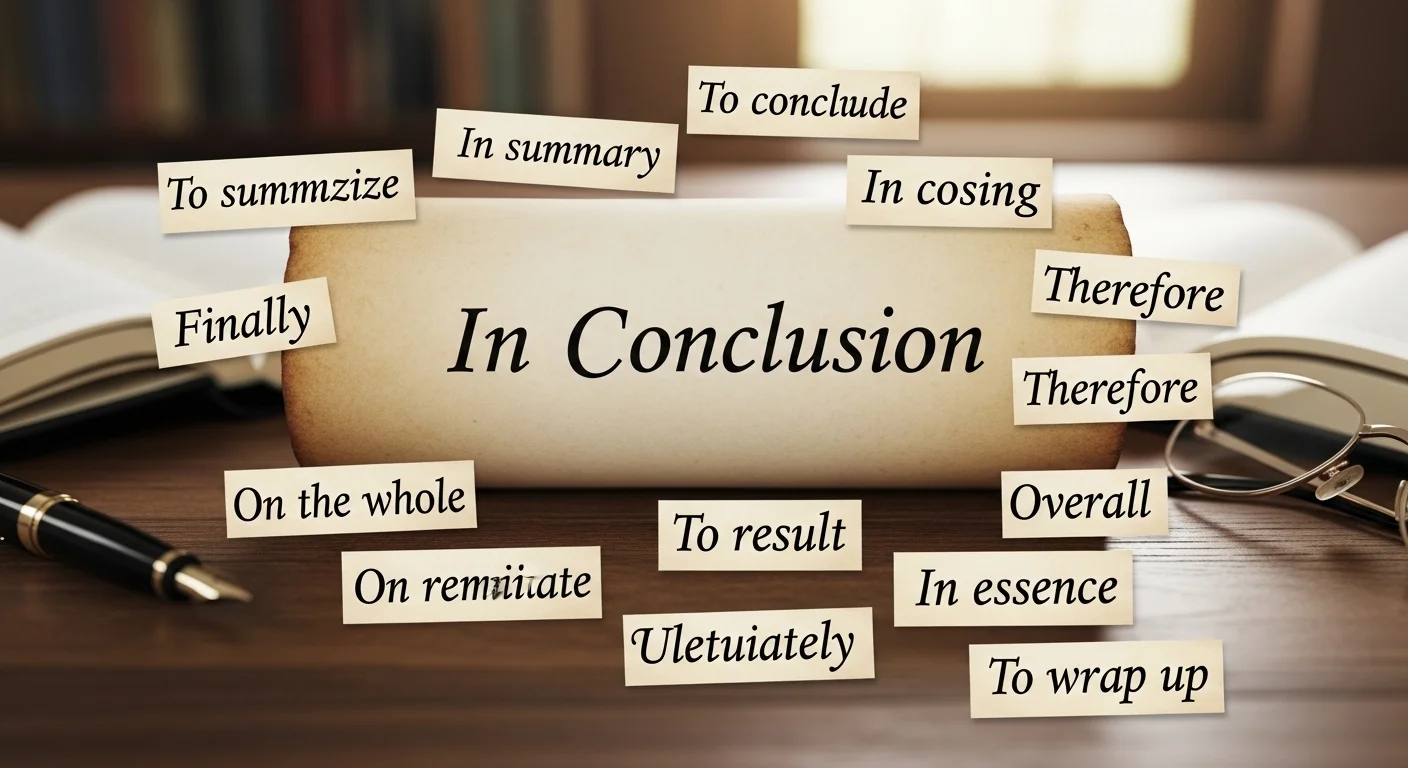
Why Using Alternatives Matters
Relying solely on “In Conclusion” can make your writing or speech seem repetitive. Using alternatives:
👉 Keeps your writing engaging and polished
👉 Helps emphasize the final point clearly
👉 Adds professional or academic tone when needed
👉 Makes presentations, essays, or emails more memorable
Whether in professional emails, academic papers, or casual reports, varied alternatives ensure your conclusion feels impactful.
Professional & Formal Alternatives
These are suitable for business reports, emails, and presentations.
👉 To summarize
👉 In summary
👉 Overall
👉 To wrap up
👉 In brief
👉 In short
👉 To conclude
👉 As a final point
👉 In essence
👉 All things considered
👉 Ultimately
👉 In review
👉 As a summary
Academic & Analytical Alternatives
Perfect for essays, research papers, and academic reports.
👉 In closing
👉 To recapitulate
👉 To synthesize
👉 To sum up
👉 In final analysis
👉 In retrospection
👉 In final consideration
👉 To draw a conclusion
👉 In final assessment
👉 Summing up
👉 To encapsulate
Casual & Everyday Alternatives
Use these in informal writing, emails, or presentations.
👉 To finish up
👉 Wrapping things up
👉 Finally
👉 In short, that’s it
👉 In a nutshell
👉 To put it briefly
👉 All in all
👉 That’s the bottom line
👉 To bring things together
👉 To sum things up
How to Make It More Effective
Instead of just writing “In Conclusion,” you can:
👉 Personalize your summary — e.g., “In conclusion, these strategies will help our team succeed.”
👉 Highlight key points — e.g., “To sum up, communication and teamwork are crucial.”
👉 Add a call to action — e.g., “In closing, I encourage everyone to implement these ideas.”
Contextualizing your conclusion makes it more persuasive and memorable.
Common Mistakes to Avoid
👉 Using “In Conclusion” at the start of every paragraph or slide
👉 Mixing casual and formal alternatives inappropriately
👉 Forgetting to emphasize the main takeaway
👉 Using vague summaries without key points
👉 Repeating phrases instead of varying language
Example Usage
Professional Email:
“To summarize, the project deadlines are confirmed and responsibilities are clearly allocated. Please reach out with any questions.”
Academic Essay:
“In conclusion, renewable energy adoption can significantly reduce global carbon emissions.”
Team Presentation:
“Wrapping things up, these initiatives will improve efficiency and team collaboration.”
Casual Email:
“All in all, it was a productive week, and I appreciate everyone’s hard work.”
Conclusion
While “In Conclusion” is effective, using other ways to say ‘In Conclusion’ adds variety, clarity, and professionalism to your writing or speech.
Choosing the right alternative depending on tone, context, and audience strengthens your message, ensures your points are understood, and leaves a lasting impression.
Variety in concluding phrases enhances readability, impact, and overall communication quality.
Frequently Asked Questions
Is “In Conclusion” formal enough for professional emails?
Yes, but alternatives like “To summarize” or “Ultimately” can sound more polished.
What is a casual alternative?
“All in all,” “In a nutshell,” or “To wrap things up” works well in informal writing.
Can I use it in presentations?
Absolutely, alternatives like “To sum up” or “Wrapping things up” make slides and speeches more engaging.
Are playful alternatives appropriate?
Only in informal or friendly communication; formal reports require precise terms.