

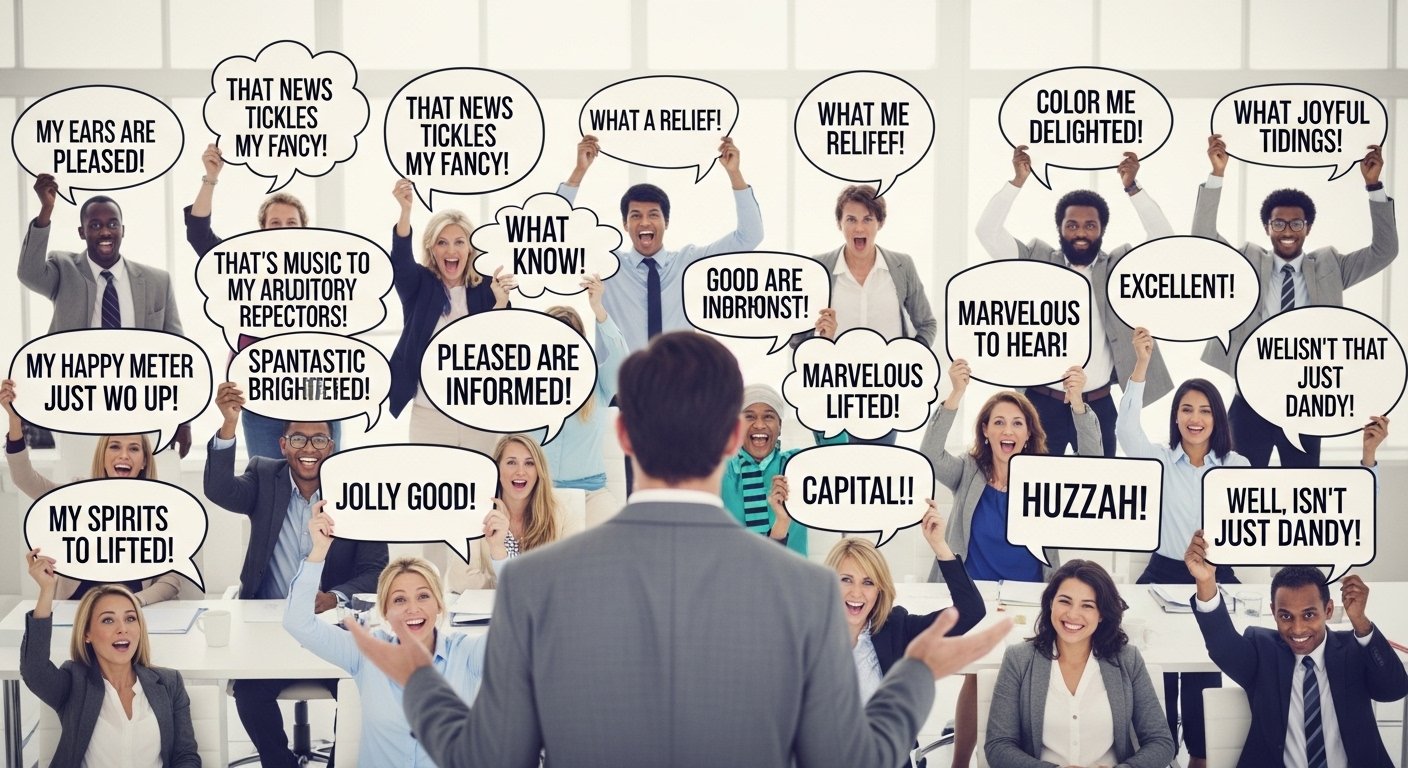
Other Ways to Say I’m Glad to Hear That.The phrase “I’m glad to hear that” is a kind and positive way to respond when someone shares good news. It shows happiness, support, and interest in what the other person says. While it’s a great phrase, using it too often can feel repetitive.
- What Does “I’m Glad to Hear That” Mean?
- When to Use “I’m Glad to Hear That”
- Spoken English
- Business English
- Emails / Messages
- Social Media
- Academic Writing
- Professional Meetings
- Is “I’m Glad to Hear That” Polite or Professional?
- Pros & Cons of Using “I’m Glad to Hear That”
- Quick Alternatives List
- That’s great to hear
- I’m happy to hear that
- That’s wonderful
- I’m pleased to hear that
- That’s fantastic
- Good to hear
- I’m delighted to hear that
- That’s excellent news
- I’m thrilled to hear that
- That’s awesome
- Love to hear that
- That’s really good news
- Sounds great
- That’s nice to hear
- Glad to know
- Mini Dialogue Examples
- Mistakes to Avoid
- Cultural & Tone Tips
- Comparison Table
- FAQs
- Conclusion
Learning different ways to say “I’m glad to hear that” helps you sound more natural and expressive. Your word choice can change your tone—more formal in emails, more friendly with friends, or more professional at work.
For example:
- Formal: “I’m pleased to hear that.”
- Informal: “That’s awesome!”
Using varied expressions makes your English richer and helps you connect better in conversations, messages, and professional settings.
What Does “I’m Glad to Hear That” Mean?
“I’m glad to hear that” means you feel happy or pleased about something someone just told you.
Grammar Form:
- Sentence (subject + adjective + infinitive phrase)
Simple Synonyms:
- That’s great
- Nice to hear
- Wonderful
Opposite Ideas:
- I’m sorry to hear that
- That’s unfortunate
Example Sentences:
- I’m glad to hear that you got the job.
- I’m glad to hear that everything went well.
When to Use “I’m Glad to Hear That”
Spoken English
Very common in daily conversations. Sounds warm and polite.
Business English
Good for polite responses, especially in meetings or calls.
Emails / Messages
Works well, especially when replying to updates or good news.
Social Media
Often replaced with shorter phrases like “That’s great!”
Academic Writing
Rarely used. Too conversational.
Professional Meetings
Appropriate when acknowledging positive updates.
Is “I’m Glad to Hear That” Polite or Professional?
- Polite: Yes
- Neutral: Yes
- Formal: Slightly
- Informal: Also acceptable
Tone Levels:
- Soft: I’m glad to hear that
- Strong: I’m very happy to hear that
Etiquette Tip:
✔ Good for workplace communication
✘ Avoid overusing in formal reports or academic writing
Pros & Cons of Using “I’m Glad to Hear That”
✔ Pros:
- Warm and friendly
- Easy to understand
- Works in many situations
✘ Cons:
- Can sound repetitive
- Not very expressive
- Slightly basic in professional writing
Quick Alternatives List
- That’s great to hear
- I’m happy to hear that
- That’s wonderful
- I’m pleased to hear that
- That’s fantastic
- Good to hear
- That’s amazing
- I’m delighted to hear that
- That’s excellent news
- I’m so happy for you
- That’s awesome
- Love to hear that
- That’s really good news
- I’m thrilled to hear that
- Sounds great
- That’s nice to hear
- Glad to know
- That’s brilliant
- Happy to hear that
That’s great to hear
Meaning: I’m happy about your news
Explanation: Very common and natural
Grammar Note: Sentence
Example Sentence: That’s great to hear about your success.
Best Use: Conversation, emails
Worst Use: Formal reports
Tone: Friendly
Level: Beginner
Similarity Score: 10/10
Replaceability Tip: Best simple alternative
I’m happy to hear that
Meaning: I feel happy about it
Explanation: Slightly more emotional
Grammar Note: Sentence
Example Sentence: I’m happy to hear that you’re doing well.
Best Use: Personal and professional
Worst Use: Very formal writing
Tone: Warm
Level: Beginner
Similarity Score: 10/10
That’s wonderful
Meaning: Very good news
Explanation: Strong positive feeling
Grammar Note: Sentence
Example Sentence: That’s wonderful news!
Best Use: Conversation
Worst Use: Serious formal settings
Tone: Positive
Level: Beginner
Similarity Score: 9/10
I’m pleased to hear that
Meaning: I feel satisfied or glad
Explanation: More formal and polite
Grammar Note: Sentence
Example Sentence: I’m pleased to hear that the project succeeded.
Best Use: Workplace, emails
Worst Use: Casual slang conversations
Tone: Professional
Level: Intermediate
Similarity Score: 10/10
That’s fantastic
Meaning: Very exciting news
Explanation: Energetic and expressive
Grammar Note: Sentence
Example Sentence: That’s fantastic! Congratulations.
Best Use: Informal situations
Worst Use: Formal emails
Tone: Excited
Level: Beginner
Similarity Score: 8/10
Good to hear
Meaning: Nice information
Explanation: Short and casual
Grammar Note: Phrase
Example Sentence: Good to hear everything is fine.
Best Use: Messages, quick replies
Worst Use: Formal communication
Tone: Neutral
Level: Beginner
Similarity Score: 8/10
I’m delighted to hear that
Meaning: Very happy
Explanation: Strong and formal
Grammar Note: Sentence
Example Sentence: I’m delighted to hear that you were selected.
Best Use: Formal emails
Worst Use: Casual chats
Tone: Formal
Level: Advanced
Similarity Score: 10/10
That’s excellent news
Meaning: Very good information
Explanation: Professional and positive
Grammar Note: Sentence
Example Sentence: That’s excellent news for the team.
Best Use: Workplace
Worst Use: Casual texting
Tone: Professional
Level: Intermediate
Similarity Score: 9/10
I’m thrilled to hear that
Meaning: Extremely happy
Explanation: Strong emotion
Grammar Note: Sentence
Example Sentence: I’m thrilled to hear about your achievement.
Best Use: Formal and personal
Worst Use: Neutral situations
Tone: Strong
Level: Intermediate
Similarity Score: 9/10
That’s awesome
Meaning: Very good
Explanation: Casual and modern
Grammar Note: Sentence
Example Sentence: That’s awesome! Well done.
Best Use: Friends, social media
Worst Use: Professional emails
Tone: Informal
Level: Beginner
Similarity Score: 7/10
Love to hear that
Meaning: I really like this news
Explanation: Friendly and modern
Grammar Note: Phrase
Example Sentence: Love to hear that you’re improving.
Best Use: Social media, texting
Worst Use: Formal writing
Tone: Friendly
Level: Intermediate
Similarity Score: 8/10
That’s really good news
Meaning: Positive update
Explanation: Neutral and clear
Grammar Note: Sentence
Example Sentence: That’s really good news for everyone.
Best Use: All settings
Worst Use: None
Tone: Neutral
Level: Beginner
Similarity Score: 9/10
Sounds great
Meaning: That seems good
Explanation: Slightly indirect agreement
Grammar Note: Phrase
Example Sentence: Sounds great! Let’s proceed.
Best Use: Work, conversation
Worst Use: Emotional situations
Tone: Neutral
Level: Beginner
Similarity Score: 7/10
That’s nice to hear
Meaning: Pleasant information
Explanation: Soft and polite
Grammar Note: Sentence
Example Sentence: That’s nice to hear about your progress.
Best Use: Polite conversation
Worst Use: Very exciting news
Tone: Soft
Level: Beginner
Similarity Score: 9/10
Glad to know
Meaning: Happy to learn
Explanation: Short and slightly informal
Grammar Note: Phrase
Example Sentence: Glad to know everything is fine.
Best Use: Messages
Worst Use: Formal writing
Tone: Neutral
Level: Beginner
Similarity Score: 8/10
Mini Dialogue Examples
Formal:
A: The project was completed successfully.
B: I’m pleased to hear that. Excellent work.
Informal:
A: I passed my exam!
B: That’s awesome! Congrats!
Business Email:
I’m glad to hear that the issue has been resolved. Thank you for the update.
Mistakes to Avoid
- Using “awesome” in formal emails
- Overusing one phrase repeatedly
- Using strong phrases for small news
- Sounding too formal with friends
- Not matching tone to situation
- Using short replies in serious contexts
Cultural & Tone Tips
In US English, phrases like “awesome” and “great” are very common.
In UK English, “that’s lovely” or “brilliant” may be used more.
In casual English, shorter phrases like “nice!” or “good!” are popular.
Tone matters a lot. Strong words like “thrilled” show excitement, while softer ones like “nice to hear” feel more calm and polite.
Comparison Table
| Phrase | Tone | Best Context | Professional Level | Example |
|---|---|---|---|---|
| I’m pleased to hear that | Formal | Emails | High | I’m pleased to hear that |
| That’s great to hear | Friendly | General | Medium | That’s great to hear |
| That’s awesome | Casual | Friends | Low | That’s awesome |
| I’m delighted to hear | Formal | Business | High | I’m delighted |
| Good to hear | Neutral | Messages | Medium | Good to hear |
| That’s excellent news | Professional | Work | High | Excellent news |
FAQs
Is “I’m glad to hear that” rude?
No, it is polite and friendly. It shows positive emotion and support.
Is it okay in emails?
Yes, it works well in emails, especially when replying to good news or updates.
What is the most formal alternative?
“I’m delighted to hear that” is one of the most formal options.
What is the most polite alternative?
“I’m pleased to hear that” sounds polite and professional.
What should beginners use?
“That’s great to hear” is simple, natural, and easy to use.
What is best for casual talk?
“That’s awesome” or “nice!” are great for informal conversations.
Conclusion
Using different ways to say “I’m glad to hear that” helps you sound more natural and expressive in English. It allows you to match your tone to the situation—formal, casual, or professional.
Practice these alternatives in conversations, emails, and daily life. Over time, you will feel more confident and fluent when responding to good news.