

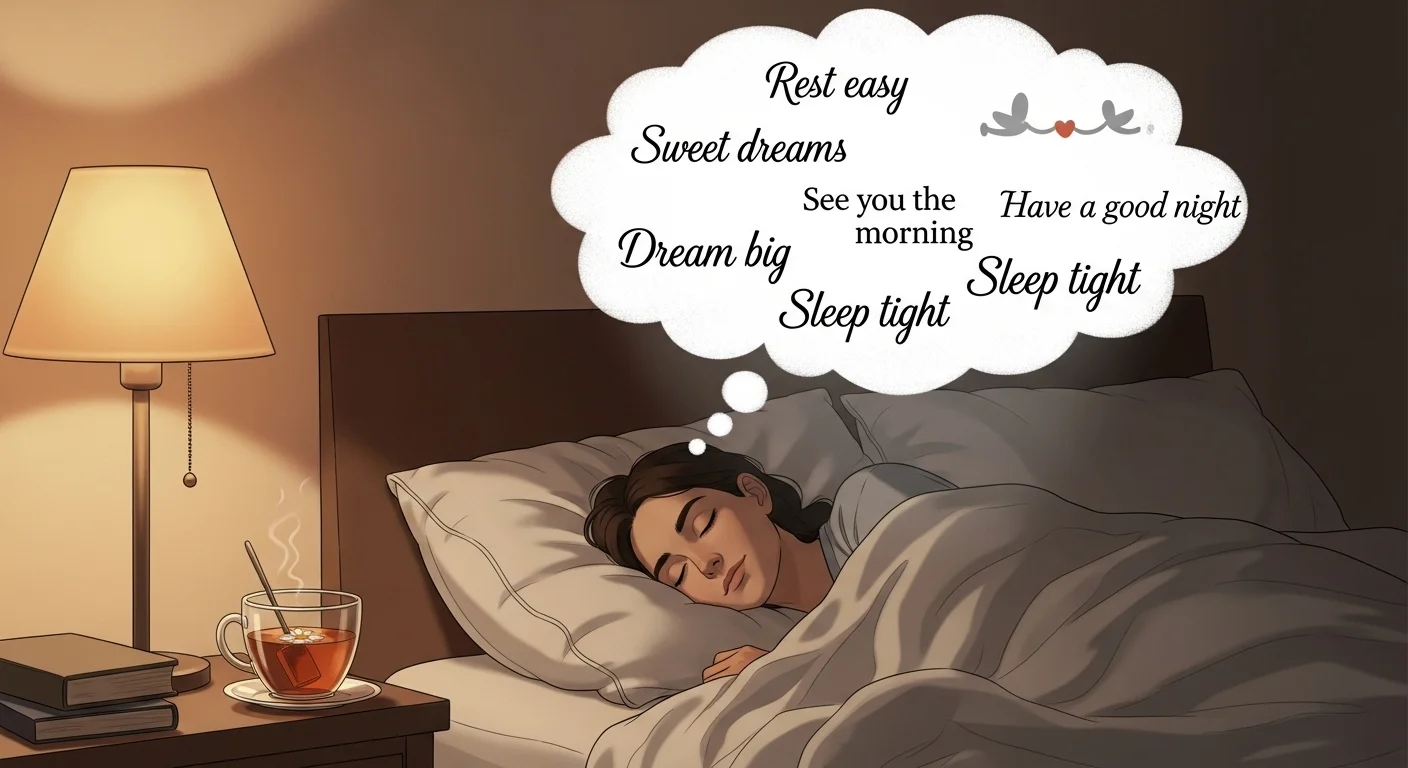
comforting alternatives to say sleep well.Nighttime goodbyes are small, but meaningful. The words we choose before someone goes to sleep can create comfort, calm, and emotional safety. “Sleep well” is a kind and simple phrase, but using it again and again can sound plain or repetitive. English offers many comforting alternatives that express care more naturally and match different situations.
- What Does “Sleep Well” Mean?
- When to Use “Sleep Well”
- Is “Sleep Well” Polite or Professional?
- Pros & Cons of Using “Sleep Well”
- Quick Comforting Alternatives (One-Line Phrases)
- Comforting Alternatives Explained
- Rest Well
- Sweet Dreams
- Have a Peaceful Night
- Sleep Tight
- Wishing You a Restful Night
- May You Sleep Peacefully
- Hope You Get Some Good Rest
- Take Care and Get Some Rest
- Have a Cozy Night
- Sending You Peaceful Thoughts
- Mini Dialogue Examples
- Mistakes to Avoid
- Cultural & Tone Tips
- Frequently Asked Questions
- Conclusion
Choosing the right words helps you sound more thoughtful, fluent, and emotionally aware. A gentle message to a friend, a caring text to a loved one, or a polite sign-off to a colleague all need different tones. This is why learning alternatives matters.
Compare the feeling:
-
Formal: “Wishing you a restful night.”
-
Informal: “Sweet dreams.”
Both express care, but the tone and warmth change completely. Using the right expression improves clarity, professionalism, and connection in daily conversations, messages, and emails.

What Does “Sleep Well” Mean?
“Sleep well” is a polite phrase used to wish someone a good, peaceful, and refreshing night’s sleep.
Grammar form:
Imperative phrase (used as a friendly wish)
Tone range:
Neutral to soft
Similar expressions:
Rest well, good night, sweet dreams
Opposite tone expressions:
Stay awake, don’t sleep (rare and informal)
Sample sentences:
-
You look exhausted. Sleep well tonight.
-
Good night! Sleep well.
When to Use “Sleep Well”
Spoken English
Common at the end of evening conversations.
Business English
Acceptable in friendly teams, but softer or more professional options are better.
Emails / Messages
Used in casual emails, chats, and texts.
Social Media
Often used in comments or replies at night.
Academic Writing
Not suitable. Too personal and informal.
Professional Meetings
Rarely used unless the environment is very relaxed.
Is “Sleep Well” Polite or Professional?
Polite: Yes
Neutral: Yes
Strong: No
Soft: Yes
-
Formal vs Informal: Slightly informal
-
Workplace tip: Fine for friendly coworkers, avoid in corporate emails
-
Emotional tone: Calm, caring, gentle
Pros & Cons of Using “Sleep Well”
✔ Pros:
-
Easy to understand
-
Friendly and kind
-
Safe for casual use
✘ Cons:
-
Sounds basic if overused
-
Lacks emotional depth
-
Not ideal for formal communication
Quick Comforting Alternatives (One-Line Phrases)
👉 Rest well tonight
👉 Sweet dreams
👉 Have a peaceful night
👉 Sleep tight
👉 Hope you get good rest
👉 Wishing you a calm night
👉 Have a restful sleep
👉 Night, take care
👉 May you sleep peacefully
👉 Get some good rest
👉 Have a cozy night
👉 Hope tonight brings you rest
👉 Enjoy a good night’s sleep
👉 Sending you peaceful thoughts
👉 Take it easy and rest
Comforting Alternatives Explained
Rest Well
Meaning:
A gentle wish for good rest.
Explanation:
Sounds mature and caring without being emotional.
Grammar Note:
Imperative phrase
Example Sentence:
You’ve worked hard today. Rest well.
Best Use:
Texts, friendly workplace chats
Worst Use:
Romantic messages
Tone:
Soft, polite
Level:
Beginner
Similarity Score:
9/10
Replaceability Tip:
Use when you want warmth without intimacy.
Sweet Dreams
Meaning:
Wishing pleasant dreams.
Explanation:
Emotionally warm and comforting.
Grammar Note:
Noun phrase used as a wish
Example Sentence:
Good night—sweet dreams.
Best Use:
Family, close friends, loved ones
Worst Use:
Professional emails
Tone:
Warm, friendly
Level:
Beginner
Similarity Score:
8/10
Replaceability Tip:
Best for emotional closeness.
Have a Peaceful Night
Meaning:
Wishing calm and relaxation.
Explanation:
Focuses on emotional peace, not just sleep.
Grammar Note:
Imperative sentence
Example Sentence:
I hope you have a peaceful night.
Best Use:
Supportive messages, emails
Worst Use:
Very casual slang chats
Tone:
Soft, caring
Level:
Intermediate
Similarity Score:
8/10
Replaceability Tip:
Use when someone feels stressed.
Sleep Tight
Meaning:
A friendly way to say good night.
Explanation:
Old-fashioned but comforting.
Grammar Note:
Idiomatic phrase
Example Sentence:
Night! Sleep tight.
Best Use:
Family, children, close friends
Worst Use:
Workplace communication
Tone:
Warm, informal
Level:
Beginner
Similarity Score:
7/10
Replaceability Tip:
Avoid in professional settings.
Wishing You a Restful Night
Meaning:
Hoping the person wakes refreshed.
Explanation:
Polite and slightly formal.
Grammar Note:
Gerund phrase
Example Sentence:
Wishing you a restful night ahead.
Best Use:
Emails, professional messages
Worst Use:
Quick casual chats
Tone:
Professional, polite
Level:
Intermediate
Similarity Score:
9/10
Replaceability Tip:
Great for polite sign-offs.
May You Sleep Peacefully
Meaning:
A gentle, caring wish.
Explanation:
Sounds poetic and emotionally supportive.
Grammar Note:
Modal verb structure
Example Sentence:
May you sleep peacefully tonight.
Best Use:
Emotional or supportive messages
Worst Use:
Very casual talk
Tone:
Soft, caring
Level:
Advanced
Similarity Score:
8/10
Replaceability Tip:
Use when offering comfort.
Hope You Get Some Good Rest
Meaning:
Wishing physical recovery.
Explanation:
Common when someone is tired or unwell.
Grammar Note:
Hope clause
Example Sentence:
You’ve been busy—hope you get some good rest.
Best Use:
Texts, friendly work chats
Worst Use:
Romantic conversations
Tone:
Friendly, neutral
Level:
Beginner
Similarity Score:
9/10
Replaceability Tip:
Perfect after a long day.
Take Care and Get Some Rest
Meaning:
Shows concern and kindness.
Explanation:
Adds emotional care beyond sleep.
Grammar Note:
Imperative phrase
Example Sentence:
It’s late—take care and get some rest.
Best Use:
Supportive conversations
Worst Use:
Formal writing
Tone:
Caring, soft
Level:
Intermediate
Similarity Score:
7/10
Replaceability Tip:
Good when someone feels unwell.
Have a Cozy Night
Meaning:
Wishing warmth and comfort.
Explanation:
Creates a relaxed, safe feeling.
Grammar Note:
Imperative phrase
Example Sentence:
Grab a blanket and have a cozy night.
Best Use:
Friends, casual texts
Worst Use:
Professional emails
Tone:
Warm, friendly
Level:
Intermediate
Similarity Score:
6/10
Replaceability Tip:
Use for emotional warmth.
Sending You Peaceful Thoughts
Meaning:
Offering emotional calm.
Explanation:
Indirect but deeply comforting.
Grammar Note:
Gerund phrase
Example Sentence:
Sending you peaceful thoughts tonight.
Best Use:
Emotional support messages
Worst Use:
Workplace chats
Tone:
Soft, emotional
Level:
Advanced
Similarity Score:
5/10
Replaceability Tip:
Use when words feel heavy.
Mini Dialogue Examples
Formal:
– Good night.
– Thank you. Wishing you a restful night.
Informal:
– I’m heading to bed.
– Alright, sweet dreams!
Business Email Style:
It’s been a productive day. Wishing you a peaceful evening.
Mistakes to Avoid
-
Using “sweet dreams” in corporate emails
-
Saying “sleep tight” to clients
-
Overusing one phrase daily
-
Mixing romantic tone with professional context
-
Using slang with seniors or managers
Cultural & Tone Tips
UK English:
Prefers polite and calm phrases like “Have a restful night.”
US English:
Casual options like “Sleep well” and “Get some rest” are common.
Casual Social English:
Warm phrases like “Sweet dreams” feel natural and friendly.
Frequently Asked Questions
Is “sleep well” polite?
Yes, it is polite and friendly.
Is it okay in emails?
Yes, in informal or friendly emails.
What is the most formal alternative?
“Wishing you a restful night.”
What is the most comforting alternative?
“Sweet dreams” or “May you sleep peacefully.”
What should beginners use?
“Rest well” or “Sleep well.”
Is it romantic?
It can be, depending on tone and relationship.
Conclusion
Using comforting alternatives to “sleep well” helps you sound more natural, thoughtful, and fluent in English. Small changes in words can express care, professionalism, or emotional warmth. By choosing the right phrase for the right situation, you improve clarity and connection. Practice these expressions in real conversations, messages, and emails to build confidence and natural flow in your English.
