
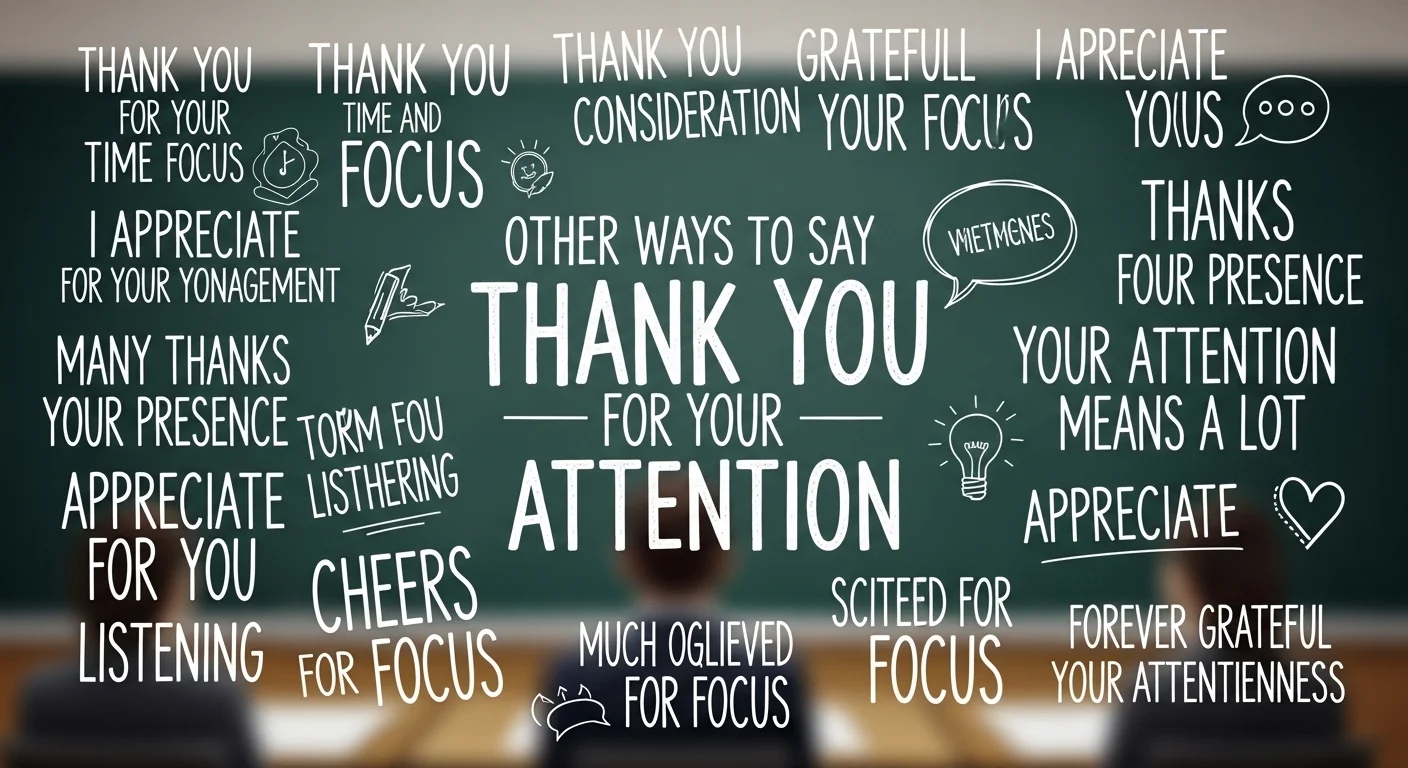
Other Ways to Say “Thank You for Your Attention”.Saying “Thank You for Your Attention” is a polite way to acknowledge someone’s focus on your message, presentation, or email. While it’s professional, repeating it can make your communication feel formulaic.
Using varied alternatives makes your gratitude sound thoughtful, professional, and engaging. Here are 306+ ways to express appreciation for someone’s attention.
Why Using Alternatives Matters
Overusing “Thank You for Your Attention” in emails, presentations, or formal messages can feel repetitive. By using alternatives:
👉 You make your communication more polished
👉 Show respect for the recipient’s time
👉 Make presentations and emails sound more engaging
👉 Enhance professional relationships and credibility
Having a range of expressions ensures your gratitude feels genuine and appropriate.
Professional & Corporate Alternatives
Perfect for formal emails, client communication, or business presentations.
👉 I appreciate your time and attention
👉 Thank you for your consideration
👉 Many thanks for reviewing this
👉 I value your attention and focus
👉 Sincere thanks for your time
👉 Thank you for your careful review
👉 Thank you for taking the time to read this
👉 I’m grateful for your attention
👉 Your attention to this matter is appreciated
👉 Thanks for your focus on this
👉 I appreciate your interest in this topic
👉 Thank you for giving this your attention
Friendly & Casual Alternatives
Use these in informal messages, chats, or lighter emails.
👉 Thanks for checking this out
👉 Thanks for giving this a look
👉 Appreciate you taking a moment
👉 Thanks for your time
👉 Thanks for looking into this
👉 Appreciate your focus
👉 Thanks for paying attention
👉 Thanks for noticing
👉 Appreciate you reviewing this
👉 Thanks for giving it a glance
Warm & Personal Alternatives
Use these to add care or personal appreciation, especially after a presentation or detailed email.
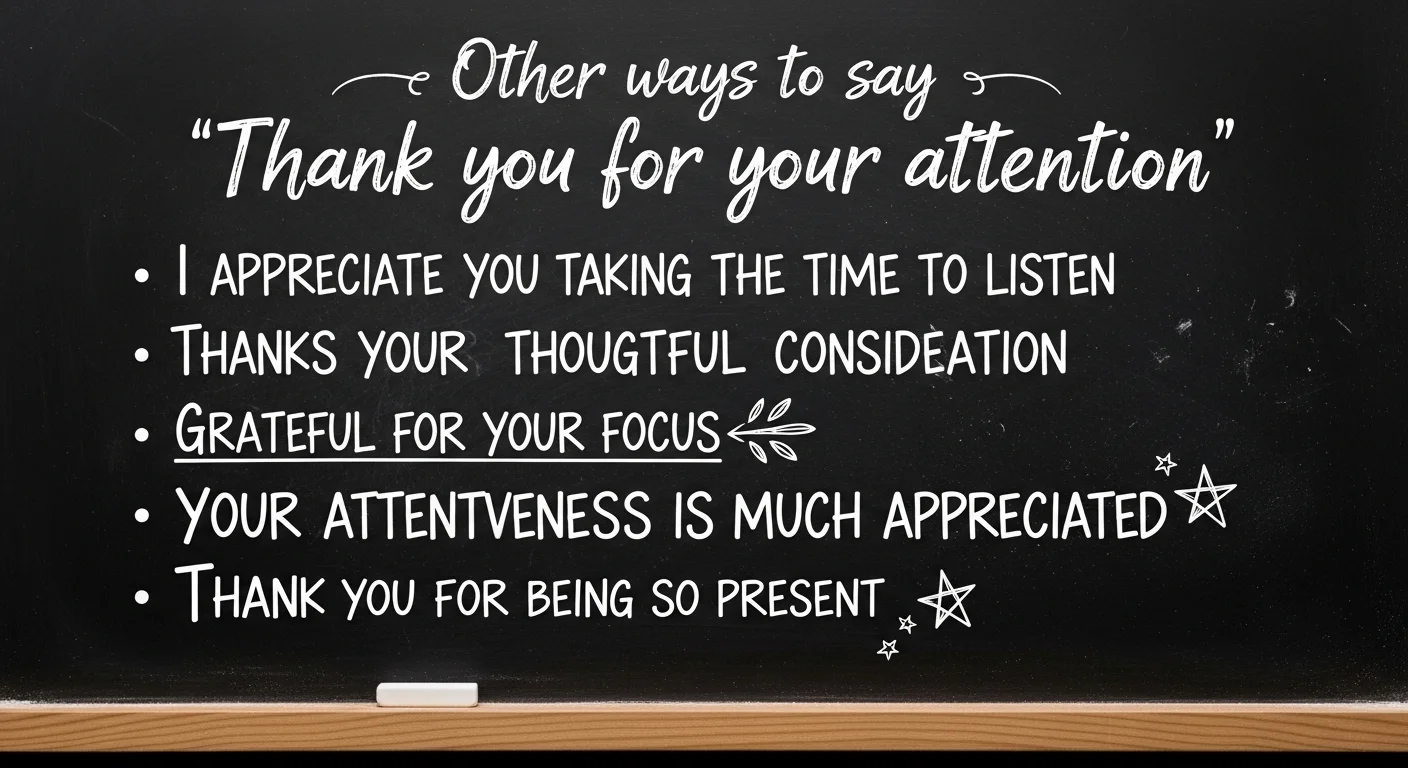
👉 Many thanks for your time and focus
👉 I truly appreciate your attention
👉 Grateful for your careful review
👉 Thank you for giving this your consideration
👉 Your attention is much appreciated
👉 Thanks for dedicating your time to this
👉 Thank you for being attentive
👉 I appreciate your thoughtful review
👉 Thanks for paying attention to the details
👉 Your focus and time are highly valued
How to Make It More Meaningful
Instead of just saying “Thank You for Your Attention,” you can add context to make your gratitude more personal and impactful:
👉 Thank you for your attention — I value your insights on this matter
👉 Many thanks for reviewing this email carefully
👉 I appreciate your attention and feedback on the report
👉 Thank you for taking the time to go through this proposal
👉 Your careful attention is greatly appreciated and helps improve our work
Adding context makes your appreciation genuine and meaningful.
Common Mistakes to Avoid
👉 Overusing “Thank You for Your Attention” in every email
👉 Using casual alternatives in formal emails
👉 Forgetting to personalize or reference the context
👉 Being too generic without acknowledging effort or time
👉 Ignoring tone — ensure it matches the audience
Example Usage
Professional Email:
“Dear Mr. Smith, thank you for your attention to this report. Your feedback is highly appreciated.”
Team Chat Message:
“Thanks for taking a look at the presentation slides — your attention is really appreciated.”
Presentation Closing:
“Thank you for your attention. I look forward to your questions and feedback.”
Friendly Email:
“Thanks for giving this a look — I appreciate your time!”
Conclusion
While “Thank You for Your Attention” is professional and polite, using other ways to say ‘Thank You for Your Attention’ makes your communication more genuine, thoughtful, and engaging.
Choosing the right alternative depending on tone, context, and audience strengthens professional relationships, shows respect for others’ time, and makes your emails, presentations, or messages feel more impactful.
Frequently Asked Questions
Is “Thank You for Your Attention” too formal for emails?
It is formal, but alternatives like “I appreciate your time and focus” can sound professional without being stiff.
What is a casual alternative?
“Thanks for checking this out” or “Thanks for taking a look” works well in informal emails.
Can I make it more personal?
Yes, by mentioning the context, task, or feedback you value.
Are playful alternatives appropriate?
No, stick to professional, polite alternatives for workplace or client communication.