
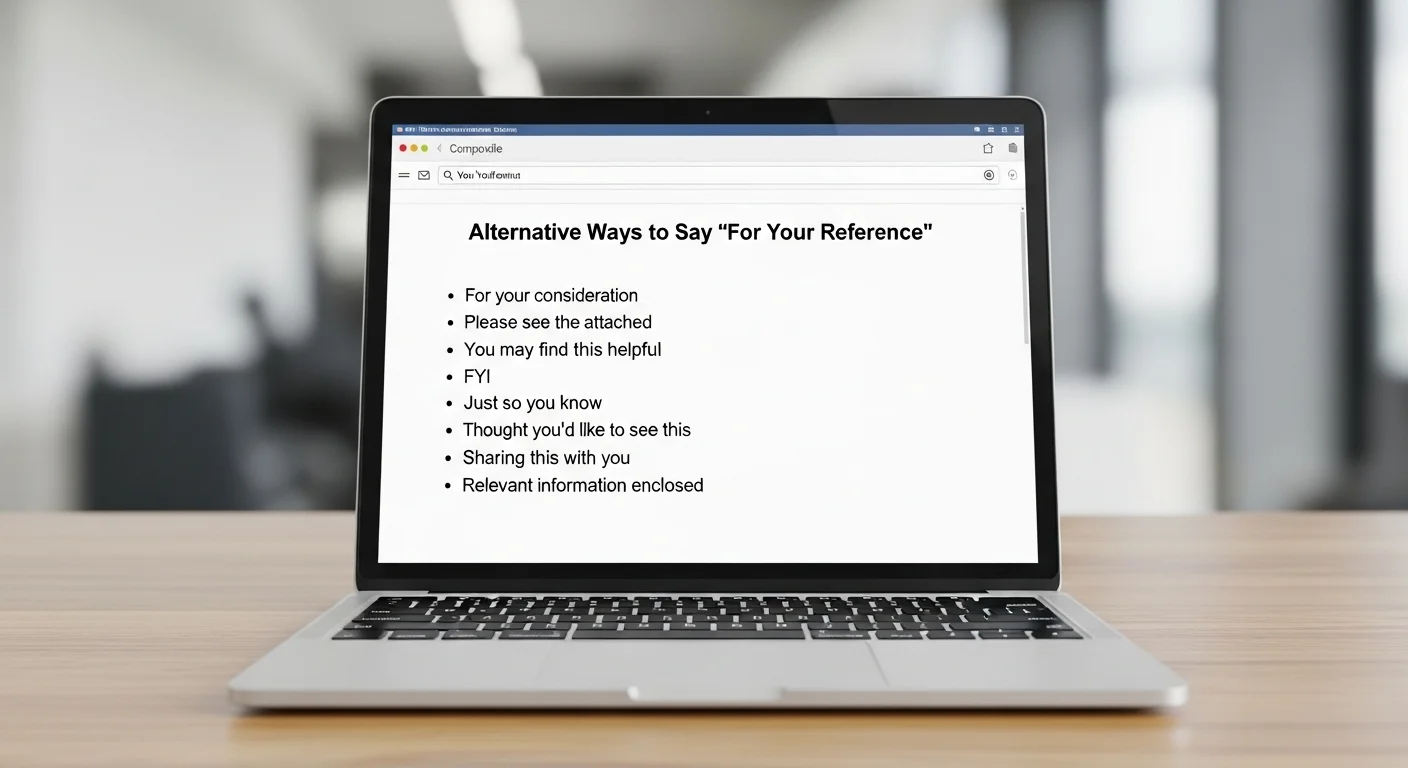
Other Ways to Say “For Your Reference.In professional emails, the phrase “for your reference” is commonly used when sharing information, documents, links, or details that may be helpful to the recipient. While it is correct and widely accepted, using it repeatedly can make your emails sound repetitive or slightly mechanical.
If you want to sound more polished, confident, and professional, learning alternative phrases can significantly improve your email communication skills.
In this detailed guide, you’ll discover 65 professional alternatives categorized by tone and purpose — along with practical examples you can copy and use immediately.
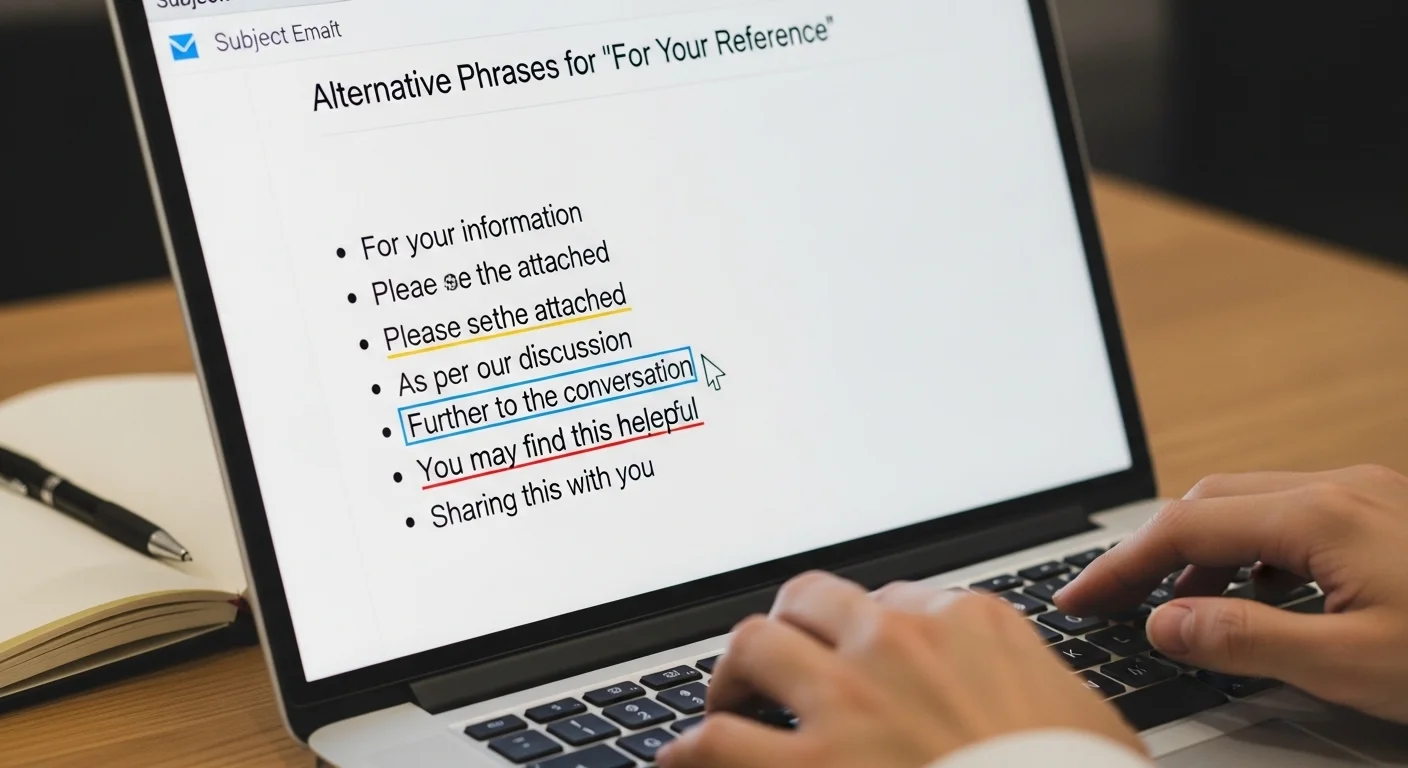
What Does “For Your Reference” Mean?
“For your reference” means you are sharing information so the recipient can review, check, or use it if needed. It does not always require immediate action but provides useful context or supporting material.
It is commonly used when:
-
Sharing attachments
-
Sending reports or documents
-
Providing links
-
Giving background information
-
Forwarding previous emails
Why Use Alternatives in Emails?
👉 It prevents repetition in professional communication.
👉 It makes your writing sound more natural.
👉 It improves clarity and tone.
👉 It helps match context and intent.
👉 It strengthens your professional image.
Professional & Polished Alternatives
Best for clients, managers, and formal emails.
👉 For your review.
👉 For your consideration.
👉 For your information.
👉 For your perusal.
👉 For your kind attention.
👉 For your records.
👉 For your awareness.
👉 For your convenience.
👉 For your reference and action.
👉 For your evaluation.
👉 For your approval.
👉 For your assessment.
👉 For your guidance.
👉 For your necessary action.
👉 For documentation purposes.
Example:
“Please find the attached report for your review.”
Clear & Direct Alternatives
When you want to sound confident and specific.
👉 Please see the attached.
👉 Kindly find attached.
👉 Attached for your review.
👉 Sharing this for context.
👉 Please review the details below.
👉 Here are the requested documents.
👉 Please refer to the attached file.
👉 I’ve included the document below.
👉 See the information below.
👉 Refer to the details attached.
Example:
“Attached for your review is the final draft of the proposal.”
Informative Alternatives (When No Immediate Action Is Required)
👉 Sharing this for your information.
👉 For your awareness only.
👉 Just so you’re aware.
👉 Keeping you informed.
👉 For background information.
👉 For context.
👉 For visibility.
👉 For record-keeping.
👉 For future reference.
👉 Passing this along for your information.
Example:
“Sharing this for your information — no action required at this stage.”
Formal Corporate Alternatives
Ideal for high-level professional communication.
👉 For your kind perusal.
👉 For your valuable consideration.
👉 For your official records.
👉 Submitted for your review.
👉 Provided for your examination.
👉 Enclosed for your reference.
👉 Forwarded for your attention.
👉 Attached herewith for your review.
👉 Presented for your evaluation.
👉 Circulated for your review.
Example:
“Enclosed herewith for your review is the signed agreement.”
Casual Workplace Alternatives
Suitable for internal team communication.
👉 Sharing this with you.
👉 Here you go.
👉 Take a look at this.
👉 Just sharing this.
👉 Check this out.
👉 Thought this might help.
👉 Sending this over.
👉 Passing this along.
👉 Have a look.
👉 Take a quick look.
Example:
“Sending this over — have a quick look when you can.”
When to Use Each Type?
-
Use formal alternatives for clients and senior management.
-
Use direct alternatives when sharing attachments.
-
Use informative phrases when no action is needed.
-
Use casual phrases for internal chats.
Matching tone with context improves clarity and professionalism.
Common Email Mistakes to Avoid
-
❌ Writing “for your reference” without explaining purpose.
-
❌ Not mentioning attachments clearly.
-
❌ Sounding too robotic in simple emails.
-
❌ Using overly formal phrases in casual chats.
-
❌ Forgetting to specify if action is required.
Clear communication saves time and avoids confusion.
Conclusion
While “for your reference” is correct and professional, using varied alternatives enhances your communication style. Whether you’re sharing a document, forwarding information, or providing context, choosing the right phrase improves tone and clarity.
Small improvements in email language can create a strong professional impression and make your communication more effective.
Frequently Asked Questions
Is “for your reference” professional?
Yes, it is professional and widely used in business communication.
What is a more formal alternative?
“For your kind perusal” or “Enclosed herewith for your review” are more formal options.
What can I say instead when sending an attachment?
You can say “Please find attached,” “Attached for your review,” or “Kindly find the document enclosed.”
Can I use casual alternatives in client emails?
Casual phrases like “Check this out” are better suited for internal team communication