


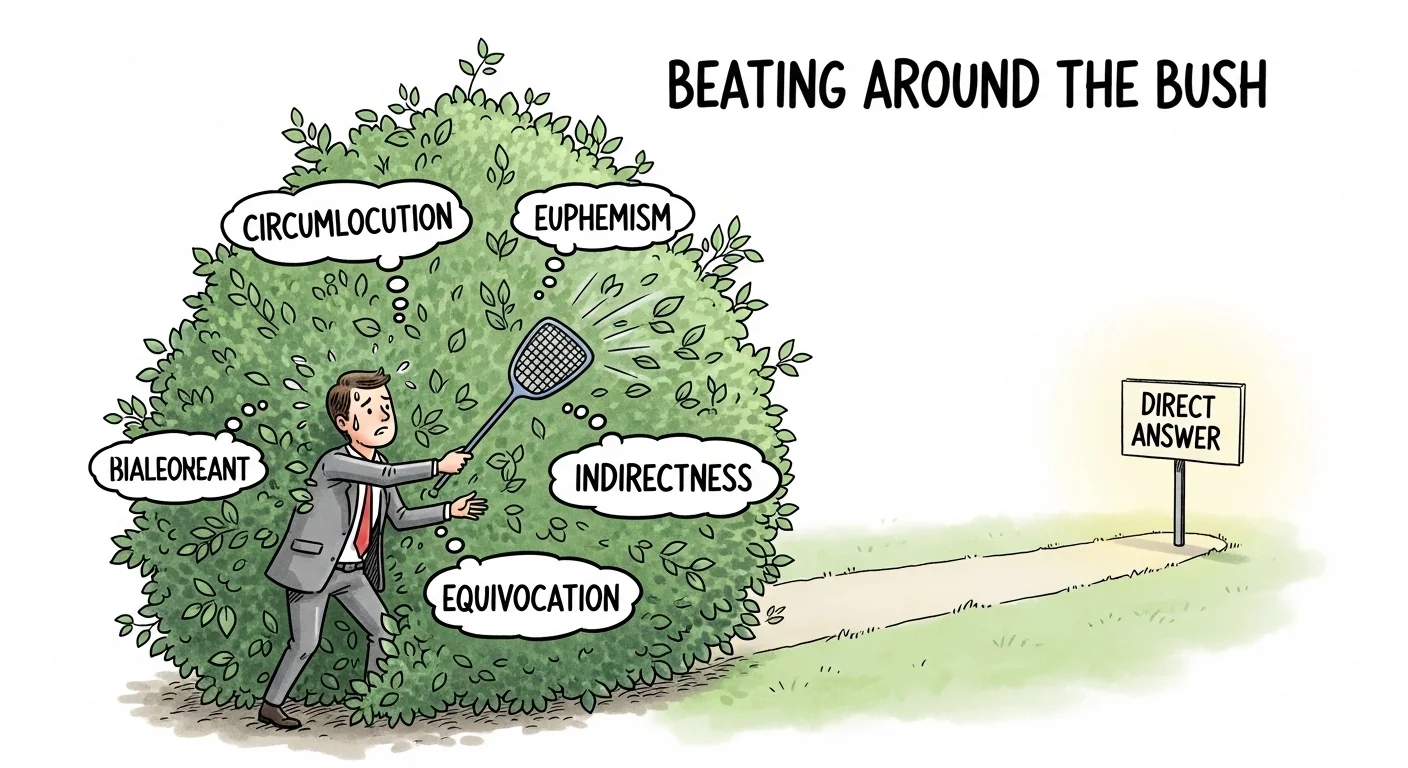
Other Ways to Say “Beating Around the Bush”.“Beating around the bush” is a common idiom that means avoiding the main point or speaking indirectly instead of getting straight to the issue. While it’s widely understood, using the same phrase repeatedly can make your writing or speech sound repetitive.
Whether you’re writing an essay, business email, blog post, or having a conversation, using alternative expressions can help you sound more professional, polite, or expressive depending on the context.
Below are categorized alternatives you can use in formal, professional, casual, or conversational settings.
Professional & Workplace Alternatives
These are ideal for business communication, meetings, and formal writing.
👉 Avoiding the main point
👉 Not addressing the issue directly
👉 Circumventing the topic
👉 Speaking indirectly
👉 Being vague
👉 Not getting to the point
👉 Delaying the main issue
👉 Failing to address the core matter
👉 Providing an indirect response
👉 Sidestepping the issue
👉 Dodging the question
👉 Evading the topic
👉 Offering a roundabout explanation
👉 Not being straightforward
👉 Giving an unclear answer
👉 Avoiding a direct answer
👉 Deflecting the question
👉 Being noncommittal
👉 Speaking ambiguously
👉 Not speaking plainly
These options sound more polished in professional settings.
Formal & Academic Alternatives
Useful in essays, reports, and analytical writing.
👉 Using circumlocution
👉 Employing indirect language
👉 Engaging in verbal evasion
👉 Avoiding direct confrontation
👉 Providing a tangential response
👉 Offering a non-specific explanation
👉 Diverting from the main argument
👉 Failing to articulate clearly
👉 Avoiding direct discourse
👉 Presenting a convoluted explanation
👉 Speaking in generalities
👉 Avoiding specificity
👉 Engaging in rhetorical avoidance
👉 Straying from the central issue
👉 Offering an evasive statement
These phrases elevate academic tone.
Casual & Conversational Alternatives
Best for everyday conversations.
👉 Not getting to the point
👉 Going in circles
👉 Talking in circles
👉 Dragging it out
👉 Not being straight
👉 Dancing around the topic
👉 Avoiding the question
👉 Not saying it directly
👉 Taking the long way around
👉 Rambling
👉 Skirting the issue
👉 Tiptoeing around it
👉 Talking around it
👉 Not being upfront
👉 Beating around it
These keep the tone natural and relatable.
Strong & Direct Alternatives
When you want to clearly call out indirect behavior.
👉 Dodging the issue
👉 Evading the question
👉 Deflecting
👉 Avoiding responsibility
👉 Not being transparent
👉 Hiding the real point
👉 Refusing to answer directly
👉 Being deliberately vague
👉 Withholding clarity
👉 Masking the truth
👉 Obscuring the issue
👉 Avoiding accountability
👉 Being evasive
👉 Skipping the real issue
👉 Not addressing the problem
These are powerful and assertive.
Polite Alternatives (Less Confrontational)
If you want to sound diplomatic instead of accusatory.
👉 Perhaps we could get to the main point
👉 Could we address the core issue?
👉 Let’s focus on the main concern
👉 Can we clarify the central topic?
👉 It might help to be more direct
👉 Could you elaborate more clearly?
👉 Let’s speak plainly about this
👉 Can we address this directly?
👉 It would be helpful to clarify
👉 Let’s avoid unnecessary details
These soften the message while encouraging clarity.
When to Use Each Type
-
Professional alternatives → Workplace emails and meetings
-
Academic phrases → Essays and formal analysis
-
Casual expressions → Everyday conversations
-
Strong alternatives → Debates or serious discussions
-
Polite versions → Sensitive or diplomatic situations
Choosing the right phrase depends on tone, audience, and purpose.
Why Avoid “Beating Around the Bush” Sometimes?
Although widely understood, this idiom can:
-
Sound informal in professional writing
-
Feel repetitive if overused
-
Appear confrontational in serious discussions
-
Reduce clarity in academic contexts
Using precise alternatives improves communication and professionalism.
Practical Examples
Instead of:
“Stop beating around the bush.”
Try:
“Please get to the point.”
Instead of:
“He keeps beating around the bush.”
Try:
“He keeps avoiding the main issue.”
Instead of:
“She’s beating around the bush in her answer.”
Try:
“She’s giving an indirect response.”
Small changes create a stronger impact.
FAQs
What does “beating around the bush” mean?
It means avoiding the main topic or speaking indirectly instead of addressing something clearly.
Is it formal?
No, it’s considered informal. In professional writing, alternatives like “avoiding the main issue” are better.
What is a polite way to say it?
You can say, “Let’s focus on the main concern” or “Could we address this directly?”
What is a strong alternative?
“Evading the question” or “dodging the issue” are strong and direct phrases.
Conclusion
“Beating around the bush” is a useful idiom, but having alternatives helps you communicate more clearly and professionally. Whether you want to sound formal, polite, assertive, or conversational, choosing the right phrase ensures your message is effective and appropriate.