
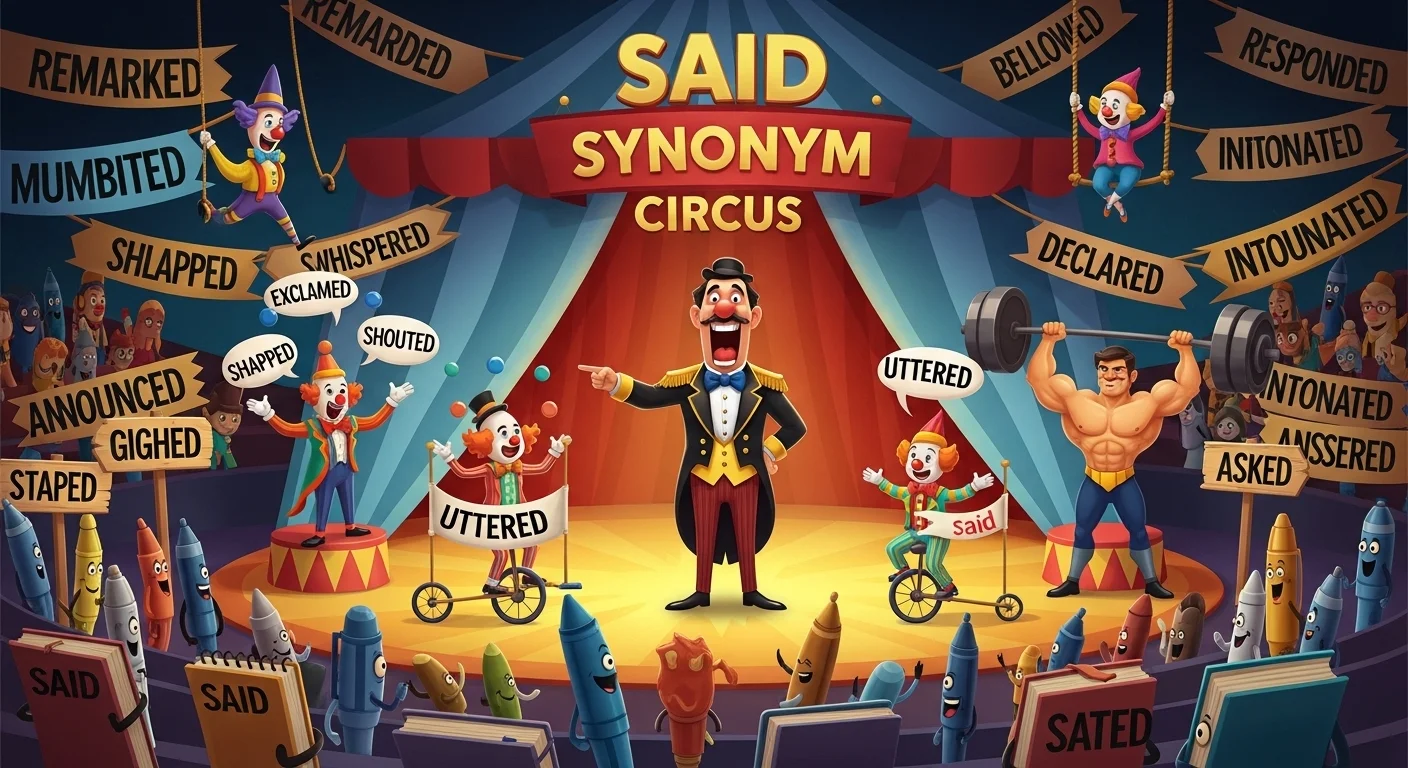
Other Ways to Say Said in Writing.Using “said” repeatedly in writing can make dialogue feel repetitive or flat. While “said” is simple and effective, varying your word choice can add emotion, clarity, and personality to your writing.
Whether you’re writing a novel, short story, essay, or script, choosing the right alternative helps convey tone — anger, excitement, sarcasm, fear, or confidence.
Below are categorized alternatives you can use depending on the situation and emotion.
Neutral Alternatives (Safe for Most Writing)
👉 Stated
👉 Mentioned
👉 Remarked
👉 Noted
👉 Added
👉 Commented
👉 Shared
👉 Explained
👉 Replied
👉 Responded
👉 Observed
👉 Expressed
👉 Announced
👉 Declared
👉 Indicated
Emotional & Expressive Alternatives
👉 Whispered
👉 Shouted
👉 Yelled
👉 Cried
👉 Sobbed
👉 Murmured
👉 Exclaimed
👉 Gasped
👉 Snapped
👉 Growled
👉 Sighed
👉 Groaned
👉 Laughed
👉 Boasted
👉 Complained
Formal & Professional Alternatives
👉 Reported
👉 Clarified
👉 Confirmed
👉 Emphasized
👉 Asserted
👉 Suggested
👉 Advised
👉 Informed
👉 Disclosed
👉 Addressed
👉 Articulated
👉 Reiterated
👉 Specified
👉 Outlined
👉 Elaborated
Strong & Dramatic Alternatives
👉 Demanded
👉 Insisted
👉 Argued
👉 Proclaimed
👉 Urged
👉 Warned
👉 Promised
👉 Threatened
👉 Objected
👉 Countered
👉 Challenged
👉 Accused
👉 Retorted
👉 Protested
👉 Confessed
Casual & Conversational Alternatives
👉 Went
👉 Was like
👉 Chimed in
👉 Pointed out
👉 Spoke up
👉 Blurted out
👉 Called out
👉 Spoke
👉 Told
👉 Answered
👉 Asked
👉 Joked
👉 Teased
👉 Muttered
👉 Added casually
When to Use Alternatives to “Said”
-
Use neutral alternatives for clean, professional writing.
-
Use emotional words to show tone instead of telling it.
-
Use formal options in academic or business writing.
-
Use dramatic verbs in fiction to increase intensity.
-
Avoid overusing flashy dialogue tags — sometimes “said” is still the best choice.
Balance is key. Too many dramatic tags can distract readers.
Common Mistakes to Avoid
-
Replacing every “said” with dramatic words
-
Using verbs that don’t match the emotion
-
Overcomplicating simple dialogue
-
Using adverbs instead of strong verbs
-
Forcing variation when “said” works naturally
FAQs
Is it bad to use “said” too much in writing?
No. “Said” is invisible to readers and often preferred. However, occasional variation can enhance tone and emotion.
What is a professional alternative to “said”?
Words like “stated,” “clarified,” “confirmed,” or “emphasized” work well in formal writing.
What are strong emotional alternatives?
“Whispered,” “shouted,” “snapped,” “murmured,” and “exclaimed” help convey emotion clearly.
Should I always replace “said” in fiction?
Not always. Overusing creative dialogue tags can distract readers. Use alternatives strategically.
Conclusion
While “said” is simple and effective, using the right alternative can add depth, clarity, and emotional impact to your writing. The key is choosing words that match the tone and context naturally.
Strong writing isn’t about avoiding “said” — it’s about using the right word at the right moment.