

Other Ways to Say “Please Be Advised”.The phrase “please be advised” is often used in formal emails, notices, and official messages. It signals that important information is coming next. While it sounds professional, it can also feel stiff or overly formal if used too often.
- What Does “Please Be Advised” Mean?
- Simple Definition:
- Grammar Type:
- Similar Ideas:
- Opposite Tone:
- Example Sentences:
- When to Use “Please Be Advised”
- Spoken English
- Business English
- Emails / Messages
- Social Media
- Academic Writing
- Professional Meetings
- Is “Please Be Advised” Polite or Professional?
- Tone Levels:
- Etiquette Tip:
- Pros & Cons of Using This Phrase
- ✔ Pros:
- ✘ Cons:
- Quick Alternatives List (For Fast Use)
- Top Alternatives Explained
- 1. Please Note
- 2. Kindly Note
- 3. Be Aware That
- 4. Just to Let You Know
- 5. For Your Information
- 6. Kindly Be Informed
- 7. Please Keep in Mind
- 8. This Is to Inform You
- 9. We Would Like to Inform You
- 10. Take Note That
- 11. Just a Reminder
- 12. Please Be Aware
- 13. As a Reminder
- 14. We Want to Let You Know
- 15. Please Consider
- Mini Dialogue Examples
- Formal Conversation
- Informal Conversation
- Business Email Example
- Mistakes to Avoid
- Cultural & Tone Tips
- Comparison Table
- FAQs
- Is “please be advised” rude?
- Is it okay in emails?
- What is the best modern alternative?
- What is the most polite option?
- What should beginners use?
- Is it outdated?
- Conclusion
That’s why learning alternatives is useful. The right phrase can make your message sound clearer, friendlier, or more modern, depending on your audience. In business writing, tone matters a lot. A small change in wording can make your message feel more respectful, direct, or approachable.
For example:
Formal: Please be advised that the meeting is canceled.
Modern/Neutral: Please note that the meeting is canceled.
Both are correct—but the second feels smoother and more natural.
What Does “Please Be Advised” Mean?
“Please be advised” means “please take note of this important information.”
Simple Definition:
It is used to introduce important or official information.
Grammar Type:
- Formal phrase
- Passive construction
Similar Ideas:
- Please note
- Kindly be informed
- For your information
Opposite Tone:
- Casual sharing (e.g., “Just letting you know”)
Example Sentences:
- Please be advised that the office will be closed tomorrow.
- Please be advised of the updated policy.
When to Use “Please Be Advised”
Spoken English
Rarely used. Sounds too formal.
Business English
Common in official communication:
- Policies
- Legal notices
- Company announcements
Emails / Messages
Used in formal emails:
- “Please be advised that your request has been approved.”
Social Media
Not recommended. Sounds too stiff.
Academic Writing
Sometimes used in formal notices or instructions.
Professional Meetings
Rarely spoken, but may appear in written summaries.
Is “Please Be Advised” Polite or Professional?
Yes, but it is very formal and slightly outdated in modern communication.
Tone Levels:
- Formal: Very high
- Neutral: No
- Soft: No (can sound firm)
- Friendly: No
Etiquette Tip:
✔ Good for legal or official notices
✘ Avoid in friendly or modern business emails
Pros & Cons of Using This Phrase
✔ Pros:
- Sounds official and authoritative
- Clear for formal notices
- Common in legal/business writing
✘ Cons:
- Feels outdated
- Can sound cold or impersonal
- Too formal for everyday emails
Quick Alternatives List (For Fast Use)
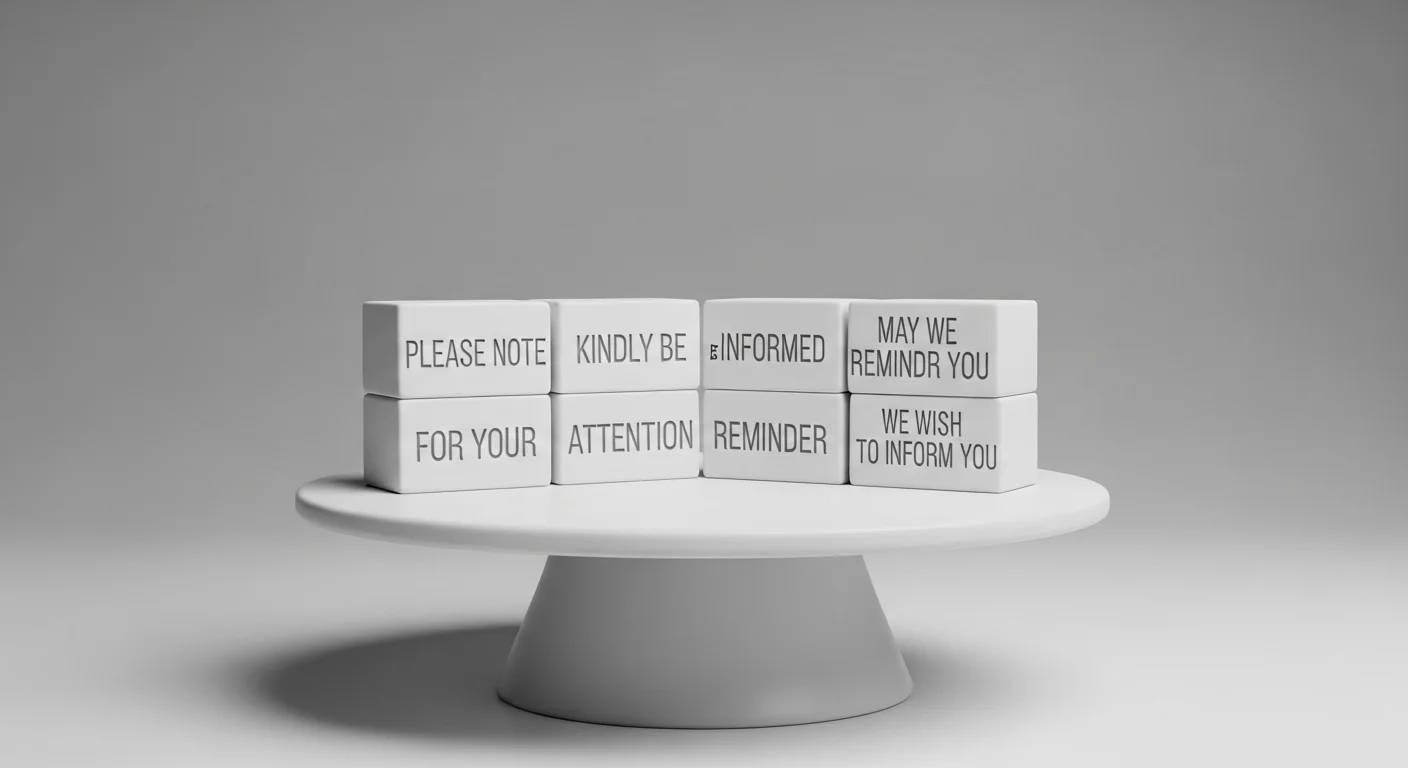
- Please note
- Kindly note
- Be aware that
- Just to let you know
- For your information
- Kindly be informed
- Please keep in mind
- This is to inform you
- We would like to inform you
- Please remember
- Take note that
- Just a reminder
- I would like to inform you
- Please be aware
- As a reminder
- We want to let you know
- Please consider
Top Alternatives Explained
1. Please Note
Meaning: Pay attention to this information
Explanation: Most common modern replacement
Grammar Note: Imperative phrase
Example: Please note that the deadline has changed.
Best Use: Emails, workplace
Worst Use: Very casual chat
Tone: Neutral
Level: Beginner
Similarity Score: 10/10
Replaceability Tip: Best overall alternative
2. Kindly Note
Meaning: Polite way to say “please note”
Explanation: Slightly softer and more polite
Grammar Note: Formal phrase
Example: Kindly note the updated schedule.
Best Use: Formal emails
Worst Use: Casual conversation
Tone: Polite
Level: Beginner
Similarity Score: 9/10
3. Be Aware That
Meaning: Pay attention to something important
Explanation: Slightly stronger tone
Grammar Note: Phrase
Example: Be aware that delays may occur.
Best Use: Warnings
Worst Use: Friendly emails
Tone: Strong
Level: Intermediate
Similarity Score: 8/10
4. Just to Let You Know
Meaning: Sharing information casually
Explanation: Friendly and informal
Grammar Note: Conversational phrase
Example: Just to let you know, the meeting is canceled.
Best Use: Informal emails
Worst Use: Legal writing
Tone: Friendly
Level: Beginner
Similarity Score: 7/10
5. For Your Information
Meaning: Providing useful details
Explanation: Neutral and widely used
Grammar Note: Prepositional phrase
Example: For your information, the office is closed tomorrow.
Best Use: Emails
Worst Use: Very formal legal text
Tone: Neutral
Level: Beginner
Similarity Score: 9/10
6. Kindly Be Informed
Meaning: Formal notification
Explanation: Similar level of formality
Grammar Note: Passive phrase
Example: Kindly be informed that changes have been made.
Best Use: Formal notices
Worst Use: Casual emails
Tone: Formal
Level: Intermediate
Similarity Score: 10/10
7. Please Keep in Mind
Meaning: Remember this detail
Explanation: Softer tone
Grammar Note: Phrase
Example: Please keep in mind the deadline.
Best Use: Friendly professional emails
Worst Use: Legal notices
Tone: Soft
Level: Beginner
Similarity Score: 8/10
8. This Is to Inform You
Meaning: Formal announcement
Explanation: Clear and direct
Grammar Note: Sentence
Example: This is to inform you that your request is approved.
Best Use: Formal communication
Worst Use: Casual chat
Tone: Formal
Level: Beginner
Similarity Score: 9/10
9. We Would Like to Inform You
Meaning: Polite formal statement
Explanation: More personal tone
Grammar Note: Sentence
Example: We would like to inform you of the changes.
Best Use: Business emails
Worst Use: Informal talk
Tone: Professional
Level: Beginner
Similarity Score: 9/10
10. Take Note That
Meaning: Pay attention
Explanation: Slightly firm
Grammar Note: Phrase
Example: Take note that the rules have changed.
Best Use: Instructions
Worst Use: Friendly messages
Tone: Strong
Level: Intermediate
Similarity Score: 8/10
11. Just a Reminder
Meaning: Gentle notice
Explanation: Soft and friendly
Grammar Note: Phrase
Example: Just a reminder about tomorrow’s meeting.
Best Use: Emails, teams
Worst Use: Legal notices
Tone: Friendly
Level: Beginner
Similarity Score: 7/10
12. Please Be Aware
Meaning: Pay attention
Explanation: Slightly formal
Grammar Note: Phrase
Example: Please be aware of the new policy.
Best Use: Workplace
Worst Use: Casual talk
Tone: Neutral
Level: Beginner
Similarity Score: 8/10
13. As a Reminder
Meaning: Repeating important info
Explanation: Polite and soft
Grammar Note: Phrase
Example: As a reminder, submit your report.
Best Use: Emails
Worst Use: First-time announcements
Tone: Soft
Level: Beginner
Similarity Score: 7/10
14. We Want to Let You Know
Meaning: Friendly sharing
Explanation: More conversational
Grammar Note: Sentence
Example: We want to let you know about the update.
Best Use: Informal business
Worst Use: Legal writing
Tone: Friendly
Level: Beginner
Similarity Score: 7/10
15. Please Consider
Meaning: Think about this information
Explanation: Indirect and soft
Grammar Note: Phrase
Example: Please consider the following points.
Best Use: Suggestions
Worst Use: Announcements
Tone: Soft
Level: Intermediate
Similarity Score: 6/10
Mini Dialogue Examples
Formal Conversation
A: Please be advised that the policy has changed.
B: Thank you for informing me.
Informal Conversation
A: Just to let you know, the meeting moved.
B: Got it!
Business Email Example
Hello,
Please note that your request has been processed.
Best regards,
Mistakes to Avoid
- Using it in casual messages
- Overusing in every email
- Sounding too cold or robotic
- Mixing with informal tone
- Using without important info
- Replacing simple phrases unnecessarily
Cultural & Tone Tips
- In US English, simpler phrases like “please note” are preferred
- In UK English, formal tone is still accepted
- In modern business English, clarity is more important than formality
- Overly formal phrases can sound distant
Comparison Table
| Phrase | Tone | Best Context | Professional Level | Example |
|---|---|---|---|---|
| Please note | Neutral | High | Please note the change | |
| Kindly be informed | Formal | Notices | High | Official updates |
| Just to let you know | Friendly | Casual email | Medium | Informal update |
| For your information | Neutral | Work | Medium | FYI |
| Be aware that | Strong | Warning | High | Risk notice |
| Just a reminder | Soft | Team | Medium | Reminder email |
FAQs
Is “please be advised” rude?
No, but it can sound strict or cold.
Is it okay in emails?
Yes, but only in formal emails.
What is the best modern alternative?
“Please note.”
What is the most polite option?
“Kindly note.”
What should beginners use?
“Please note” or “just to let you know.”
Is it outdated?
Slightly, especially in modern business writing.
Conclusion
Learning alternatives to “please be advised” helps you write more naturally and effectively. While the phrase is still correct, modern English often prefers simpler and friendlier expressions.
Choosing the right words improves clarity, tone, and professionalism. It also makes your communication feel more human and less robotic.
Practice using these alternatives in emails and conversations. With time, your English will sound more fluent and confident.