
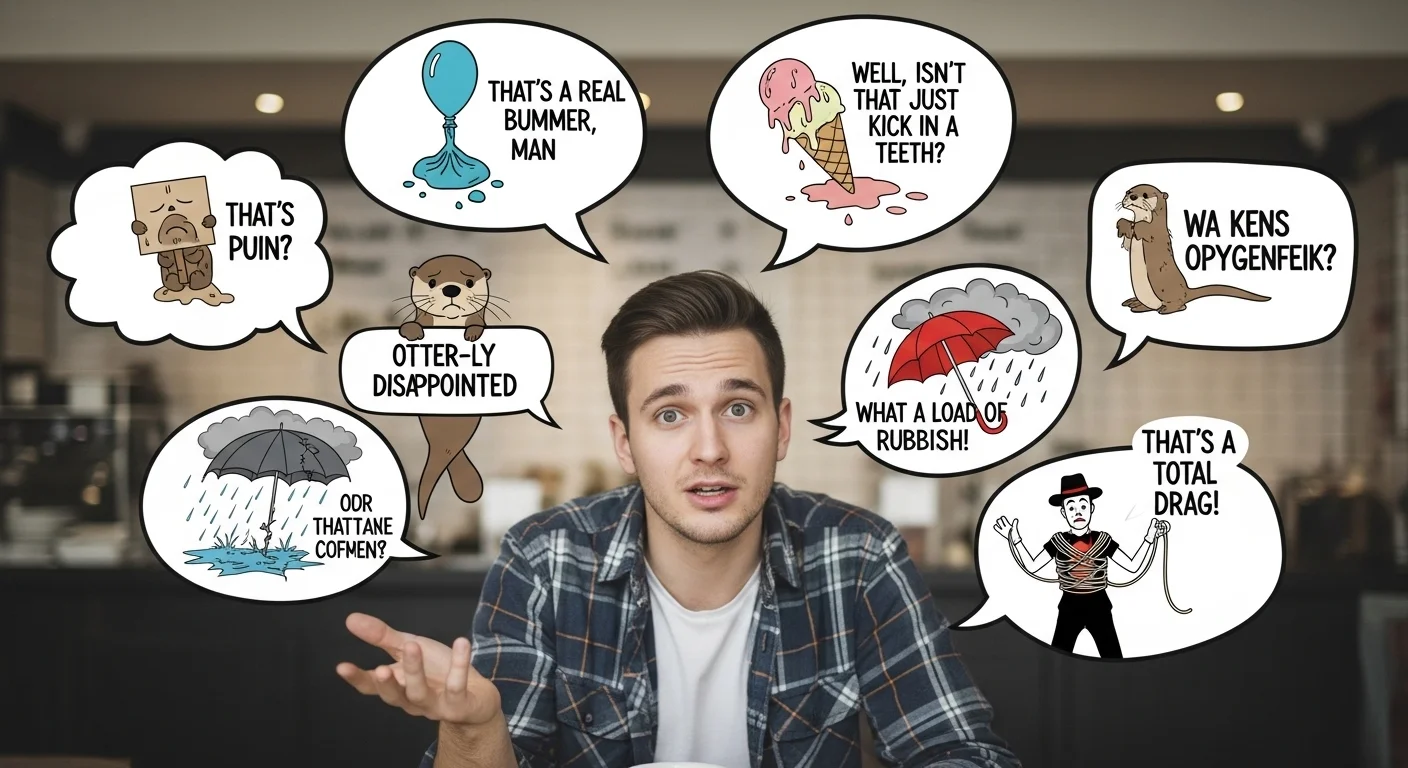
Other Ways to Say That Sucks.The phrase “that sucks” is commonly used to express disappointment, frustration, or sympathy. While it’s popular in casual conversation, it can sound too informal or even unprofessional in work emails or serious discussions. Using varied alternatives helps you convey the same emotion more appropriately depending on the setting.
- What Does “That Sucks” Mean?
- When to Use “That Sucks”
- Spoken English
- Business English
- Emails / Messages
- Social Media
- Academic Writing
- Professional Meetings
- Is “That Sucks” Polite or Professional?
- Pros & Cons of Using “That Sucks”
- Quick Alternatives List
- Detailed Alternatives Explained
- That’s Unfortunate
- I’m Sorry to Hear That
- That’s Disappointing
- What a Bummer
- That’s Tough
- That’s a Shame
- Too Bad
- I Feel for You
- That Must Be Frustrating
- That’s Rough
- Mini Dialogue Examples
- Formal Dialogue
- Informal Dialogue
- Business Email Example
- Common Mistakes to Avoid
- Cultural & Tone Tips
- Comparison Table
- Frequently Asked Questions
- Is “that sucks” rude?
- Can I use it in emails?
- What is the most professional alternative?
- What is the friendliest alternative?
- Can beginners use this phrase?
- Is there a formal alternative for business use?
- Conclusion
For example:
Informal: That sucks!
Professional: I’m sorry to hear that.
Both communicate empathy or displeasure, but the tone changes. Learning alternatives ensures you express yourself clearly, politely, and naturally in different contexts, whether in personal conversations, professional emails, or social media.
What Does “That Sucks” Mean?
Student-Friendly Definition:
It means “that is bad” or “that is disappointing.”
Grammar Form:
-
Informal exclamation / idiom
Synonyms / Similar Tone:
-
That’s unfortunate
-
That’s terrible
-
What a bummer
Opposite Tone Expressions:
-
That’s great
-
That’s amazing
-
That’s excellent
Example Sentences:
-
You missed the deadline? That sucks!
-
The concert got canceled? That’s really disappointing.
When to Use “That Sucks”
Spoken English
✅ Very common among friends, colleagues, and casual settings
Business English
⚠ Avoid in formal communication; better to use polite alternatives
Emails / Messages
✅ Use friendly alternatives like I’m sorry to hear that in professional emails
Social Media
✅ Perfect for casual posts, reactions, or comments
Academic Writing
❌ Not suitable; use formal alternatives
Professional Meetings
⚠ Use only in informal team settings; avoid in formal presentations
Is “That Sucks” Polite or Professional?
Polite: Low (casual)
Professional: Low
Formal: No
Informal: Yes, strong
Tone: Casual, sympathetic, slightly negative
Etiquette Tip:
-
Use only with friends, family, or casual coworkers.
-
In professional settings, choose neutral or polite alternatives.
Pros & Cons of Using “That Sucks”
✔ Pros:
-
Expresses genuine emotion
-
Very casual and relatable
-
Quick and easy to say
-
Works in informal spoken English
✘ Cons:
-
Not professional
-
Can sound rude if used with strangers or clients
-
Lacks specificity
-
Overuse can sound immature
Quick Alternatives List
👉 That’s unfortunate
👉 I’m sorry to hear that
👉 That’s disappointing
👉 That’s terrible
👉 What a bummer
👉 That’s tough
👉 That’s a shame
👉 Too bad
👉 I feel for you
👉 That must be frustrating
👉 That’s rough
👉 I understand how that feels
👉 That’s not ideal
👉 I can relate, that’s unfortunate
👉 That’s regrettable
👉 That’s challenging
👉 How frustrating
👉 That’s upsetting
👉 I’m sorry that happened
👉 I know that’s difficult
Detailed Alternatives Explained
That’s Unfortunate
Meaning: It is regrettable or disappointing
Explanation: Polite, professional, neutral
Grammar Note: Adjective phrase
Example Sentence: The meeting was canceled? That’s unfortunate.
Best Use: Emails, presentations
Worst Use: Very casual texting with close friends
Tone: Polite / Professional
Level: Beginner
Similarity Score: 8/10
Replaceability Tip: Use for neutral disappointment.
I’m Sorry to Hear That
Meaning: Expressing sympathy politely
Explanation: Professional and empathetic
Grammar Note: Full sentence
Example Sentence: I’m sorry to hear that your flight was delayed.
Best Use: Emails, professional chats
Worst Use: Very casual group chat
Tone: Polite / Professional
Level: Beginner
Similarity Score: 9/10
Replaceability Tip: Safe choice for professional communication.
That’s Disappointing
Meaning: Expresses frustration or letdown
Explanation: Neutral, formal enough for business
Grammar Note: Adjective phrase
Example Sentence: It’s disappointing that the report wasn’t submitted on time.
Best Use: Workplace emails, professional discussion
Worst Use: Casual texting with friends (too formal)
Tone: Professional / Neutral
Level: Intermediate
Similarity Score: 8/10
Replaceability Tip: Use for polite expression of dissatisfaction.
What a Bummer
Meaning: That’s unfortunate or disappointing
Explanation: Very informal, friendly
Grammar Note: Exclamatory idiom
Example Sentence: You lost your keys? What a bummer!
Best Use: Friends, casual chat
Worst Use: Emails, formal settings
Tone: Informal / Friendly
Level: Beginner
Similarity Score: 7/10
Replaceability Tip: Best for personal conversations.
That’s Tough
Meaning: Sympathetic response to a problem
Explanation: Casual, friendly
Grammar Note: Adjective phrase
Example Sentence: You had to work all weekend? That’s tough.
Best Use: Informal conversations
Worst Use: Professional emails
Tone: Friendly / Casual
Level: Beginner
Similarity Score: 7/10
Replaceability Tip: Use with colleagues you know well or friends.
That’s a Shame
Meaning: Expressing regret
Explanation: Polite and empathetic
Grammar Note: Adjective phrase
Example Sentence: The event got canceled? That’s a shame.
Best Use: Casual or semi-professional settings
Worst Use: Very formal business letters
Tone: Neutral / Polite
Level: Beginner
Similarity Score: 8/10
Replaceability Tip: Works in emails with mild disappointment.
Too Bad
Meaning: Mild disappointment
Explanation: Casual, informal
Grammar Note: Exclamation
Example Sentence: You missed the sale? Too bad.
Best Use: Friends, casual chat
Worst Use: Professional communication
Tone: Informal / Friendly
Level: Beginner
Similarity Score: 6/10
Replaceability Tip: Very casual alternative.
I Feel for You
Meaning: Empathy
Explanation: Informal, warm
Grammar Note: Full sentence
Example Sentence: Your laptop broke? I feel for you.
Best Use: Friends, casual workplace
Worst Use: Formal emails
Tone: Friendly / Casual
Level: Intermediate
Similarity Score: 7/10
Replaceability Tip: Shows empathy without slang.
That Must Be Frustrating
Meaning: Recognizes the other person’s frustration
Explanation: Polite and empathetic
Grammar Note: Full sentence
Example Sentence: Waiting for hours in line? That must be frustrating.
Best Use: Professional and personal settings
Worst Use: Not really informal chat
Tone: Polite / Neutral
Level: Intermediate
Similarity Score: 8/10
Replaceability Tip: Use in professional emails when empathizing.
That’s Rough
Meaning: Expresses sympathy informally
Explanation: Casual, friendly
Grammar Note: Adjective phrase
Example Sentence: You had to reschedule three times? That’s rough.
Best Use: Informal conversations
Worst Use: Formal communication
Tone: Friendly / Casual
Level: Beginner
Similarity Score: 7/10
Replaceability Tip: Use with friends or peers.
Mini Dialogue Examples
Formal Dialogue
Colleague: The client rejected our proposal.
You: That’s disappointing. Let’s review and improve it.
Informal Dialogue
Friend: I missed the concert.
You: Oh no! That sucks!
Business Email Example
Subject: Project Delay
Dear Mr. Khan,
I understand the delay was unavoidable. That’s unfortunate, and we will adjust the timeline accordingly.
Best regards,
Ali
Common Mistakes to Avoid
-
Using “that sucks” in professional emails
-
Overusing informal phrases in formal settings
-
Using vague expressions without context
-
Mixing informal and formal tone in one sentence
-
Failing to pair with empathy
Cultural & Tone Tips
-
In US English, “that sucks” is casual and common among peers.
-
In UK English, alternatives like “that’s a shame” sound polite and more neutral.
-
In corporate culture, formal alternatives are preferred to maintain professionalism.
-
Casual phrases are better for friends, social media, or informal chats.
Comparison Table
| Phrase | Tone | Best Context | Professional Level | Example |
|---|---|---|---|---|
| That sucks | Informal | Casual chat | Low | You missed the game? That sucks! |
| That’s unfortunate | Polite | Emails, presentations | High | The meeting was canceled? That’s unfortunate. |
| I’m sorry to hear that | Polite | Emails, professional chat | Very High | I’m sorry to hear that the shipment was delayed. |
| What a bummer | Friendly | Casual conversations | Low | You lost your wallet? What a bummer! |
| That must be frustrating | Neutral / Polite | Professional emails | High | Waiting hours in line? That must be frustrating. |
Frequently Asked Questions
Is “that sucks” rude?
It’s informal and can sound rude if used with strangers or in professional settings.
Can I use it in emails?
Avoid it in professional emails; use alternatives like “that’s unfortunate.”
What is the most professional alternative?
“I’m sorry to hear that” or “that’s unfortunate.”
What is the friendliest alternative?
“What a bummer” or “that’s rough.”
Can beginners use this phrase?
Yes, in casual conversations, but not in formal settings.
Is there a formal alternative for business use?
“Yes, ‘that’s disappointing’ or ‘I’m sorry to hear that’ works well.”
Conclusion
Using alternatives to that sucks allows you to express empathy, frustration, or disappointment appropriately depending on context. Casual phrases work for friends, while professional alternatives maintain respect and clarity in emails, presentations, and workplace discussions. Practicing these phrases ensures you communicate naturally and politely across all situations.