
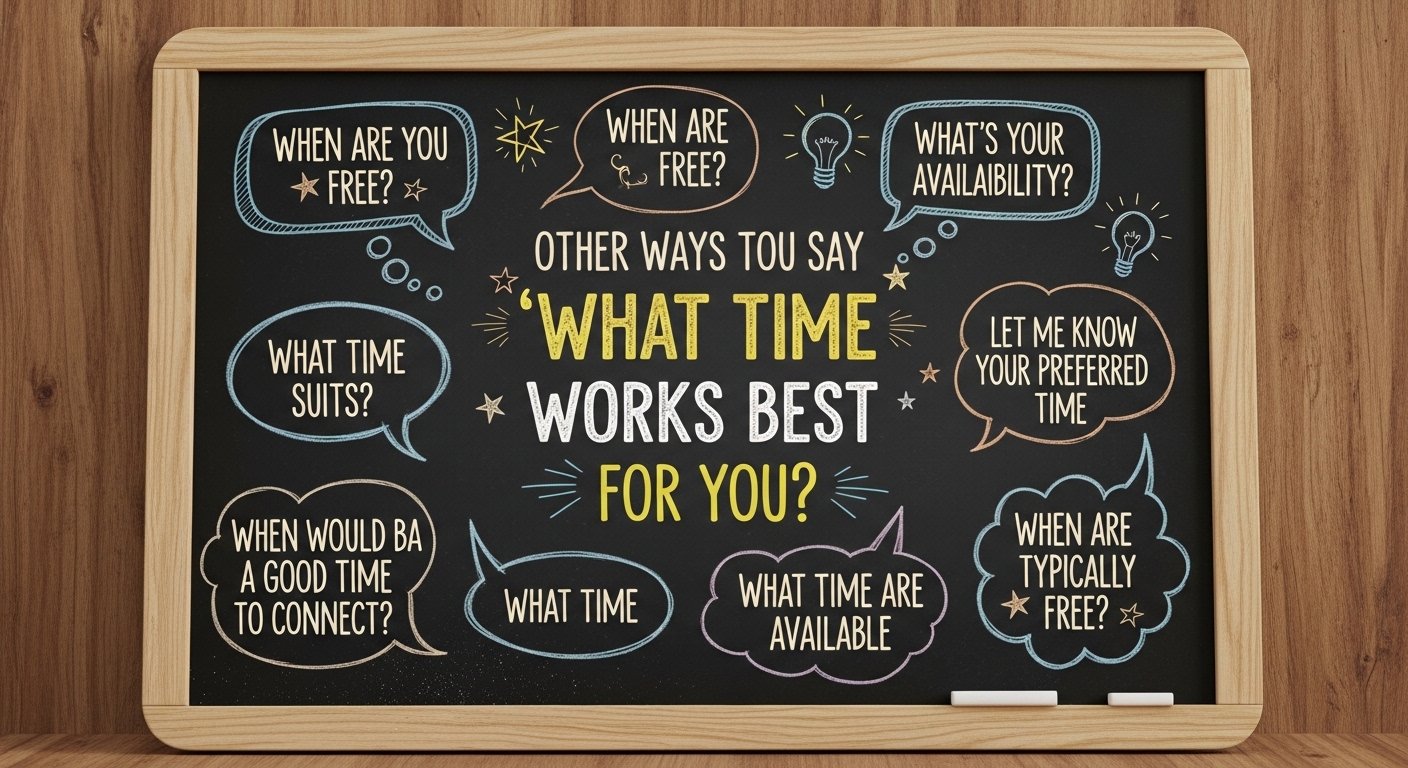
Other Ways to Say “What Time Works Best for You.Scheduling meetings, calls, or appointments often requires asking about availability. While “What time works best for you” is common, using varied alternatives can make your communication feel more professional, polite, or friendly.
Here are 311+ ways to say ‘What Time Works Best for You’ naturally and effectively in emails, chats, and messages.
Why Using Alternatives Matters
Relying only on “What time works best for you” can make your scheduling messages repetitive. Using alternatives:
👉 Makes your communication polite and professional
👉 Provides clarity without sounding repetitive
👉 Allows you to adapt tone for colleagues, clients, or friends
👉 Improves response rates by sounding thoughtful
Whether in emails, texts, or team chats, varied ways to ask about availability make scheduling smoother.
Professional & Formal Alternatives
Perfect for workplace emails, client communication, and professional settings.
👉 What time would be convenient for you?
👉 When would you be available?
👉 Could you let me know your availability?
👉 At what time would you prefer to meet?
👉 Please share a time that suits you best
👉 When is a good time for you?
👉 What time fits your schedule?
👉 Could we schedule a time that works for you?
👉 When would it be convenient for you to meet?
👉 Please let me know a time that works for you
Friendly & Casual Alternatives
Use these for colleagues, team chats, or informal planning.
👉 What time works for you?
👉 When’s good for you?
👉 When’s a good time to chat?
👉 What time is best for you?
👉 When can we connect?
👉 What time is convenient?
👉 When are you free?
👉 When should we meet?
👉 What time do you prefer?
👉 When’s a good time for us to talk?
Polite & Warm Alternatives
These add care or extra courtesy, useful for clients or senior colleagues.
👉 I’d love to know what time works best for you
👉 Please let me know a time that is convenient
👉 I’m happy to work around your schedule
👉 Let me know a time that fits best for you
👉 Could you kindly share your preferred time?
👉 I’d appreciate it if you could suggest a suitable time
👉 When would be most convenient for you?
👉 At your convenience, please let me know a suitable time
How to Make It More Effective
Instead of just asking “What time works best for you,” you can:
👉 Suggest options — e.g., “Would 10 AM or 2 PM work for you?”
👉 Be flexible — e.g., “I’m happy to adjust to your schedule, let me know what works best.”
👉 Mention the context — e.g., “For our project discussion, what time works best for you?”
Adding clarity or options makes it easier for the recipient to respond promptly.
Common Mistakes to Avoid
👉 Using overly casual alternatives in professional emails
👉 Asking multiple vague questions instead of suggesting options
👉 Forgetting to mention time zones for international colleagues
👉 Using long or complicated sentences that confuse the recipient
👉 Not confirming after a time is agreed upon
Example Usage
Professional Email:
“Hi James, I’d like to schedule a meeting next week. Please let me know a time that works best for you.”
Team Chat Message:
“Hey Sarah, when’s a good time for us to catch up on the project?”
Client Email:
“Dear Mr. Brown, could you kindly share your preferred time for our call next week?”
Casual Message to Friend:
“When are you free to chat this afternoon?”
Frequently Asked Questions
Is “What time works best for you” formal enough?
Yes, but alternatives like “At what time would you prefer to meet?” or “Please let me know a convenient time” sound more professional.
What is a casual alternative for friends?
“When’s good for you?” or “When are you free?” works well.
Can I suggest multiple options?
Yes, offering two or three options often helps the recipient respond faster.
Should I include time zones?
Absolutely, for international colleagues or clients to avoid confusion
Conclusion
While “What time works best for you” is clear and polite, using other ways to say ‘What Time Works Best for You’ improves your communication style, professionalism, and response rate.