
Other Ways to Say According To.The phrase “according to” is widely used to reference a source of information, opinion, or authority. It helps attribute statements to a person, organization, report, or data source. While it is grammatically correct and commonly accepted, overusing it can make writing repetitive — especially in academic papers, professional emails, or blog articles.
- What Does “According To” Mean?
- When to Use “According To”
- Academic Writing
- Business Writing
- Journalism
- Casual Conversation
- Professional Emails
- Is “According To” Formal or Professional?
- Pros & Cons of Using “According To”
- Quick Alternatives List
- Detailed Alternatives Explained
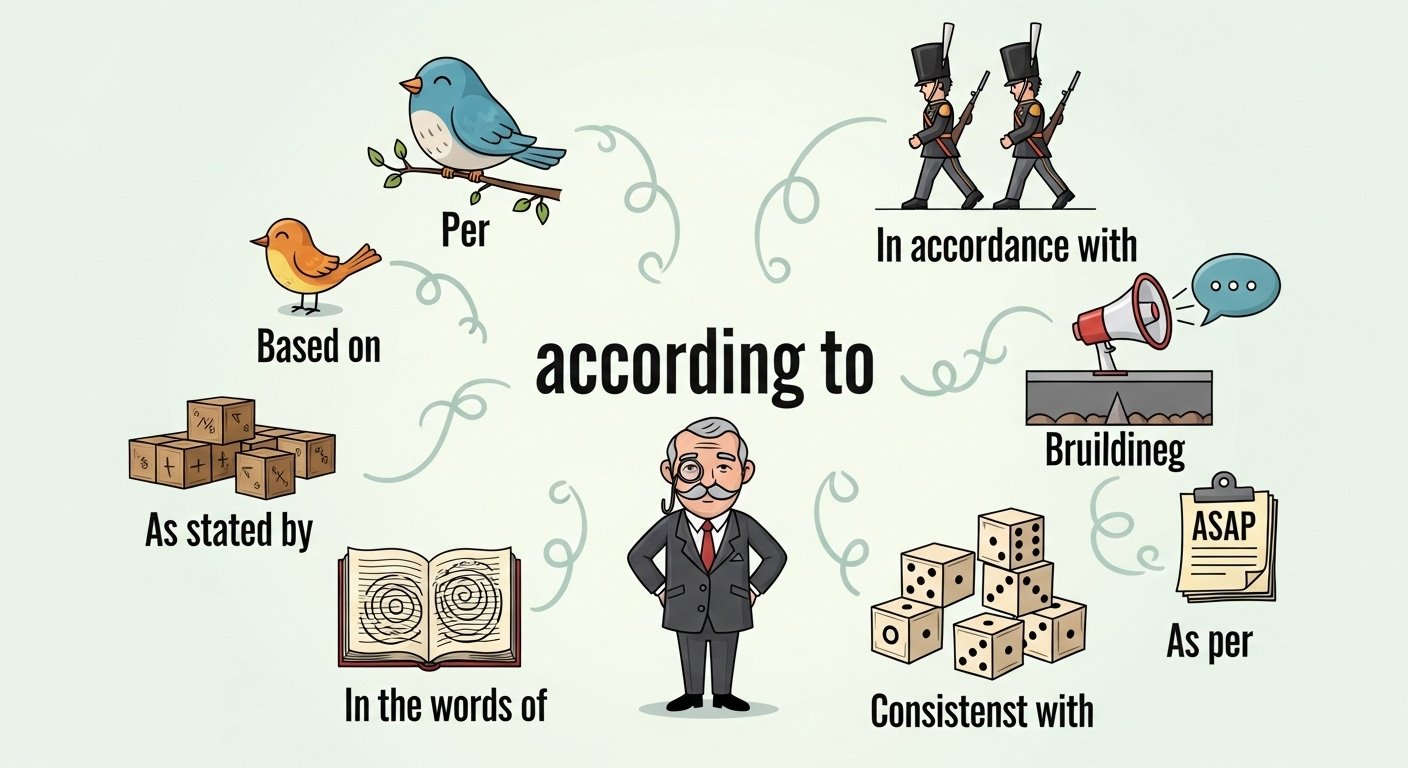
- As Stated By
- Based On
- As Reported By
- In Accordance With
- In the Words Of
- Mini Dialogue Examples
- Academic Example
- Business Example
- Casual Conversation
- Common Mistakes to Avoid
- Cultural & Tone Tips
- Comparison Table
- Frequently Asked Questions
- Conclusion
Learning alternatives allows you to vary your language, improve flow, and sound more polished. Some alternatives are formal and suitable for research writing, while others are more conversational.
For example:
Casual: According to John, the meeting is canceled.
Formal: As stated by John, the meeting is canceled.
Using the right variation ensures clarity, credibility, and professionalism.
What Does “According To” Mean?
Student-Friendly Definition:
It means “as said by” or “based on information from.”
Grammar Form:
-
Prepositional phrase
Purpose:
-
To cite a source
-
To show authority
-
To attribute information
Example Sentences:
-
According to the report, sales increased by 20%.
-
According to experts, this method is effective.
When to Use “According To”
Academic Writing
✅ Very common in research papers
Business Writing
✅ Used when citing reports or data
Journalism
✅ Essential for referencing sources
Casual Conversation
⚠ Less common; usually replaced with “He said”
Professional Emails
✅ Useful when referring to official information
Is “According To” Formal or Professional?
Polite: Yes
Professional: Yes
Formal: Yes
Informal: Rarely used
Tone: Neutral, factual
Etiquette Tip:
-
Excellent for reports and articles
-
Avoid overusing it repeatedly in the same paragraph
Pros & Cons of Using “According To”
✔ Pros:
-
Clear attribution
-
Academically accepted
-
Professional tone
-
Easy to understand
✘ Cons:
-
Can sound repetitive
-
Less conversational
-
Overuse affects writing flow
Quick Alternatives List
👉 As stated by
👉 As reported by
👉 As mentioned by
👉 As noted by
👉 As explained by
👉 As described by
👉 As indicated by
👉 Based on
👉 In the words of
👉 As per
👉 As outlined by
👉 As observed by
👉 As highlighted by
👉 As claimed by
👉 As suggested by
👉 As pointed out by
👉 As revealed by
👉 In accordance with
👉 In the opinion of
👉 Citing
Detailed Alternatives Explained
As Stated By
Meaning: Said or written by someone
Explanation: Formal and professional
Example: As stated by the CEO, the company will expand next year.
Best Use: Business writing
Tone: Professional
Similarity Score: 9/10
Based On
Meaning: Using information from
Explanation: Slightly less direct but professional
Example: Based on recent data, sales have improved.
Best Use: Reports, analysis
Tone: Neutral / Professional
Similarity Score: 8/10
As Reported By
Meaning: Published or communicated by a source
Explanation: Common in journalism
Example: As reported by the news agency, the event was canceled.
Best Use: Articles, blogs
Tone: Professional
Similarity Score: 9/10
In Accordance With
Meaning: In agreement with rules or information
Explanation: Formal and official tone
Example: In accordance with company policy, remote work is allowed.
Best Use: Legal, official writing
Tone: Formal
Similarity Score: 7/10
In the Words Of
Meaning: Directly quoting someone
Explanation: Used for emphasis
Example: In the words of the founder, “Innovation drives success.”
Best Use: Speeches, articles
Tone: Slightly formal
Similarity Score: 8/10
Mini Dialogue Examples
Academic Example
As noted by researchers, climate change is accelerating.
Business Example
As per the latest update, the deadline has been extended.
Casual Conversation
John said the meeting was moved.
Common Mistakes to Avoid
-
Repeating “according to” multiple times in one paragraph
-
Using it without a clear source
-
Mixing informal and formal alternatives incorrectly
-
Misplacing it grammatically in a sentence
Cultural & Tone Tips
-
In US academic writing, “according to” is standard and widely accepted
-
In UK formal writing, “as stated by” or “as outlined by” is also common
-
In corporate settings, “as per” is frequently used
-
In journalism, “as reported by” sounds natural and credible
Comparison Table
| Phrase | Tone | Best Context | Formal Level |
|---|---|---|---|
| According to | Neutral | Academic / Professional | High |
| As stated by | Professional | Business | High |
| Based on | Neutral | Reports | Medium |
| As per | Semi-formal | Corporate emails | Medium |
| In accordance with | Formal | Legal / Policy | Very High |
Frequently Asked Questions
Is “according to” formal?
Yes, it is suitable for academic and professional writing.
Can I use it in business emails?
Yes, especially when referring to reports or official updates.
What is a more professional alternative?
“As stated by” or “as outlined by.”
Is “as per” correct?
Yes, but it is semi-formal and common in corporate communication.
Can I avoid repeating it in essays?
Yes, use variations like “as noted by” or “based on.”
Is it used in casual speech?
Not commonly — people usually say “he said” instead.
Conclusion
“According to” is a professional and academically accepted phrase for citing sources. However, using varied alternatives like as stated by, based on, or as reported by improves writing flow and sophistication. Choosing the right alternative depends on tone, audience, and context.